AI
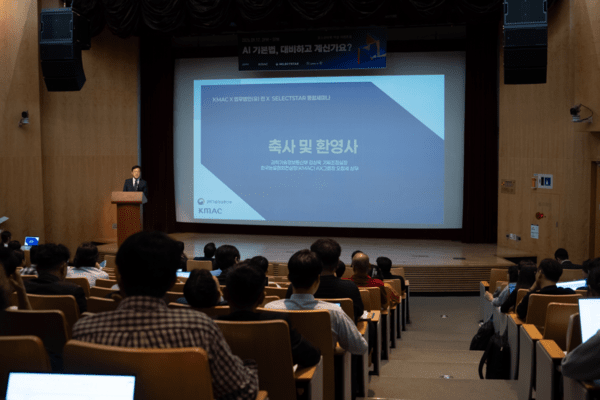
SelectStar Wraps Seminar on Responding to AI Basic Act, Says Continuous Verification Is Needed to Operate AI Services
Emphasis on the Need for Full-Cycle Evaluation From Planning to Operations
AI
Emphasis on the Need for Full-Cycle Evaluation From Planning to Operations

AI
Strengthened Screen Recognition and Computer Control Performance; Korean Performance Maintained, Model and Evaluation Methodology Released
AI TIMES ·
According to AI TIMES, Wonderpulp announced on September 18 that it has signed an approximately 3-year global partnership with FC Bayern Munich and will fully introduce enterprise AI agents into club operations, starting with fan support on game days. The first application will be fan service that handles digital ticket and account-related inquiries. The key to the partnership is not simply attaching separate tools, but connecting the club's existing systems with AI so it can be used within actual workflows. On site, the plan is to automate repetitive inquiries to reduce waiting times and confusion, while the club aims to improve service efficiency. The scope of adoption is expected to extend beyond fan support to back-office and broader business operations. The article emphasizes that sports clubs are shifting from using AI as an analytical aid to delegating the operations themselves to AI.
Perspective
The significance of this issue lies in the fact that the evaluation standard for AI adoption is shifting from answer quality to the ability to connect and complete actual work end to end. An approach that starts at the touchpoint fans feel most acutely and then expands across operations reads as a way to test real-world adoption potential before technical showmanship. Ultimately, this trend shows that whether service speed and operational efficiency can both be improved, and how naturally AI can permeate an organization's daily work, will become the benchmark that determines competitiveness.
This perspective is BizCrush's own commentary and is not part of the reporting by AI TIMES.
This article was produced with the help of an automated content generation algorithm.
AI TIMES ·
According to AI TIMES, CyberLink unveiled "PowerDirector 2027" and "PhotoDirector 2027" on Sept. 18, bringing AI agents into its video and photo editing software in earnest. The new lineup also expands more than 10 generative AI features, shifting the workflow so users can describe the desired outcome in natural language and then carry out multiple steps in sequence, from editing and retouching to marketing content creation. The key change is that the design no longer simply adds AI to individual functions, but instead hands over the creative flow itself for AI to execute. In video, users can give voice commands for tasks such as organizing source materials, editing, removing objects, applying effects and generating subtitles. In photo editing, the company strengthened conversational editing to reduce complex retouching steps, and it also embedded the same kind of agents into its marketing platform to broaden their use cases. It also added an on-device AI computing option so the creative software can switch between cloud processing and PC-side processing depending on the work environment.
Perspective
The significance of this move is that competition in editing software is shifting from the number of features to how naturally a product can execute a user's intent. In particular, applying the same approach across both creative and marketing workflows raises the likelihood that editing tools once reserved for professionals will open up to a broader user base. In the end, the differentiator is likely to converge not only on output quality, but also on how little the workflow is interrupted and how ready the tools are to use in any environment.
This perspective is BizCrush's own commentary and is not part of the reporting by AI TIMES.
This article was produced with the help of an automated content generation algorithm.
AI TIMES ·
According to AI TIMES, Xenon unveiled an open-source action-oriented AI model, "Hunmin VLM 397B," on September 18 that directly operates by looking at and manipulating computer screens. The key feature of the model is that it was post-trained on 8 NVIDIA B200 GPUs to add computer-use capabilities to a giant open model while significantly reducing the decline in Korean-language performance. It also stood out in its ability to identify targets such as on-screen buttons and input fields, and it is aimed at carrying out tasks across actual operating systems and applications. The company said it focused on translating user intent into action rather than simply generating answers. It also released the model, an FP8 version, and its evaluation methodology together so they can be used for performance comparisons and follow-up research. Attention is now on whether a development approach that efficiently adds the necessary capabilities on top of an open model will become one pillar of expanding practical AI for work.
Perspective
This release shows that the emphasis is shifting away from competition over ever-larger models and toward which capabilities can actually be added and used in practice. In particular, action-oriented AI is likely to be judged in enterprise environments more by how well it connects to work than by answer quality, so not only performance but also development methods and the scope of release could determine its industrial impact. Ultimately, if this approach takes hold, domestic developers may be able to move faster from simply following giant models to building field-ready AI by adding the execution capabilities they need.
This perspective is BizCrush's own commentary and is not part of the reporting by AI TIMES.
This article was produced with the help of an automated content generation algorithm.
AI TIMES ·
According to AI TIMES, Dinotisia unveiled a server configuration equipped with 4 VDPU cards in the United States, putting a dedicated processor strategy for search in generative AI infrastructure front and center. At an event held from September 15 to 17, the company said the server delivered up to 5.77 times higher vector search throughput than a CPU-only server. Dinotisia said it was extending the chip and accelerator cards it had previously unveiled into a real server environment, highlighting a division of labor in which GPUs handle model execution and VDPUs handle external information retrieval. In particular, it emphasized that it raised throughput without degrading search quality, targeting use cases such as retrieval-augmented generation and AI agents. In South Korea, the company is pursuing productization as enterprise AI data infrastructure bundled with its own database, while overseas it is expanding evaluation and verification scope among related industries. The company also said the unveiling would be a starting point for making the applicability of server-type VDPU more concrete based on actual customer workloads.
Perspective
The key point in this issue is that the center of gravity in generative AI competition is shifting from model computation alone to search infrastructure. Presenting a dedicated processor at the server level is closer to trying to establish it as an architectural option than merely as a supplementary accelerator. If a separately optimized search approach proves effective, companies will likely examine more actively the trend of separating computation and search within the same AI system. Ultimately, this shows that the standard for AI performance is expanding beyond the model itself to how quickly and reliably the right data can be fetched and used.
This perspective is BizCrush's own commentary and is not part of the reporting by AI TIMES.
This article was produced with the help of an automated content generation algorithm.
AI TIMES ·
According to AI TIMES, IBK Investment & Securities said on September 17 that Lotte Innovate's data center DBO business has entered a growth phase and could account for up to 30% of the company's total sales in 2028. The firm said the company is expected to benefit as rising investment in domestic AI data centers drives demand for one-stop services covering design, construction, and operations. It also said Lotte Innovate has built competitiveness in a structure where it handles the full process for customer-owned facilities, drawing on its long operational experience. Recently, the company has also been boosting the business's presence by securing a series of outsourced operations and DBO contracts. In addition, the expanding participation of investors in data center development was cited as a favorable environment for business expansion, while expectations for improved performance at subsidiaries have also raised hopes that the company's overall earnings strength will improve as well.
Perspective
The key point here is not simply an expansion in orders, but that enterprise infrastructure businesses are being reshaped into long-term services that include operational capabilities amid the AI investment wave. The fact that a target share of total sales was presented suggests that this business is moving from a peripheral area to one of the company's core pillars. In the market, evaluation criteria are likely to shift so that actual operating capability and customer-tailored execution matter more than construction experience alone. Ultimately, the sector may move away from competition over building facilities and toward competition over who can operate and scale them reliably.
This perspective is BizCrush's own commentary and is not part of the reporting by AI TIMES.
This article was produced with the help of an automated content generation algorithm.
AI TIMES ·
According to AI TIMES, Hancom stepped up its push into the U.S. market on September 18 by unveiling the first TV ad for its AI workforce platform, Nomadian. The ad features five AI agents with different work roles appearing like team members, while a solo founder runs a company with them. Through this, Hancom presented AI not as a simple tool but as a teammate that works alongside users, and showed a way to build a team by choosing and deploying agents and, if needed, creating them directly. In particular, it highlighted as a differentiating factor that the agents grow to resemble the user's own way of working as conversations and feedback accumulate. Starting with domestic broadcasts, the ad will also be used in marketing aimed at U.S. users, and the service is set to move into U.S. beta release and commercialization. The move is seen as a strategy to build a stronger presence in the solo founder market by tying the brand message to the experience of working with AI itself rather than to simple feature competition.
Perspective
This issue shows that competition in AI services is shifting beyond performance comparisons to how companies design relationships with users, time spent in the service, and a sense of team management. In particular, an approach that puts solo founders front and center could have broad impact because it may encourage people to accept AI as part of the organization in environments where hiring more people is difficult. In the end, the market is likely to be decided less by who adds more features and more by who blends most naturally into the flow of work.
This perspective is BizCrush's own commentary and is not part of the reporting by AI TIMES.
This article was produced with the help of an automated content generation algorithm.

AI
Megazone and ETRI to Develop Manufacturing Data Quality Management Technology, Advancing Digital Twin-Based Physical AI Technology

AI
Up to 5.77 Times Higher Vector Search Throughput vs. CPU Servers; Productizing AI Data Infrastructure by Combining Seahorse and VDPU
AI TIMES ·
According to AI TIMES, UNIST was selected on September 18 for a project to develop core security technology that connects judgment and execution in agentic AI, and will receive about KRW 11 billion in funding. Together with Sungkyunkwan University, it will conduct research through December 2031, with the core goal of building an integrated defense system that prevents external attacks from leading to information leaks or unauthorized tasks. The research will move beyond an approach that protects only the model and focus on designing both the interfaces through which inputs enter and exit and the actual execution environment. The plan is to link safeguards so that even if one stage is breached, attacks can be blocked at the next stage, responding to threats that pass through multiple stages. It also plans to verify the technology in the actual services of partner companies and assess whether it can be applied on-site. The project also carries significance in lowering the barrier to adoption in areas where deployment had lagged because of security concerns and in broadening the research workforce that understands both AI and security.
Perspective
The key point in this issue is that AI safety is shifting beyond competition over individual model performance to a problem that must address the entire system. In particular, there is now a clear recognition that in architectures where judgment and execution are connected, defending a single point is not enough, and this research shows a way to fill that gap. The fact that it is premised on verification in actual services increases the possibility that the work will not remain in papers but will instead lead to changes in deployment standards. In the end, it signals that the conditions needed to use AI in the field may be redefined to include not only performance but also a trustworthy operating structure.
This perspective is BizCrush's own commentary and is not part of the reporting by AI TIMES.
This article was produced with the help of an automated content generation algorithm.
AI TIMES ·
According to AI TIMES, the Ministry of SMEs and Startups selected 40 winners after the second round of presentation evaluations for the "Everyone's Startup: Social Innovation Social Venture League," and the final 10 will be decided at a public presentation evaluation during "Venture Week 2026" in December. The selections, announced on September 18, were based on judging focused on how the entrants approach social problem solving. The program aims to identify founders and nurture them into social ventures in areas such as care gaps, jobs and social participation, energy efficiency, productivity improvements using AI, and resource circulation. The successful candidates will further refine their solutions and test their feasibility in the field with the help of private startup planners and investment firms. Follow-up support will include investment, marketing, sales channel development, technology commercialization, expert consulting, and access to public data. The ministry said it will continue supporting the effort so that startups addressing social problems can serve as a stage where innovation and growth potential are proven together.
Perspective
This selection more clearly shows a startup support trend that evaluates social value and business viability together rather than separately. In particular, the structure that extends all the way to a public presentation evaluation is close to a signal that the persuasiveness and execution ability of problem solving will be judged to the end. For founders, the environment is becoming one in which a good idea alone is not enough, and they must demonstrate both real-world applicability and market scalability. Ultimately, if this approach takes hold, the field of social problem solving is likely to see tighter competition, more rigorous validation, and stronger links to follow-on investment, much like the broader startup market.
This perspective is BizCrush's own commentary and is not part of the reporting by AI TIMES.
This article was produced with the help of an automated content generation algorithm.
AI TIMES ·
According to AI TIMES, MIT researchers unveiled an AI technology called XvRA on September 16 that adapts to patient-specific CT and MRI scans in about 5 minutes and then precisely aligns intraoperative X-rays with 3D medical images. The technology links a patient's 3D anatomical information to flat X-rays, helping clinicians identify tool positions more accurately in minimally invasive surgery, and its registration accuracy was reported at the submillimeter level. Previously, medical staff had to manually set reference points or align positions, which placed a heavy burden on them, but this approach aims to reduce that process with patient-specific AI. The key is not to use one general-purpose model for all patients, but to quickly fine-tune separate models to each patient's unique anatomy. The researchers said evaluations using real hospital data showed that it worked stably across different patients, body parts, and medical procedures. Going forward, the challenges are to expand its use to emergency procedures and surgical robot navigation, and to extend it to moving organs and tissues.
Perspective
This technology matters because it signals a shift in medical imaging AI from a competition over general-purpose performance to one over real-world adaptability. In the operating room, what matters more than average accuracy is whether the system fits this patient right now, so being able to secure both a short adaptation time and precise registration could lower the barrier to clinical adoption. In particular, if it helps support tasks that have relied heavily on imaging interpretation expertise, it could reduce procedural difficulty and narrow skill gaps. Ultimately, this trend is likely to further expand the role of navigation software in minimally invasive surgery and robotic surgery.
This perspective is BizCrush's own commentary and is not part of the reporting by AI TIMES.
This article was produced with the help of an automated content generation algorithm.
AI TIMES ·
According to AI TIMES, a report unveiled on September 17 by EverPure and Omdia found that more than one-third of enterprise data remains unused dark data, identifying it as a key risk that undermines AI readiness. The survey showed that 97% of organizations are struggling to move AI pilots into live operations. The report argued that simply accumulating more data makes it hard to deliver AI results, and that duplicated, outdated, or unnecessary information mixed in with valuable data adds to costs as well as security and regulatory burdens. It also said companies recognize the risks of dark data but still lack sufficient visibility and control across their data environments. It suggested that businesses need a way to assess data value and risk together and decide which information to use immediately, which to manage strictly, and which to reduce or eliminate. In the end, the article raises the issue that AI competitiveness depends less on the model itself than on whether a company has an operating system that can explain where its data is stored, who uses it, and how trustworthy it is.
Perspective
The core issue here is that the race to adopt AI is shifting from a technology experimentation contest to a contest over data operations capabilities. On the surface, even if companies make the same AI investment, performance, costs, security, and regulatory response can all be shaken at once if internal data is not organized, making speed of execution alone insufficient to create an advantage. Conversely, organizations that establish management systems based on data value and risk can widen the gap in actual conversion potential and the scope of use even with the same resources.
This perspective is BizCrush's own commentary and is not part of the reporting by AI TIMES.
This article was produced with the help of an automated content generation algorithm.

AI
Modularizing AI Components Into an Agent Pack... Verification, Reuse, and Lifecycle Management
AI
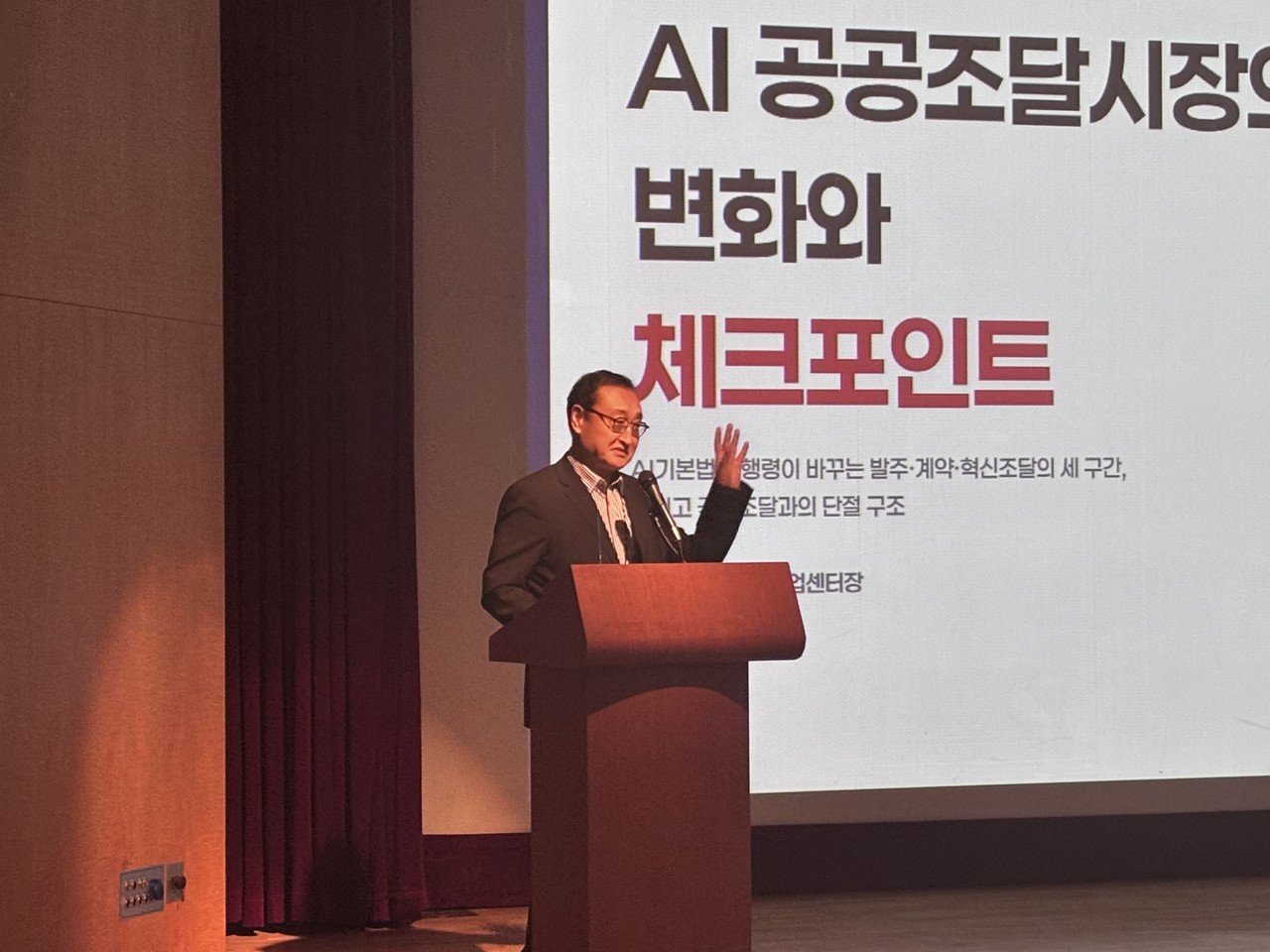
KMAC, Law Firm Lin, and SelectStar Hold Joint Seminar... Unveiling a "Reliability Measurement Pipeline"

AI
Oxford English Dictionary and BabelNet Experts Participate, Sharing Research Results on Dictionaries and Corpora; First Unveiling of the “Urimal Eohwi Yeoksa Dictionary” and Discussion on the Direction of Expanding AI Knowledge Resources
AI TIMES ·
According to AI TIMES, a Gyeongnam delegation visited the Yangtze AI Robot Valley in Shanghai, China, on Sept. 17 and conducted an on-site review for the creation of a "manufacturing AI demonstration and diffusion hub." The delegation visited AGIBOT, a humanoid company that has grown rapidly in just 3 years since its founding, and examined a production system that operates robots and AI models together, as well as examples of their application on manufacturing sites. The visit focused on how the ecosystem of a world-class robot industry cluster takes shape and how technology is introduced into actual processes. Gyeongnam Province said it plans to flesh out practical measures to spread AI transformation across manufacturing in the province based on the visit. It also reiterated its vision of creating an evidence-based hub by combining on-site data with its existing manufacturing base in aerospace, defense, and nuclear power. On the same day, the delegation also carried out a tourism cooperation schedule, broadening ties with China in both industrial and consumer areas.
Perspective
The significance of this schedule lies not simply in inspection, but in finding a local execution model for how AI and robots can be embedded in manufacturing sites. As the technology race shifts from R&D to application speed and ecosystem completeness, if Gyeongnam connects its strong manufacturing base with a demonstration hub, the region could have a greater chance to take the lead in industrial transformation. In the end, the key question is whether the results of the visit will stay at the level of declarations or be turned into a structure that local companies can actually test and scale.
This perspective is BizCrush's own commentary and is not part of the reporting by AI TIMES.
This article was produced with the help of an automated content generation algorithm.

AI
Joint Infrastructure for Small and Midsize Defense Companies... Cooperation on Institutions, Security, and Demonstration
AI TIMES ·
According to AI TIMES, Nokia and MS said on September 17 that they will jointly build an integrated data foundation that allows telecom operators to use network data within minutes, accelerating the shift to AI agent-centric autonomous networks. The plan is to significantly reduce the data integration and preparation process, which previously took weeks, and expand AI-based automation to root-cause analysis of outages, predictive maintenance, and closed-loop operations. At the center of the partnership is the effort to combine telecom-specific data products with an integrated data and analytics platform to unify fragmented data environments. Based on this, the system is designed to increase network autonomy even in multi-vendor environments and in on-premises, cloud, and hybrid environments. They also said AI would function as a copilot to assist operations rather than replace engineers, with the scope of automation expanded step by step under human supervision. Initial use cases include voice service quality assurance, location-based experience analysis, and fault management, and the key question is whether real-world deployment will expand further.
Perspective
This partnership is significant in that telecom companies' use of AI is moving beyond the experimental stage toward reworking the operating model itself. In particular, the approach of reducing data preparation time and increasing autonomy while keeping human supervision in place reflects a trend that weighs responsibility and deployability alongside performance gains. Ultimately, the focus of competition is also likely to shift from demonstrations of individual features to how stably automation can run in complex operating environments.
This perspective is BizCrush's own commentary and is not part of the reporting by AI TIMES.
This article was produced with the help of an automated content generation algorithm.