Policy
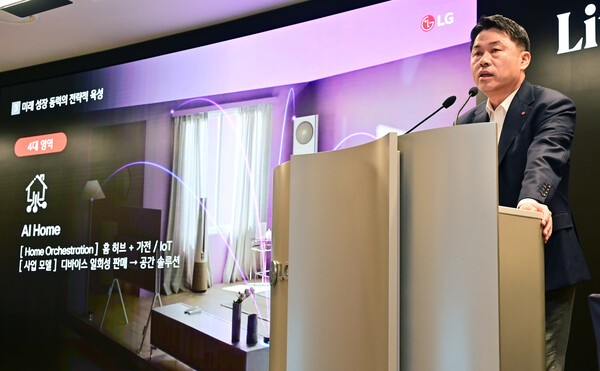
LG Electronics Enhances Corporate Value Through Transparent IR, Wins Best IRO Award
Park Won-jae Wins Best IRO Award at the "2026 Korea IR Awards"; Shareholder Return Policies and Corporate Value Enhancement Efforts Continue
Policy
Park Won-jae Wins Best IRO Award at the "2026 Korea IR Awards"; Shareholder Return Policies and Corporate Value Enhancement Efforts Continue
Policy
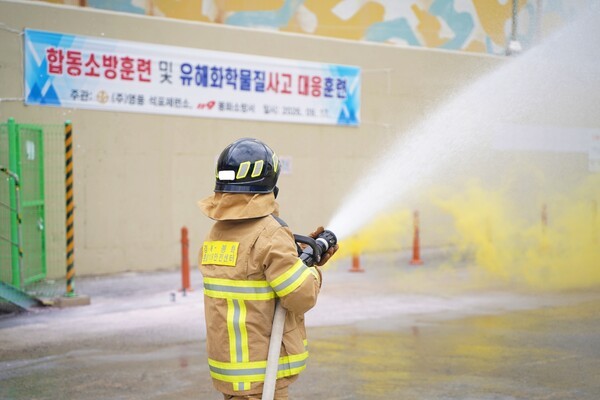
More Than 50 People Join Practical Drill From Initial Fire Suppression to Sulfuric Acid Leak Response and Neutralization; Fire Pump Truck and Specialized Truck Deployed to Strengthen Response Capabilities to Prevent Loss of Life, Property Damage, and Spillover to Surrounding Areas
AI TIMES ·
According to AI TIMES, NIA and the Ministry of the Interior and Safety reviewed third-quarter progress on 30 key tasks for realizing an AI democracy government on September 17 and discussed government-wide support measures for public AX. At the meeting, the lead agency for each task shared implementation status and future plans, checking how the task-by-task management system is working at the actual execution stage. The discussion covered not only central government projects but also local government cases, broadening the scope of on-the-ground application and highlighting initial results that the public can feel in daily life. It also confirmed a direction of identifying more cases with strong public touchpoints in the second half of the year to show results. NIA and the Ministry of the Interior and Safety plan to further refine support measures based on field feedback and strengthen support functions that help public-sector AI adoption. In the fourth quarter, they plan to expand overall implementation reviews as well as public outreach centered on high-quality tasks with strong public impact.
Perspective
The significance of this discussion is that public-sector AI is moving beyond declarations and individual pilot projects into an execution phase equipped with quarterly reviews and support systems. In particular, managing central and local governments together and emphasizing public-facing results signals that competitiveness will be judged by actual administrative change and service quality rather than the speed of technology adoption. Going forward, success will likely hinge less on how many tasks are launched and more on whether a support structure can be built that can be applied repeatedly in the field.
This perspective is BizCrush's own commentary and is not part of the reporting by AI TIMES.
This article was produced with the help of an automated content generation algorithm.

Policy
First Working-Level Meeting Held... Cooperation on Establishing the Korea Broadcast Media and Communications Promotion Agency
AI TIMES ·
According to AI TIMES, the Ministry of SMEs and Startups began operating the Gyeongnam Manufacturing AI Center on September 17 and will open its infrastructure free of charge to companies in the province through this year. Based on 40 high-performance GPUs and other resources, the center will help local small and medium-sized manufacturers jointly use the resources needed for AI model development and proof-of-concept testing. The key point of this opening is that it is the first public hub to support on-site manufacturing-focused AI transition tailored to industrial demand in the Gyeongnam region. It will also connect business-site challenges with AI technologies and expand application areas such as quality control and process optimization. The government, local governments, and support organizations plan to use the space to spread proven use cases across the region's core industries. For manufacturers that had delayed adoption because of cost and infrastructure barriers, it is expected to lower the threshold for testing and implementation.
Perspective
This launch of the center shows that AI transition in local manufacturing is shifting away from being left solely to the investment capacity of individual companies and toward a shared infrastructure and proof-of-concept-centered system. In particular, the free access and shared-use structure are likely to reduce the burden at the early stage of adoption and pull demand from mere technical review into actual implementation. In the end, the important change is not simply owning equipment, but having a foundation that can connect on-site challenges with technology for practical use, and that could become a factor determining the pace of manufacturing AI diffusion at the regional level.
This perspective is BizCrush's own commentary and is not part of the reporting by AI TIMES.
This article was produced with the help of an automated content generation algorithm.

Policy
ADIO Support for Korean Companies and Investors as a Strategic Partner
Policy
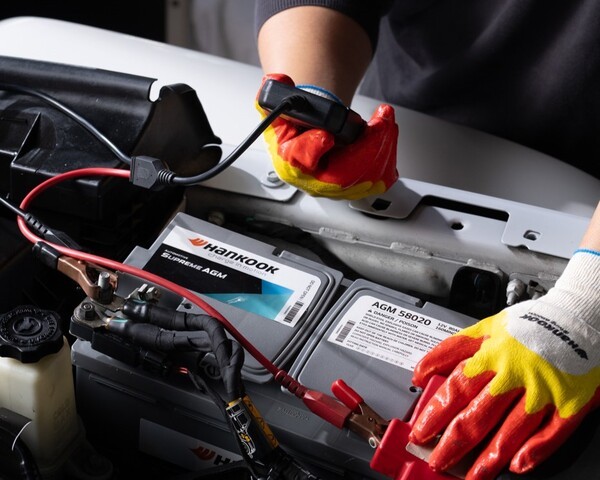
Hankook & Company provided guidance on how to check and maintain vehicle batteries ahead of long-distance Chuseok holiday travel. It said th…
Policy
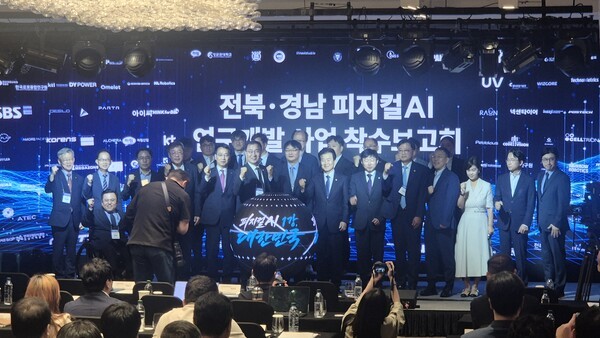
Jeonbuk to Build Full-Cycle Manufacturing R&D, South Gyeongsang to Create SW Platform and Demonstration Complex, Autonomous Equipment and Robot Control to Be Demonstrated by 2030

Policy
From Making Songpyeon and Jeon to Playing Yutnori, Social Contribution Continues Since 2014

Policy
'ThanksFULL Day' to Thank On-Site Employees’ Dedication; 5-Year KRW 1.4 Trillion Support Plan Also Underway, With Family Participation Programs Prepared

Policy
University Newspaper Article Contest Teams to Run Life-Respect Feature Stories in Each University Newspaper
Policy
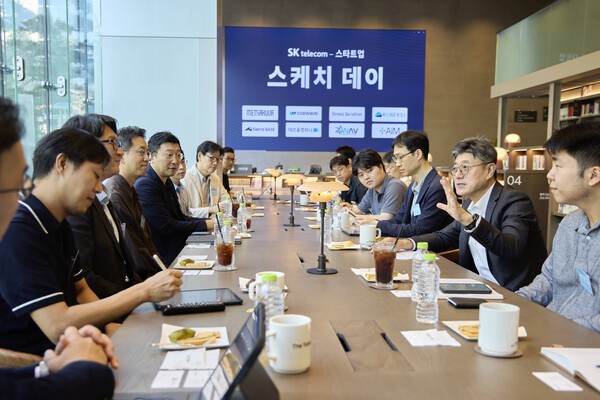
CEO Jeong Jae-heon Shares On-the-Ground Challenges and Ways to Strengthen Cooperation With 8 Startup CEOs

Policy
Shin Gi-yeon gave a 90-minute lecture on teen essay and speech education for teenagers and parents at an essay academy in Guri on the 15th.…

Policy
Gyeonggi and Incheon Broadcaster OBS Can Be Watched Nationwide via IPTV

Policy
False Information Spreads Online and Through Messenger Services About an Additional 25% Discount on Mobile Phone Bills
AI TIMES ·
According to AI TIMES, the Ministry of the Interior and Safety said on September 15 that it will fully promote 4 AI projects to be used for wildfire evacuations, CCTV monitoring, elderly safety, and the prevention of repeated complaints. The project focuses on linking risks and inconveniences to advance prediction and on-site response rather than post hoc handling. In wildfire response, it will develop a system that reads both spread and smoke-flow patterns to help residents evacuate and guide firefighting routes. CCTV monitoring will be upgraded so disaster signs can be detected faster, while elderly safety will support joint responses by examining abnormal signs and movement routes together. In the area of repeated complaints, the plan is to analyze in advance the likelihood of occurrences by region and season so inspections and measures can be brought forward. The government sees these services as a test bed for preemptive administration that can reduce disaster damage and lower repeated inconvenience in daily life.
Perspective
This push shows that competition in public-sector AI is shifting away from the technology deployment itself and toward how smoothly predictive results can be linked to real-world action. If a approach to addressing risks and inconvenience in advance takes hold, administration could move beyond a race for speed in complaint handling or incident response and toward an operating system that finds problems first and intervenes. Ultimately, it highlights that success depends on making sure field organizations trust these signals and can act on them immediately.
This perspective is BizCrush's own commentary and is not part of the reporting by AI TIMES.
This article was produced with the help of an automated content generation algorithm.
AI TIMES ·
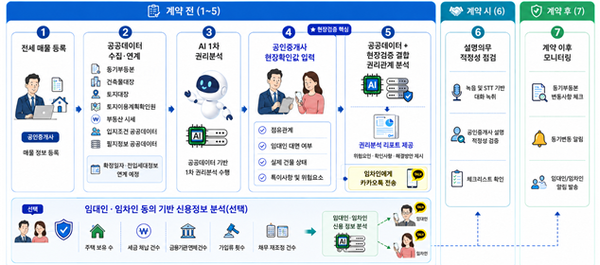
According to AI TIMES, Gyeonggi Province unveiled the "Gyeonggi Safe Real Estate" portal on September 15, a service that lets users review potential risks before signing a jeonse contract, and also established an operating cooperation system with 6 related organizations. The service will run as a pilot until December and is scheduled to move into full operation in 2027. When tenants enter an address, a deposit amount, and other information, AI gathers data such as registration records, market prices, and senior lien relationships and displays a pre-contract rights analysis report. However, the province said AI does not replace responsibility, and that licensed real estate agents explain the findings by checking on-site occupancy conditions, landlord information, and the state of the building. Another notable feature is that even if tenants were unable to use the service in advance, agents can issue the report on site and guide them through risk factors and response measures. Gyeonggi Province plans to refine convenience and analysis functions during the pilot operation and later expand the scope to monthly rent and sales by broadening links to administrative data.
Perspective
This initiative is meaningful in that it attempts to institutionalize technology by separating the role of collecting and displaying scattered information in advance from the role of verifying it responsibly on site, positioning AI as a complement rather than a replacement for experts. In a market where concerns about jeonse fraud and information asymmetry are high, standardizing pre-transaction verification procedures could also change the explanatory responsibilities of brokers and the way users make decisions.
This perspective is BizCrush's own commentary and is not part of the reporting by AI TIMES.
This article was produced with the help of an automated content generation algorithm.
Policy
Supports Everything From Pre-Contract Rights Analysis to Registry Change Monitoring... Pilot Operation in October
Policy
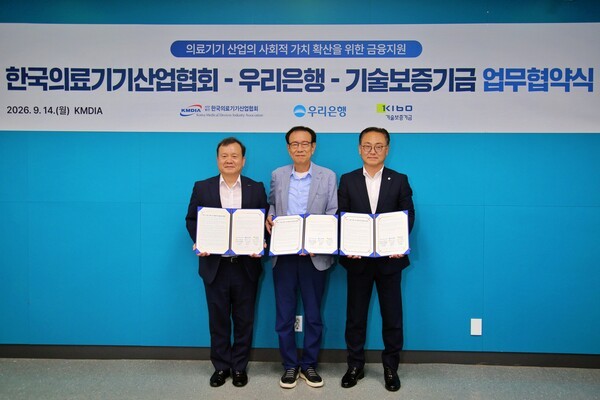
Woori Bank Signs Three-Way Agreement With Korea Medical Devices Industry Association and Korea Technology Finance Corporation, Building a Customized Financial Support System
Policy
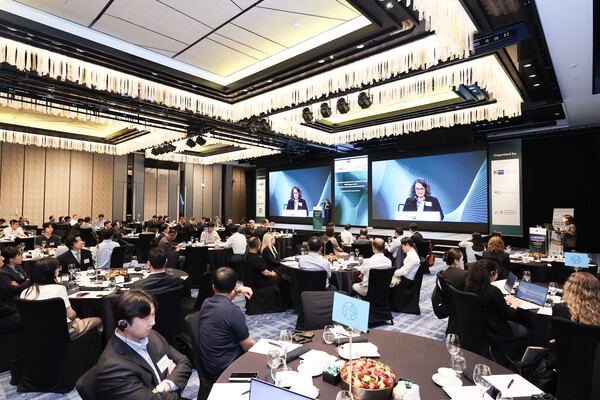
Discussion on Cooperation to Expand Offshore Wind and Repower Onshore Wind