Samsung Holds Second-Half GSAT, Moves to Secure Talent in Semiconductors, AI, and Biotech
TECHWORLD ·
✦ AI Summary
Samsung began the application process for its 2026 second-half open recruitment for new employees with application submissions in September.
The Samsung Aptitude Test (GSAT) was conducted online over two days on the 24th and 25th, with 19 affiliates participating, including Samsung Electronics.
Samsung plans to make final selections after interviews and medical checkups in November, and for job categories, SW applicants will take a separate SW skills test, while design applicants will undergo portfolio reviews.
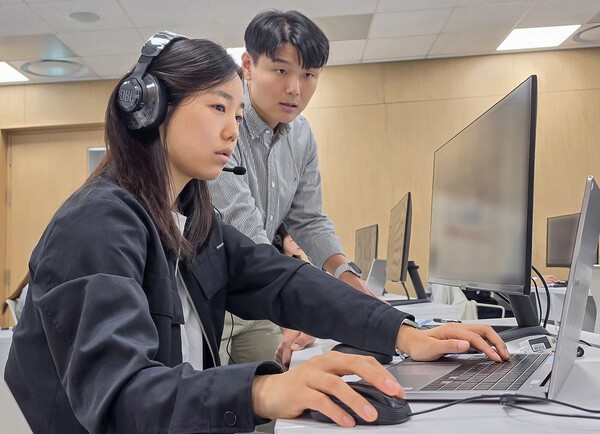
Samsung said on the 25th that it began the application process for its 2026 second-half open recruitment for new employees with application submissions in September and conducted the Samsung Aptitude Test (GSAT) over two days on the 24th and 25th as part of that process. GSAT stands for Global Samsung Aptitude Test and was administered to job applicants.
A total of 19 affiliates participated in this second-half GSAT: Samsung Electronics, Samsung C&T, Samsung Biologics, Samsung Bioepis, Samsung Life Insurance, Samsung Display, Samsung SDI, Samsung Electro-Mechanics, Samsung SDS, Samsung Fire & Marine Insurance, Samsung Card, Samsung Securities, Samsung Heavy Industries, Samsung E&A, Hotel Shilla, Cheil Worldwide, S-1, Samsung Medical Center, and Samsung Welstory.
GSAT is a hiring process designed to assess applicants’ comprehensive reasoning skills and flexible problem-solving abilities. Samsung said its hiring policy is to secure key talent for future growth businesses such as semiconductors, artificial intelligence (AI), and biopharmaceuticals, while continuing to create jobs for young people.
For Samsung’s 2026 second-half open recruitment, new hires will be selected in the final stage after interviews and medical checkups in November following GSAT.
Samsung has been conducting GSAT online since 2020, when the COVID-19 pandemic began. As a result, applicants can take the test on a PC in an independent location.
To ensure the exam proceeded smoothly, Samsung held a preliminary briefing over two days on the 17th and 18th. At the briefing, it checked related infrastructure such as the PC environment, testing system, and network.
Evaluation methods differ by job category. Applicants for software (SW) positions take a separate SW skills test instead of GSAT, and Samsung held an offline computer-based test (CBT) for SW applicants on the 11th at Samsung Electronics’ Suwon campus and Samsung SDS’s Jamsil office building. Design positions are filled through portfolio reviews.
This hiring approach is tied to efforts to secure talent needed to foster future growth businesses such as semiconductors, AI, and biopharmaceuticals. Samsung is continuing to expand domestic investment and is also steadily increasing youth hiring to support the development of these future growth businesses.
In September last year, Samsung announced plans to hire 60,000 new employees over the next five years. The expansion focuses on advanced industries such as semiconductors and key component businesses, biopharmaceuticals, and AI. Samsung linked this to securing future growth engines and strengthening the competitiveness of domestic industries.
Under this stance, Samsung said it plans to carry out domestic investment and talent acquisition in parallel. It also aims to build a virtuous cycle in which corporate growth leads to quality jobs for young people. Samsung Electronics Chairman Lee Jae-yong said at a meeting with economic groups and business leaders in August last year that the company would continue creating quality jobs in Korea and keep investing in industries with high added value.
Samsung introduced Korea’s first open recruitment system for new employees in 1957. Since then, Samsung has continued to hold regular open recruitment drives. It remains the only one among the country’s four major conglomerates to maintain a regular recruitment system.
Samsung conducts hiring in both the first and second halves of each year. These recruitment rounds provide regular employment opportunities for young people.
Samsung maintained its hiring policy by continuing open recruitment during the oil shock in the 1970s and during the financial crisis in the 2000s. It has also continued hiring skilled technical workers.
Through institutional reforms, Samsung has pushed ahead with an open hiring culture aimed at reducing customary discrimination based on gender and educational background. In 1993, it created open recruitment for female college graduates, and in 1995 it removed educational background requirements from eligibility criteria.
On the organizational culture front, Samsung has promoted a flatter workplace by consolidating job grades and has abolished required tenure by rank. It is also continuing to innovate its personnel systems, including by improving its evaluation system.
Alongside these hiring efforts, Samsung also operates professional skills education programs for young people needed in the AI era. Samsung Youth SW·AI Academy (SSAFY) is a program for unemployed young people and provides free training in software and AI.
Samsung is strengthening SSAFY’s AI education, and SSAFY operates five campuses nationwide. The campuses are located in Seoul, Daejeon, Gwangju, Gumi, and Busan.
To respond to rising demand for AI talent in industry, Samsung completely revamped SSAFY’s curriculum around AI in June last year. SSAFY’s 13th cohort began in January last year, and from the 13th cohort onward the program expanded eligibility to include Meister high school graduates and expected graduates. The move was intended to expand educational opportunities and help non-college young people build professional AI and SW capabilities.
SSAFY began its first training cohort in December 2018. By the 13th cohort, SSAFY had produced more than 11,000 graduates in total, and cumulative employment reached more than 9,400, according to the company. The employment rate stands at about 85%.
Samsung has also continued to foster and hire skilled technical workers. Since 2007, Samsung has sponsored the International Skills Olympics and has also continued special hiring for prizewinners in the National Skills Competition. From 2007 to 2025, Samsung affiliates including Samsung Electronics, Samsung Electro-Mechanics, and Samsung Display specially hired more than 1,600 prizewinners from the National Skills Competition.
Samsung said it plans to continue securing outstanding talent in a wide range of fields through regular open recruitment, job-specific tailored hiring, and youth education programs. Through these efforts, it aims to contribute to strengthening the competitiveness of Korea’s advanced industries and to creating jobs for young people as well.
Source: TECHWORLD · Park Gyu-chan
Original: https://www.epnc.co.kr/news/articleView.html?idxno=408714
References
This article was produced with the help of an automated content generation algorithm.
Source: TECHWORLD
View originalThis article was summarized and organized by BizCrush based on the original article from TECHWORLD. For exact quotations and full details, please refer to the original article.