Samsung Foundry’s Global Share Falls to 6.4% as It Seeks a Rebound With 4nm and 2nm
IT DAILY · · 2 views
✦ AI Summary
Samsung Electronics improved its foundry business performance by expanding sales of logic semiconductors for HBM and advanced-process products.
According to Counterpoint Research, Samsung Electronics’ estimated foundry revenue rose 6% from the previous quarter, but its share of the global pure-play foundry market fell from 6.9% to 6.4%.
Samsung Electronics plans to push ahead with expanding investment in production facilities at home and abroad, backed by rising sales of 4nm HBM base dies and expanding 2nm orders.
BizCrushWant to follow Korean talks and live streams in real time?Try CapCrush on the web
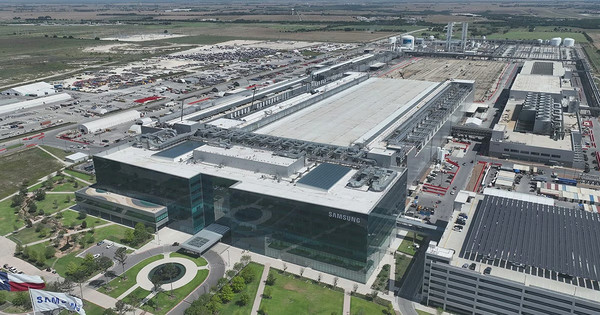
A view of Samsung Electronics’ Taylor foundry plant in Texas. The photo is provided by Samsung Electronics.
According to data released on the 25th local time by Counterpoint Research for the third quarter of this year, Samsung Electronics improved its foundry business performance by expanding sales of logic semiconductors for HBM and advanced-process products. Samsung Electronics’ estimated foundry revenue rose 6% from the previous quarter.
However, while market growth accelerated on strong demand for AI semiconductors, Samsung Electronics’ growth pace lagged the global market. As a result, its share of the global pure-play foundry market fell from 6.9% to 6.4%, though Samsung Electronics maintained its No. 2 ranking in the industry. To meet customer demand, Samsung Electronics plans to push ahead with expanding revenue centered on 4nm, expanding revenue centered on 2nm, and increasing investment in production facilities at home and abroad.
Revenue in the global pure-play foundry market rose 13% from the previous quarter and 36% from a year earlier. This is believed to reflect demand for leading-edge processes for AI semiconductors outpacing supply, demand for advanced packaging also outpacing supply, and wafer price increases driving market growth. The market expanded around AI semiconductors.
Amid this trend, TSMC retained the No. 1 spot in the market. TSMC’s revenue rose 16% from the previous quarter, and its market share climbed from 73% to 75%, supported by expanded 2nm production, full utilization of its 3nm process, and expanded 'CoWoS' capacity. TSMC’s market share rose from 63% in the first quarter of 2024 to 75% in the third quarter of this year. SMIC took third place in the market and posted its highest-ever quarterly revenue, benefiting from stronger domestic demand and incoming overseas orders.
In a period of market expansion, leading-edge process capacity and advanced packaging capacity emerged as factors differentiating companies’ growth rates. As a result, differences in capacity for leading-edge processes and advanced packaging translated into changes in market share and differences in growth pace among companies. Samsung Electronics’ share fell from 11% to 6.4%.
Counterpoint Research calculates market share based on revenue. Its tally of Samsung Electronics’ share includes in-house logic semiconductor manufacturing services.
A rise in demand for HBM lies behind the improvement in Samsung Electronics’ foundry performance. The effect of the HBM generation shift extended not only to the memory division but also to revenue growth in the foundry division.
A Samsung Electronics official said on the 26th that third-quarter foundry performance improved significantly. The official explained that the background was an increase in sales of 4nm HBM base dies and expanded sales of advanced-process products to global clients.
A base die is located beneath HBM. The base die controls data transfer between stacked DRAM and external semiconductors, and has the characteristics of a logic semiconductor. Samsung Electronics is applying a 4nm process to the HBM4 base die. HBM4 is the sixth generation of HBM.
According to a report by DS Investment & Securities published on October 29, Samsung Electronics’ third-quarter HBM4 revenue more than tripled from the previous quarter. HBM4 accounted for about 60% of Samsung Electronics’ total HBM revenue. Samsung Electronics’ leading-edge processes at 8nm and below were running at maximum capacity.
DS Investment & Securities analyzed that demand for HBM base dies contributed to the improvement in foundry performance. It also said that expanding contracts with new 2nm customers contributed to the improvement in foundry performance.
DS Investment & Securities estimated Samsung Electronics’ combined operating loss in System LSI and foundry at KRW 2.849 trillion in the second quarter and KRW 1.982 trillion in the third quarter. It therefore viewed the combined operating loss in the third quarter as having fallen by about 30% from the second quarter. The firm projected combined operating profit of KRW 445 billion in the third quarter of next year and expected a quarterly return to profit in the third quarter of next year.
Current revenue growth is being underpinned by 4nm HBM base dies. The key to future business expansion is 2nm.
Samsung Electronics is expanding 2nm orders centered on HPC customers, including large hyperscalers. It expects 2nm order volume this year to more than double from a year earlier.
Samsung Electronics expects HPC revenue to account for more than 50% of its foundry business next year. A Samsung Electronics official said growth centered on advanced 4nm and 2nm processes is expected in 2027 amid robust AI demand.
As production capacity expansion is failing to keep pace with the increase in demand for leading-edge processes, securing capacity has emerged as a challenge. This is a task aimed at responding to demand for leading-edge processes, and Samsung Electronics said in its third-quarter earnings release that its pace of expanding leading-edge processes is falling short of demand growth.
Accordingly, Samsung Electronics said it plans to expand investment in new semiconductor fabrication plants, or fabs, at home and abroad to respond in a timely manner to 2nm customer demand. It is also pushing ahead with securing advanced packaging capacity.
At the Taylor plant in Texas, preparations for mass production are under way. A Samsung Electronics official said the company has begun operating the clean room in Plant 1 and bringing in equipment, while also moving forward with wafer starts for line construction and dispatching headquarters specialists, adding that everything is proceeding normally on schedule.
TSMC is also pushing ahead with securing new production facilities in Texas. According to a Reuters report on the 24th local time, TSMC’s U.S. unit submitted an application for tax incentives to build a semiconductor production facility in Brazoria County, with an investment size of about $22.6 billion. The facility is planned to apply processes at 2nm and below, and its production targets include semiconductors for AI, HPC, and smartphones.
Counterpoint Research cited rising wafer ASPs and expanded advanced packaging capacity as key factors, and forecast that high utilization at major foundry companies will continue from the fourth quarter of this year through next year. To expand orders for advanced processes, improving the yield of the 2nm process, 'SF2,' was identified as a key task for Samsung Electronics.
Source: IT DAILY · Kim Byeong-ju
Original: https://www.itdaily.kr/news/articleView.html?idxno=243242
References
This article was produced with the help of an automated content generation algorithm.
Source: IT DAILY
View originalThis article was summarized and organized by BizCrush based on the original article from IT DAILY. For exact quotations and full details, please refer to the original article.
Keep reading
BizCrush