“AI Is Not the Only New Growth Engine”: LGU+ Expands Into Security and EV Charging
IT DAILY ·
✦ AI Summary
LG Uplus is broadening its business portfolio into security and EV charging.
In security, it acquired Fargo Networks and is expanding security and network services for corporate customers through collaboration with Moniterlab and the launch of U+SASE.
In EV charging, revenue and the number of chargers in operation at LG Uplus VoltUp are increasing, but improving profitability remains a challenge.
BizCrushWant to follow Korean talks and live streams in real time?Try CapCrush on the web
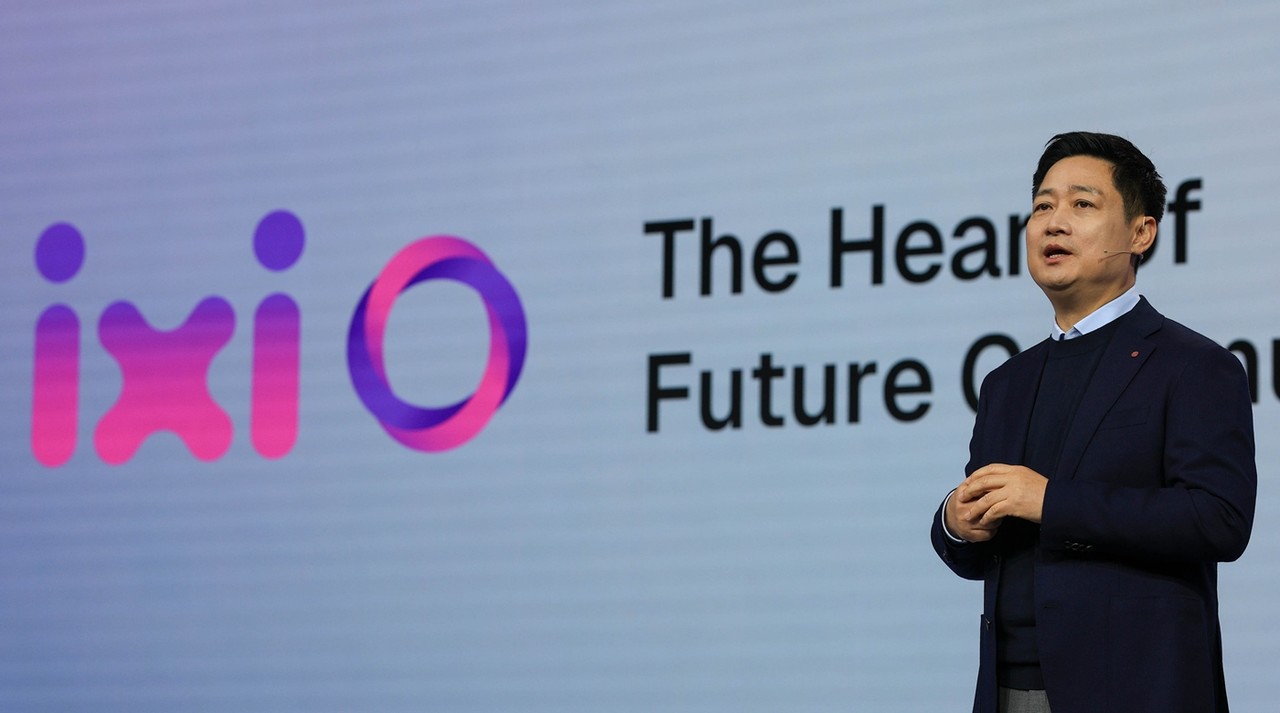
LG Uplus is broadening its business portfolio beyond AI and AIDC to include security and EV charging. The photo shows LG Uplus CEO Hong Bum-sik delivering the keynote speech on the opening day of MWC 2026.
In security, LG Uplus acquired Fargo Networks about 7 years after its purchase of LG HelloVision. Backed by partnerships with outside companies, LG Uplus is expanding security and network services for corporate customers. In EV charging, LG Uplus VoltUp posted an operating loss last year amid stagnating EV demand, but this year revenue at LG Uplus VoltUp is increasing and its business base is also expanding.
The common approach in the security and EV charging businesses is to combine telecom network operating experience with the technology and platform capabilities of outside companies. Through this, LG Uplus aims to secure a growth base that can support its core telecom business.
LG Uplus acquired a 66.67% stake in Fargo Networks for KRW 14 billion. Fargo Networks provides cybersecurity and managed detection and response, or MDR, services. MDR is a threat detection, analysis and response service based on continuous monitoring by specialized personnel.
LG Uplus plans to use the threat intelligence and response experience accumulated through MDR operations. The goal is to improve its companywide security system and strengthen security services for corporate customers.
This direction aligns with the 'Secure AI' strategy LG Uplus previously unveiled at 'MWC 2026.' The core of the 'Secure AI' strategy is to strengthen security capabilities across AI services, data and infrastructure.
In LG Uplus's Information Protection White Paper, published in July this year, the company said it expanded its security monitoring scope more than 10-fold last year based on the security operations center it established in 2024. It also provided remote security monitoring services to its subsidiary LG HelloVision, thereby expanding its centralized monitoring system.
LG Uplus is reviewing the internalization of its subsidiary security monitoring system. At the same time, it is also reviewing a plan to establish a security monitoring response process that operates 24 hours a day, 365 days a year. The goal is to create an integrated security environment based on a remote monitoring setup.
The direction of the integrated security environment is focused on advancing event detection, analysis and response capabilities. LG Uplus is reviewing a plan to extend its security monitoring system to subsidiaries and establish an operating structure capable of constant response.
This trend has expanded through collaboration with security specialists and product launches. On the 16th, LG Uplus partnered with Moniterlab. It also officially launched Uplus SASE, a cloud-based integrated network and security platform. SASE, or Secure Access Service Edge, is a cloud-integrated delivery model for network connectivity and security functions.
Behind this are the rise in remote and hybrid work and the spread of cloud and generative AI use. As a result, one of the security system challenges is said to be the need to expand the protection perimeter beyond internal infrastructure.
The SASE architecture sends work traffic generated in offices, at home or on business trips to a user-adjacent PoP to perform security checks, then connects it to internal work systems, the internet and SaaS according to security policy criteria. A feature of this structure is that it applies consistent security policies regardless of the user's location.
Global companies such as Cisco and Palo Alto Networks dominate SASE supply, while domestic provider Moniterlab is offering related services.
Within this SASE category, U+SASE is a service that manages network connectivity and security functions for a company's headquarters, branches, data centers, cloud environments, remote work and work-from-home settings on a single platform. The service provides features that block access to malicious websites, cloud firewalls and controls over access to work systems, and it also includes support functions for analyzing generative AI input data and prompts and preventing sensitive information from leaking outside the company.
An LG Uplus official said the company is a telecom operator that directly provides and operates enterprise networks. Based on this, the company presented its strength as managing a single operating system for network and security.
The official also said that while overseas vendors charge separately for traffic through SASE licenses, LG Uplus directly builds and provides PoPs at telecom IDC sites. In addition, the official said LG Uplus does not charge separately for traffic through.
The company added that its 24/7 integrated monitoring system reduces the complexity of separate management for customers' operators and solutions and speeds up root-cause analysis and response when outages or security threats occur.
Meanwhile, in EV charging, the company said LG Uplus VoltUp, the joint venture it established with Kakao Mobility in June 2024, is the main driver behind the expansion of its revenue base. The two companies contributed KRW 25 billion each, and they are pursuing greater charging service competitiveness by combining LG Uplus's telecom infrastructure operating experience with Kakao Mobility's platform capabilities. In the process, it said both operating scale and revenue per charger are increasing.
LG Uplus VoltUp is increasing its own facilities based on a strategy of selectively expanding sites in consideration of charging demand and operating efficiency, while also acquiring charging facilities from other operators and converting them to in-house facilities. It is also operating on the basis of the VoltUp 2.0 charging platform and is developing an AI-based function to detect abnormalities in chargers.
However, beyond the expansion in scale, the challenge of securing profitability remains. Last year, revenue rose 380.6% from the previous year to KRW 46,211,360,000, but the company posted an operating loss of KRW 26,778,230,000 last year. This was because stagnating EV demand last year, actual EV charging usage falling short of expectations last year, the burden of charger installation costs, fixed costs such as basic electricity charges and fixed costs such as site rental fees affected profitability.
This year, service revenue continues to grow. Service revenue in the third quarter was KRW 16 billion, up 129% from the same period last year and about 19.4% from KRW 13.4 billion in the previous quarter.
In EV charging, average revenue per charger, or ARPU, rose about 58.6% to KRW 124,800 in the third quarter from KRW 78,700 in the same period last year. The number of chargers in operation also increased about 34.3% over the same period, from 32,100 to 43,100. The company aims to expand the number of chargers to 50,000 by the end of the year.
However, scale growth alone is not enough, and a future challenge identified is turning revenue growth in the EV charging business into improved profitability. In security services, expanding the customer base and securing a stable revenue model were cited as challenges. The goal of the two businesses is to take root as complementary growth engines for the core telecom business, and to do so they must connect business expansion and operating scale with sustained profit generation.
Source: IT DAILY · Seong Won-young
Original: https://www.itdaily.kr/news/articleView.html?idxno=243094
References
This article was produced with the help of an automated content generation algorithm.
Source: IT DAILY
View originalThis article was summarized and organized by BizCrush based on the original article from IT DAILY. For exact quotations and full details, please refer to the original article.
Keep reading
BizCrush