SNU Unveils Physical AI That Starts by Changing the Sensor
AI TIMES ·
✦ AI Summary
According to AI TIMES, a Seoul National University research team said on Nov. 16 that it has developed a physical AI architecture that raise…
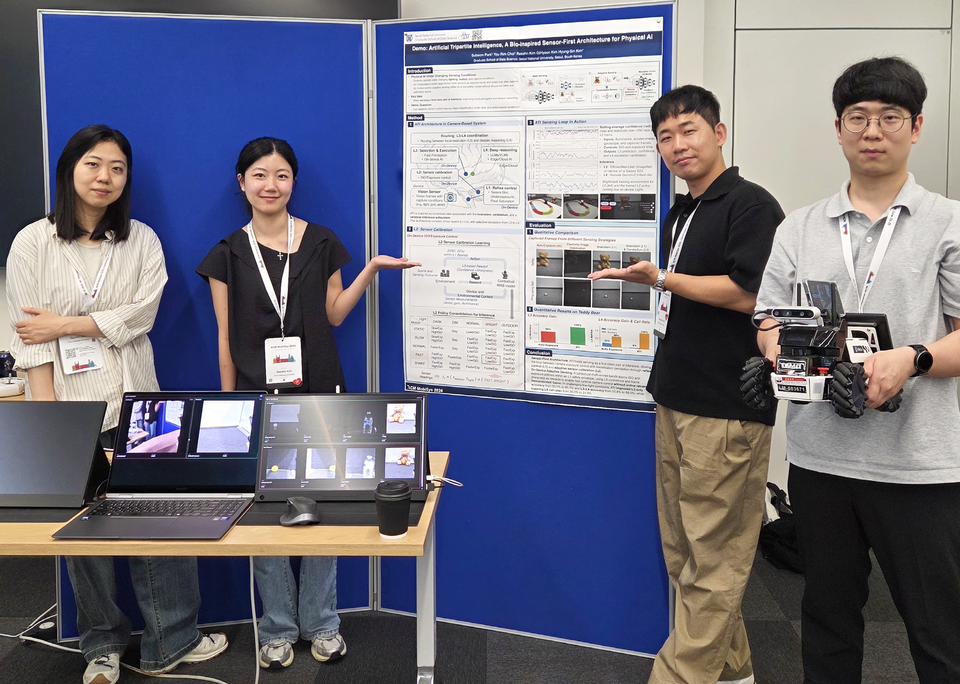
According to AI TIMES, a Seoul National University research team said on Nov. 16 that it has developed a physical AI architecture that raised the object-recognition accuracy of mobile cameras to 88% using an "artificial triune intelligence" model inspired by the human nervous system's division of functions. The architecture also cut remote AI calls by 43.3%, with its key feature being the linking of sensor control and on-device and remote inference into a single circular system. The team designed the system to divide the roles of the brain stem, cerebellum and cerebrum, protect sensor signals, automatically adjust them to shooting conditions and then balance on-device decisions with external high-performance inference. The approach stems from the view that conventional methods, which only correct data after input, cannot sufficiently recover information lost at the sensor stage. In experiments, the camera settings were actively adjusted so that image data favorable for recognition could be captured even in environments with changing light and movement. The team plans to expand the work to sensors beyond cameras and continue real-world testing on devices such as smart glasses and robots.
Perspective
The significance of this research is that the competitive axis of physical AI is shifting away from simply securing larger models and toward designing what inputs the system should accept in the first place. The results, which improved accuracy while reducing reliance on remote processing, mark an especially important change for devices that must make faster and more stable decisions within limited resources. In the end, the industry is likely to find that not inference performance alone, but the optimization of sensor control, on-device processing and remote collaboration together, will become the standard that determines product quality.
This perspective is BizCrush's own commentary and is not part of the reporting by AI TIMES.
This article was produced with the help of an automated content generation algorithm.
Source: AI TIMES
View originalThis article was summarized and organized by BizCrush based on the original article from AI TIMES. For exact quotations and full details, please refer to the original article.