Ibex Offers Mass-Production Fix for Industrial Physical AI: 'From PoC to On-Site Deployment'
TECHWORLD ·
✦ AI Summary
Ibex unveiled a technology strategy to connect AI proof-of-concept projects in manufacturing sites with actual mass-production deployment.
The strategy covers integrated sensing, recognition, mechanics, control, and operations, and is designed to continuously improve AI performance using on-site data.
The forum highlighted data shortages, equipment integration, and operating cost management as challenges for enterprise AI adoption and Physical AI commercialization.
BizCrushWant to follow Korean talks and live streams in real time?Try CapCrush on the web
Ibex unveiled a technology strategy to connect AI proof-of-concept projects in manufacturing plants with actual mass-production deployment. The strategy covers integrated sensing, recognition, mechanics, control, and operations, and calls for continuously improving AI performance using on-site data.
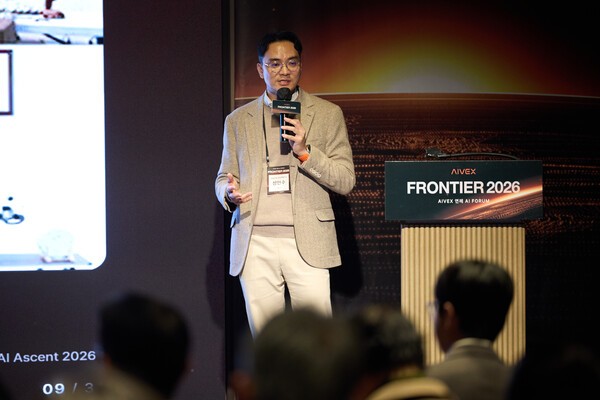
Against that backdrop, Ibex on the 11th held its first annual AI forum, 'AIVEX FRONTIER 2026,' at the Westin Seoul Parnas in Seoul. The event was co-hosted by Maeil Business Media, and the company said about 300 people from industry, academia, and the investment community attended.
The forum's theme was 'From Enterprise AI to Physical AI,' and it covered enterprise AI transformation strategies and ways to apply them in industrial settings. Speakers included experts from BCG, Palantir, Seoul National University, Upstage, LG Electronics, and Vessel AI.
Ibex CEO Sung Minsu delivered the keynote speech. He said the reason Physical AI in manufacturing sites has not moved from PoC to actual mass production lies in the fragmentation of technology and operating systems.
He pointed to a structure in which optics, AI models, mechanics, and control are handled by different companies. He said that in such a structure, responsibility becomes unclear when problems arise, which in turn delays responses.
As examples from mass-production processes, Sung cited image-quality degradation caused by camera protection devices, mechanical failures, and communication problems between equipment. He said that even if an AI model performs well, problems can arise in surrounding equipment and operating systems, and that such issues affect the entire production line.
As a solution, Ibex said it is pursuing a method in which it directly develops and integrates five technology layers. The five layers consist of sensing (L1), recognition (L2), mechanics (L3), control (L4), and learning and operations (L5).
The presentation also introduced a system for improving AI models using on-site data. It presented a method for inspecting thousands of varieties with a single model based on a vision foundation model applied to mass-production lines. The company said the amount of training data used in the process was reduced to one-36th of the previous level.
It then explained a structure in which data collected during inspection is selected, the AI model is retrained, and then redeployed to the production line. Through this, it proposed a 'Closed-loop' operating system that continuously advances the model by feeding data obtained from the mass-production line back into training.
The operating system is based on a connection between on-site equipment and training servers, and it was designed to continuously improve the model even as inspection targets and production environments change. Sung said that if optics, models, mechanics, control, and operations are separated, it becomes difficult to implement PoC performance in a mass-production environment.
Sung said Ibex has directly developed the five technology layers. He also said there must be a system in which one company takes responsibility to the end. This was presented as a condition for enabling that operating structure through integrated development of technical elements and a single accountability framework.
The forum then moved on to presentations on enterprise AI. Speakers argued that securing actual business results is more important than technology adoption itself, and pointed to gaps in enterprise AI performance. They also emphasized redesigning workflows and improving operational efficiency.
BCG Korea CEO Partner Kim Ji-hoon analyzed performance gaps stemming from differences in how companies use AI. Based on BCG's 'AI Utilization Index 2026' survey, he said differences in AI maturity are translating into actual differences in business outcomes. The survey was conducted among 1,330 senior executives at companies worldwide, and the share of companies classified as 'future-ready,' the highest level of AI maturity, came to 7.5%. The share of companies expanding AI use and generating results was 41%.
Kim Ji-hoon said it is difficult to secure a sufficient return on investment by simply adding AI tools to existing work. He said work itself needs to be redesigned around AI rather than merely adding AI on top of current workflows. He also said AI-centered workflow redesign is necessary.
Kim Ji-hoon also said organizational structures centered on AI need to be redesigned. He further said there is a need to build 'Enterprise IQ' that reflects a company's own knowledge and decision criteria. He said the key is whether AI can make judgments based on the company's own grammar.
Palantir Technologies Asia-Pacific (APAC) Commercial Head Min Se-hun said AI investment must be tied to business outcomes such as revenue growth, improved profitability, and cost reduction. He pointed out the limits of simple task automation and stressed the need to identify a company's core problems.
Min Se-hun explained that for AI investment to lead to tangible results, great effort must be devoted to redefining the problem to be solved. He also said leadership is the entity that determines how problems are solved, and that changes in decision-making methods and execution methods are needed accordingly.
As a supporting technology, he presented Ontology, which connects enterprise data, business logic, decision-making, and execution. He said Ontology is used by reusing the data and operating systems built in supply chain management for other tasks such as quality control, with the aim of expanding the scope of AI applications.
The discussion also included the issue of infrastructure build and operating costs as AI spreads across enterprises. Vessel AI CEO Ahn Jae-man described the AI factory, made up of data centers, GPU, power, and data utilization, and defined it as the production base for enterprise AI that provides AI model training and inference services.
Vessel AI is a Neocloud company that provides large-scale GPU cloud services for AI training and inference based on domestic data centers. Ahn defined the AI factory as an intelligence production base.
Ahn said demand for company-specific AI models and agent development is rising, and that securing computing resources and operating them efficiently are both important.
The Physical AI session that followed presented commercialization challenges. It identified exception handling in real-world environments and a lack of training data as major issues.
Seoul National University Professor Kim Geon-hee pointed to a shortage of training data as a major obstacle to Physical AI commercialization. He said autonomous vehicles and industrial robots must respond to various environmental changes such as weather, lighting, and the position of work objects. He added that it is difficult to secure data capable of covering every situation in real-world settings.
Professor Kim said data shortage is the biggest bottleneck for Physical AI, and that the shortage persists even if data collection is expanded. As a solution, he introduced the 'World Action Model (WAM).'
WAM combines a world model with a vision-language-action model (VLA). The world model handles predicting changes in the real world, while the VLA generates robot actions. The approach uses large-scale video to pretrain physical environments, and through this, robots can be trained with less task data than existing VLA methods, he explained.
Ibex AI Robotics Group Leader Park Ji-hoon said there is a gap between humanoid demonstration performance and the level required in actual manufacturing sites. He explained that even high-performance AI models developed at the research stage must meet task success rate, speed, quality, and operating cost requirements before they can be applied to production lines. Ibex presented 'hybrid control' as its approach, combining conventional robot teaching, vision-based control, and the vision-language-action model (VLA). Ibex said conventional control technologies can be used for processes such as picking up and moving parts, while AI is applied only to precision fastening tasks, reducing the time and cost required to secure training data.
Park said the goal of industrial robots is not to imitate humans, but to carry out needed tasks efficiently and stably. He also set a criterion for AI deployment, saying it should be limited to tasks that are difficult to solve with existing methods.
Ibex then introduced its integrated control platform, 'AIVot,' and its on-site data collection device, 'AMI.' 'AIVot' can link with equipment regardless of robot manufacturer, and it supports path simulation, obstacle avoidance, and vision-based control. The company said the data secured through 'AMI' will be used to develop industrial VLA models.
The discussion then turned to robot form factors and design directions. Dennis Hong, a professor in the Department of Mechanical and Aerospace Engineering at UCLA and director of the Robotics and Mechanisms Laboratory, said that in human-oriented environments, forms similar to people may be advantageous. However, he added that human-like appearance is not essential when considering structural complexity, energy efficiency, stability, and cost, and he argued that for robots, design suited to the task and environment is more important than appearance.
LG Electronics Vice President No Beom-jun, head of AI Home Solutions business development, introduced LG Electronics' strategy for using AI in living spaces and building operations. No said LG Electronics operates the AI home hub 'ThinQ ON,' the modular housing solution 'Smart Cottage,' and the enterprise platform 'ThinQ Pro.' He then presented a method in which LG Electronics links home appliances with space management services.
He said ThinQ Pro integrates and manages home appliances in residential facilities such as apartments and condos, while also supporting anomaly detection and maintenance work. LG Electronics plans to incorporate AI agents into this system. The goal of integrating AI agents is to expand the scope of automation in space operations.
No said that in smart homes, voice features and GPT alone provide limited perceived value. He said the company is focusing on giving time back to customers and reducing costs. At the forum, technological and operational challenges for enterprise AI adoption, business outcomes, and industrial deployment were presented.
The forum also noted that, as industrial AI spreads, securing data in addition to model performance, linking with existing equipment, and efficiently managing operating costs will be important conditions. Ibex was also introduced as having a closed-loop operating system that combines inspection, robots, and MLOps. At the same time, the company said it still needs to prove the stability and economic viability of its mass-production technology, and that demonstrating stability and economic viability in mass-production settings is also the key to Ibex's business expansion.
Source: TECHWORLD · Kim Seung-gi
Original: https://www.epnc.co.kr/news/articleView.html?idxno=409683
References
This article was produced with the help of an automated content generation algorithm.
Source: TECHWORLD
View originalThis article was summarized and organized by BizCrush based on the original article from TECHWORLD. For exact quotations and full details, please refer to the original article.
Keep reading
BizCrush