Intel Presents an Expansion Strategy From AI PC to Autonomous Factories
AI TIMES ·
✦ AI Summary
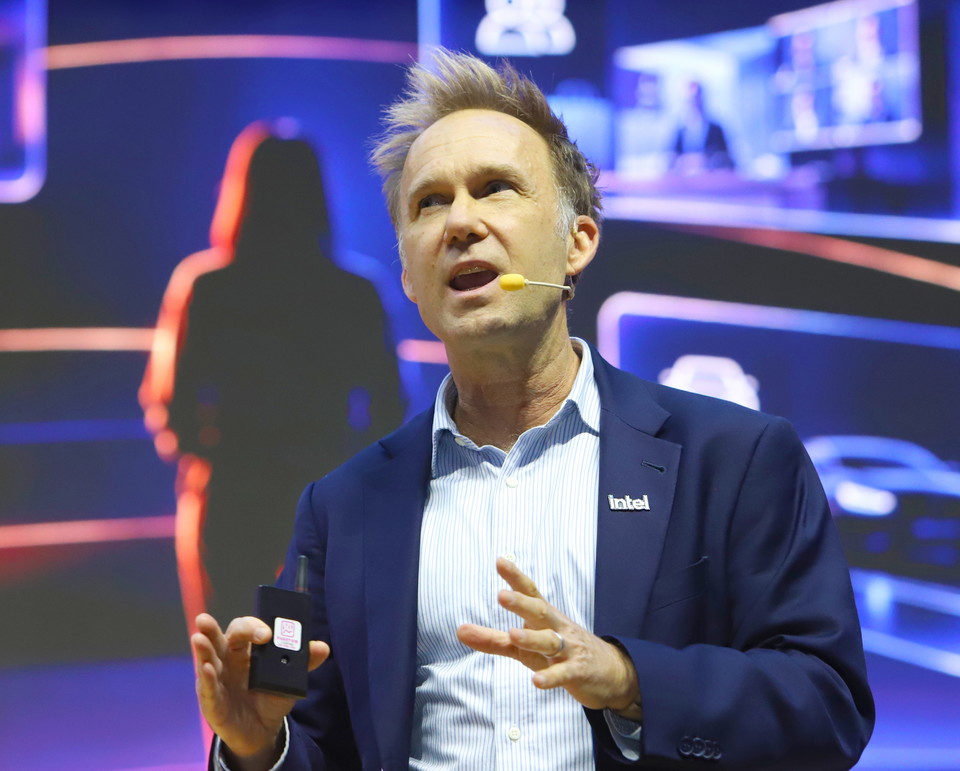
According to AI TIMES, Intel said at an event in Seoul on Nov. 12 that it has unveiled a strategy to evolve PCs from devices used by people…
According to AI TIMES, Intel said at an event in Seoul on Nov. 12 that it has unveiled a strategy to evolve PCs from devices used by people into platforms where AI agents directly carry out tasks, and to extend that approach to the edge and industrial sites. As the foundation for that effort, Intel said more than 300 PC designs based on Intel Core Ultra Series 3 have been introduced. Intel emphasized a structure that combines CPU, GPU, and NPU, and said it would promote a way of using both local and cloud resources together, while aiming to build a PC ecosystem suited to agent execution in personal work environments and to lead with physical AI in industrial settings. In particular, the company said the key is a direction that goes beyond simple recognition to understand situations and connect that understanding to action in places where real-time judgment and stability are critical, such as manufacturing and healthcare. As domestic collaboration examples, it introduced the development of reference architectures for medical devices and autonomous factories. However, the announcement placed more weight on a blueprint to secure a common platform and ecosystem connecting PCs and the edge than on showcasing finished results.
Perspective
The significance of this announcement is that the center of gravity in the AI competition is shifting from model performance itself to where AI runs and how it is attached to work and equipment. The direction of tying PCs and the edge into one flow lowers the boundary between consumer devices and industrial systems, and signals intensified competition not only in semiconductors but also in software and partner ecosystems. In the end, the market is increasingly likely to be shaped less by who built the stronger chip than by who can stably deploy agents and physical AI in real-world environments.
This perspective is BizCrush's own commentary and is not part of the reporting by AI TIMES.
This article was produced with the help of an automated content generation algorithm.
Source: AI TIMES
View originalThis article was summarized and organized by BizCrush based on the original article from AI TIMES. For exact quotations and full details, please refer to the original article.