IBM Sets Its Sights on 1,000 Qubits in 2027 on the Back of Speed Gains
AI TIMES ·
✦ AI Summary
According to AI TIMES, IBM said on the 11th that it plans to build a 1,040-qubit system in 2027, backed by performance that is up to 19 time…
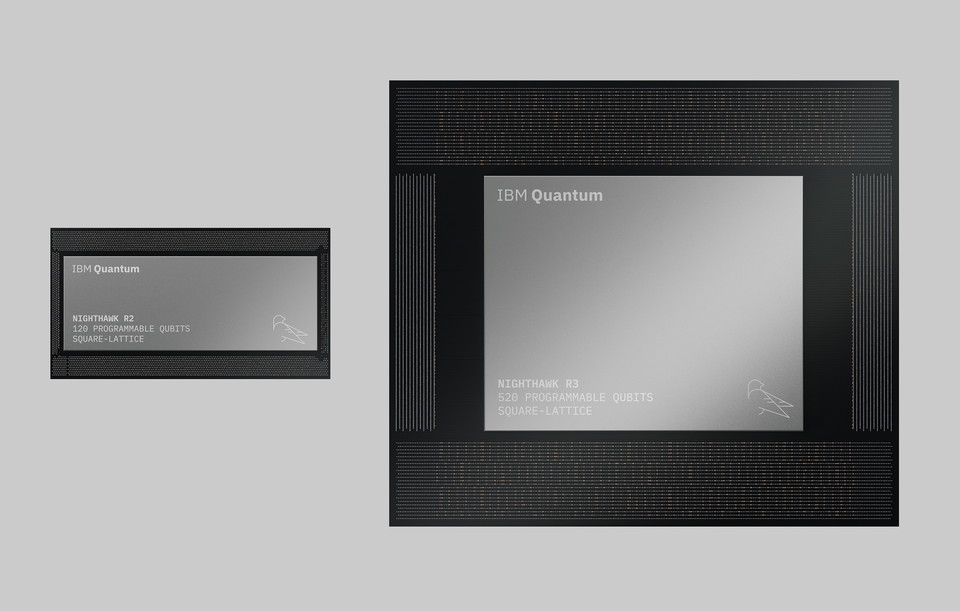
According to AI TIMES, IBM said on the 11th that it plans to build a 1,040-qubit system in 2027, backed by performance that is up to 19 times faster than its existing quantum processors. The focus of the announcement is not simply on increasing the number of qubits, but on improving computing speed, accuracy, and real-world industrial applicability at the same time. The company outlined a modular architecture that links multiple chips in its next-generation processors, detailing a path toward large-scale systems. On existing equipment, the company said it has validated an approach that cuts waiting time for repeated runs and enables faster acquisition of more samples, and it said some collaborative experiments also confirmed potential use cases. It also drew a line under the comparison, saying that this does not mean quantum computers outperform classical computing in every problem. Alongside hardware improvements, IBM is also working to refine the conditions for a practical transition by pairing its hardware with a platform that combines classical computing resources and with collaborations aimed at error correction.
Perspective
This announcement shows that the benchmark in quantum computing competition is shifting from the numbers alone to how fast and reliably systems can actually run. In particular, IBM's effort to combine speed improvements, modular scaling, and integration of classical resources points to a pivot from research demonstrations to real-world deployment. In the industry, claims about larger machines are likely to matter less than repeated-run efficiency, operational stability, and the degree of integration with existing computing as measures of maturity.
This perspective is BizCrush's own commentary and is not part of the reporting by AI TIMES.
This article was produced with the help of an automated content generation algorithm.
Source: AI TIMES
View originalThis article was summarized and organized by BizCrush based on the original article from AI TIMES. For exact quotations and full details, please refer to the original article.