Nvidia Says Global Collaboration Ecosystem Will Solve Physical AI Challenges
IT DAILY ·
✦ AI Summary
Nvidia is pushing to open-source foundation models to lower the barriers to computing infrastructure in physical AI and robotics.
Deepu Talla said that using pre-trained open models requires only an additional 10% to 20% of resources for fine-tuning.
Nvidia said it will measure the success of the open-model ecosystem by its collaborative structure and real-world deployment, while supporting safe training with digital twins and synthetic data.
BizCrushWant to follow Korean talks and live streams in real time?Try CapCrush on the web
Nvidia is pushing to address physical AI challenges through a global collaboration ecosystem. The company aims to lower barriers to entry for computing infrastructure in physical AI and robotics.
Nvidia's strategy is to accelerate the open-sourcing of foundation models. The move is intended to ease the computing infrastructure burden that weighs heavily on physical AI and robotics.
The goal is to reduce the enormous computing resources needed to build foundation models. Through this effort, Nvidia plans to help companies and researchers around the world implement industry-specific custom robot AI with just 10% to 20% of the computing resources.
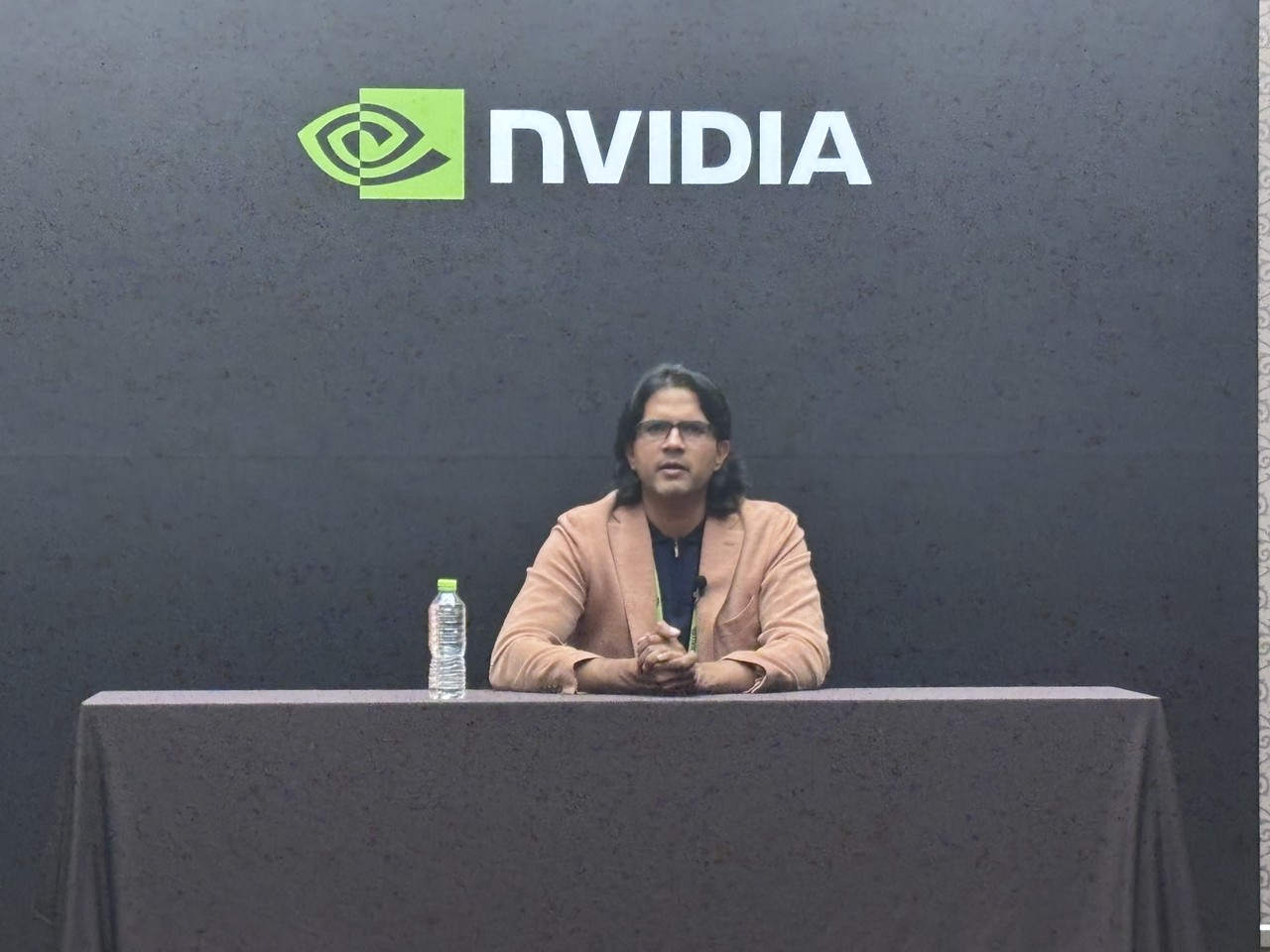
On the 9th, Nvidia held a physical AI media roundtable. At the event, the company explained its physical AI platform, "Cosmos," and the rationale behind offering open models.
Deepu Talla, Nvidia vice president of robotics and edge AI, who served as a presenter, said the key reason for open-sourcing physical AI models is the democratization of computing resources.
He explained that developing a foundation model for robotics independently requires massive computing infrastructure and high training costs, but using a pre-trained open model makes it possible to deploy it in the field. In that case, fine-tuning requires an additional 10% to 20% of resources.
One reason Nvidia adopted an open-model strategy is the high technical difficulty of physical AI. Robots operating in physical spaces must secure a high degree of accuracy and reliability, and the challenge of achieving both is considered difficult for a single company or research organization to solve on its own.
Vice President Deepu Talla said physical AI and robotics are difficult problems that no single company has fully solved. He added that a collaborative ecosystem involving global researchers and companies is needed, and that providing open models will help speed the discovery of the optimal solution.
Nvidia identified the depth of collaboration, in addition to download numbers, as a key indicator of whether the open-model ecosystem can expand successfully. The company said it will judge the ecosystem's performance not by usage alone, but by its collaborative structure and the level of real-world deployment.
The main metrics Nvidia presented were the participation rate in the "Cosmos Coalition," which shares data and pipelines, and the number of deployments in actual production environments.
As a response to physical risks and cost issues in the rollout process, Nvidia pointed to "digital twins" and "synthetic data." Testing real robots directly in actual factories and logistics centers carries a high risk of damage and safety accidents, and large-scale parallel testing is also impossible. By contrast, simulation environments can generate large volumes of synthetic data based on virtual assets and quickly improve model accuracy.
Deepu Talla said building digital twins of factories and warehouses makes it possible to train AI safely and economically without physical damage. He added that combining open models with simulation infrastructure will bring forward the commercialization of physical AI.
Source: IT DAILY · Kwon Yeong-seok
Original: https://www.itdaily.kr/news/articleView.html?idxno=242786
References
This article was produced with the help of an automated content generation algorithm.
Source: IT DAILY
View originalThis article was summarized and organized by BizCrush based on the original article from IT DAILY. For exact quotations and full details, please refer to the original article.
Keep reading
BizCrush