On Site: “We’re Tackling the Challenges of Drug Development” ... Yonsei University and IBM Launch Next-Gen Quantum Computer
IT DAILY ·
✦ AI Summary
Yonsei University and IBM began operating an upgraded “IBM Quantum System One” at Yonsei University’s Quantum Computing Center on the Incheon Songdo International Campus on the 4th.
The upgrade incorporates IBM’s latest processor, “IBM Quantum Nighthawk (Nighthawk) R2,” unveiled in September, and features 120 programmable qubits.
Jeong Jae-ho, head of Yonsei University’s quantum business team, said developing one new drug takes 15 years, costs several trillion won, and has a success rate of less than 10%.
BizCrushWant to follow Korean talks and live streams in real time?Try BizCrush Live
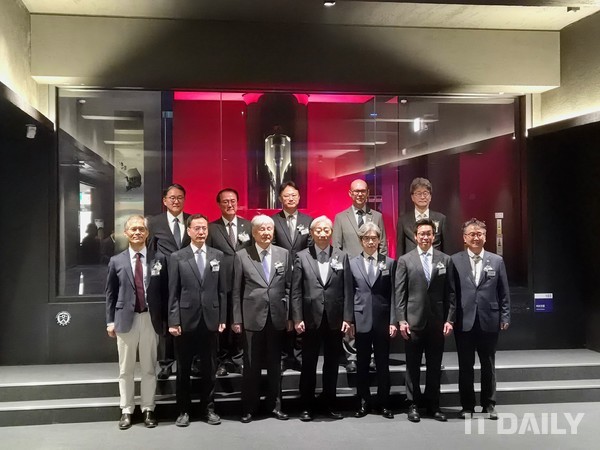
[IT Daily] On the 4th, Yonsei University’s Quantum Computing Center at the Incheon Songdo International Campus held the “Next-Gen Quantum Computing Platform Activation Ceremony” and a media briefing marking the launch of the next-gen quantum computing platform. On site, Yonsei University and IBM officials posed for commemorative photos in front of “IBM Quantum System One,” which is equipped with IBM’s latest quantum processor. The photo was taken by reporter Kim Ho-jun.
At the briefing, the significance of introducing the latest processor, “IBM Quantum Nighthawk (Nighthawk) R2,” was explained. Jeong Jae-ho, head of Yonsei University’s quantum business team, said developing one new drug takes 15 years, costs several trillion won, and has a success rate of less than 10%.
Jeong also said that the candidate discovery and optimization stage before clinical trials is a computation-intensive area that takes 7 to 8 years. He added that quantum computers are a key tool for easing computational bottlenecks and shortening the time it takes innovative new drugs to reach patients.
Yonsei University and IBM began operating the upgraded “IBM Quantum System One” on the morning of the 4th. The upgrade incorporates Nighthawk R2. Yonsei University previously introduced a Quantum System One based on the 127-qubit “Eagle” processor in 2024.
Yonsei University became the first case among IBM Quantum Network participants to build a Nighthawk processor in its own facility. Nighthawk R2 is IBM’s latest quantum processor, unveiled in September. The processor is spec’d with 120 programmable qubits.
A defining feature of Nighthawk R2 is its high-speed qubit reset architecture. IBM says this architecture reduces error rates and improves computational throughput. Nighthawk R2 delivers performance of more than 100,000 circuit executions per second, and its throughput is 25 times that of the previous-generation “Heron.”
IBM did not merely expand the number of qubits in Nighthawk; it also changed the chip architecture itself. Nighthawk contains 458 physical qubits across the chip, increasing its integration scale by more than 3.6 times compared with Eagle (127 qubits). Of these, 120 are programmable qubits that perform the actual computations, while the remaining physical qubits help control interference between qubits and improve accuracy. Nighthawk also changed the qubit connectivity structure.
Nighthawk adopts a lattice structure that allows up to 4 qubits to be connected. IBM said this lattice structure improved computational delays and errors that occurred during data transfer between qubits. This stands in contrast to the chip previously installed at Yonsei University, Eagle, which arranged 127 qubits in a honeycomb pattern and connected neighboring 2 to 3 qubits.
According to IBM, Nighthawk recorded computational accuracy of about 99.7% on a 2-qubit gate basis. A 2-qubit gate is a computational unit that forms entanglement between two qubits, allowing calculations to be processed simultaneously. Nighthawk’s error level is about 3 errors per 1,000 operations. Because qubits can have their quantum state collapse with even slight changes and are therefore prone to computational errors, Nighthawk’s lower error rate is a meaningful achievement.
IBM described Yonsei University’s adoption of Nighthawk as a milestone toward commercializing FTQC in 2029. FTQC is a quantum computer that improves accuracy by detecting and correcting errors during computation.
Jerry Chow, IBM Fellow and CTO of Quantum-Centric Supercomputing, said Nighthawk is 25 times faster than existing quantum processors and has improved error rates as well.
Chow said IBM is developing a next-generation processor that can maintain a circuit execution speed of 100,000 per second while increasing the number of programmable qubits to more than 500. He said the company plans to build an interconnect system for 500-qubit-class devices within the next 2 years, and that the system is aimed at operating more than 1,000 qubits.
On the 4th, the media briefing marking the launch of the next-gen quantum computing platform was held at Yonsei University’s Quantum Computing Center at the Incheon Songdo International Campus. In attendance were Jeong Jae-ho, head of Yonsei University’s quantum business team, Jerry Chow, IBM Fellow and CTO of Quantum-Centric Supercomputing, and Paek Han-hee, director of IBM’s Quantum Algorithm Center. The photo credit is Kim Ho-jun.
The briefing was organized amid Yonsei University’s efforts to pursue bio and drug development as well as interdisciplinary convergence research based on enhanced quantum-computer performance. Yonsei University is pursuing bio and drug development and interdisciplinary convergence research based on the improved performance of its quantum computers.
Quantum computers do not outperform conventional computers in every type of computation. However, they show superior performance in certain tasks, including finding the optimal path among multiple options, solving difficult factoring problems, and molecular and quantum simulations.
Interest in quantum computers in the bio and pharmaceutical sectors is also tied to these computational characteristics. In the drug development process, exploring disease-causing proteins and simulating therapeutic substances takes a long time, and the period for candidate exploration is expected to be shortened from 8 years. Accordingly, quantum computers may be able to solve such problems faster than supercomputers, raising hopes of accelerating drug development.
Jeong said it takes about 8 years to search for causative proteins and therapeutic compounds in drug development, adding that if quantum computers are used instead of existing AI algorithms, speed is expected to improve by 40% to 50%.
Yonsei University is carrying out the Ministry of Health and Welfare’s Korean-style ARPA-H project, building a pipeline that combines quantum algorithms and AI in parallel. The project aims to shorten the target protein discovery period from 1 to 2 years to 5 months, and the lead compound optimization period from 4 years to 2 years. A lead compound is an early-stage drug development compound that shows pharmacological activity against a specific disease target and is expected to have therapeutic effects.
Jeong said that even small improvements in computational performance during drug development can bring treatments to patients sooner and help lower drug prices. He also said that saving patients who might lose their lives because they cannot secure a treatment is the social value of quantum computing.
On the 4th at Yonsei University’s Quantum Computing Center at the Incheon Songdo International Campus, IBM’s next-generation quantum processor, “Quantum Nighthawk,” was demonstrated in operation. At the demonstration site, the process of transmitting Yonsei University’s quantum-computer output to the RIKEN supercomputer “Fugaku” in Japan was displayed. The event also highlighted achievements in linking hybrid infrastructure that seeks to overcome the physical limits of quantum computers.
IBM is pursuing the development of a quantum-computer and supercomputer-connected hybrid infrastructure. Quantum computers are effective for specific problems, but they are also prone to frequent errors. They also have limitations in that they cannot handle every problem.
Accordingly, the connected model is structured so that conventional computers handle general computing tasks, while quantum computers handle areas that require quantum-mechanical characteristics. The hybrid infrastructure integration results introduced that day focused on complementing the limitations of quantum computers in this way.
Yonsei University and IBM, in collaboration with RIKEN, connected the quantum computer in Songdo and the supercomputer “Fugaku” in Kobe via a dedicated communications network. The operating structure sends the quantum-computer results to Fugaku and then retransmits Fugaku’s optimization results back to Yonsei University. The transmission latency is around 20 ms.
As it works to expand the foundation of quantum research, Yonsei University is seeking cooperation not only with domestic educational and research institutions but also with leading overseas universities. Yonsei University is in discussions with the University of Cambridge about establishing mutual branch offices for quantum research, and Cambridge Enterprise, the University of Cambridge’s industry-academia cooperation office, is scheduled to establish its first Asian base at Yonsei University this month.
At the briefing, questions were raised about how the quantum computer would be operated and about costs. Jeong said the size of the cost involved in this upgrade was not disclosed. He also explained that the processor replacement was decided in discussions with IBM based on Yonsei University’s educational and research achievements over the past 2 years. He added that the contract was signed under a subscription model, and that there were no additional costs arising from the upgrade itself.
Since introducing Quantum System One in 2024, Yonsei University has focused on broadening access. It opened Quantum Academy and runs educational programs for elementary, middle, and high school students as well as the general public. Last year, it launched a quantum information science program in its graduate school, and it is currently training more than 50 master’s and doctoral students. The university hopes this upgrade will serve as an opportunity to establish itself as a hub for quantum research and industry-academia collaboration on this foundation.
Source: IT DAILY · Kim Ho-jun
Original: https://www.itdaily.kr/news/articleView.html?idxno=242700
References
This article was produced with the help of an automated content generation algorithm.
Source: IT DAILY
View originalThis article was summarized and organized by BizCrush based on the original article from IT DAILY. For exact quotations and full details, please refer to the original article.
Keep reading
BizCrush