Telecoms Move to End 3G Services as Shift of 3G IoT Devices, Including Elevator Systems, Becomes a Challenge
IT DAILY ·
✦ AI Summary
Following SK Telecom, KT will also stop accepting new 3G sign-ups from November 2.
The affected devices are 3G handsets and LTE handsets that do not support HD Voice, and new subscriptions, number portability and device changes will be restricted.
Ending 3G services requires approval from the Ministry of Science and ICT, and South Korea still faces the task of converting 3G-based IoT facilities such as elevator emergency calling devices.
Following SK Telecom (SKT), KT has also suspended new sign-ups for 3G services, putting South Korea's 3G network on the path to retirement. SK Telecom (SKT) halted new 3G subscriptions in August this year, and KT will stop accepting new 3G sign-ups from November 2.
KT has begun reviewing the shutdown of its 3G service. Devices affected by the new subscription freeze include 3G handsets and LTE handsets that do not support HD Voice.
The restrictions cover new subscriptions, number portability and device changes through those handsets. The device-change restrictions also include SIM-only device changes.
Overseas, telecom carriers in major countries have already shut down their 3G services. In South Korea, however, a remaining challenge is the conversion of safety-related 3G IoT facilities, such as elevator emergency calling devices.
To shut down 3G services, approval from the Ministry of Science and ICT is required. Accordingly, the end dates for SKT and KT's 3G services will be finalized after the government approval process.
South Korea's 3G service was formally introduced in 2003 after the government selected SK Telecom and Korea Telecom, now KT, as 3G mobile carriers in 2000. As time passed, aging 3G equipment became a growing problem.
As 3G equipment has aged over a long period, concerns have been raised that older equipment has limitations in providing stable telecommunications services. In addition, 3G handsets do not support the basic reception function for disaster alerts.
This has raised the need to shift to LTE and 5G handsets that can receive disaster alerts by default. The problems associated with the long-term operation of 3G services in South Korea, along with handset functionality limitations, are increasing the need for a transition.
Abroad, the shutdown of 3G services is spreading. In some countries, 3G roaming use is restricted, and in the United States, the three major carriers AT&T, Verizon and T-Mobile ended 3G services in 2022.
In Europe, too, early shutdowns of 3G services are under way. Deutsche Telekom in Germany ended 3G services in 2021, while EE and Vodafone in the United Kingdom ended 3G services in 2024. Orange Belgium is phasing out 3G services from 2024 to 2025, and Tele2, Telenor and Three in Sweden ended 3G services last year.
In the Asia-Pacific region, carriers in Japan, Singapore and Australia either ended 3G services or proceeded with shutdown steps from 2022 to 2024. KDDI in Japan ended 3G services in 2022, and Softbank ended 3G services in 2024. NTT Docomo also ended 3G services in March this year.
In Singapore, carriers also continued the process of ending 3G services. M1 began winding down 3G services in 2024, and Singtel is also in the process of phasing out 3G services in 2024.
Australia has also seen 3G services being shut down. Vodafone / TPG Telecom ended 3G services in 2023, while Telstra and Optus ended 3G services in 2024.
In South Korea, use of 3G mobile phones has declined. As of August, there were 252,591 3G mobile lines, out of a total of 57,639,275 mobile lines. The share of 3G mobile lines was about 0.44%.
However, a domestic challenge remains in converting 3G-based IoT devices. Some public safety and industrial IoT devices continue to use 3G-based communication modules. Examples include elevator emergency calling devices and vehicle fleet management systems.
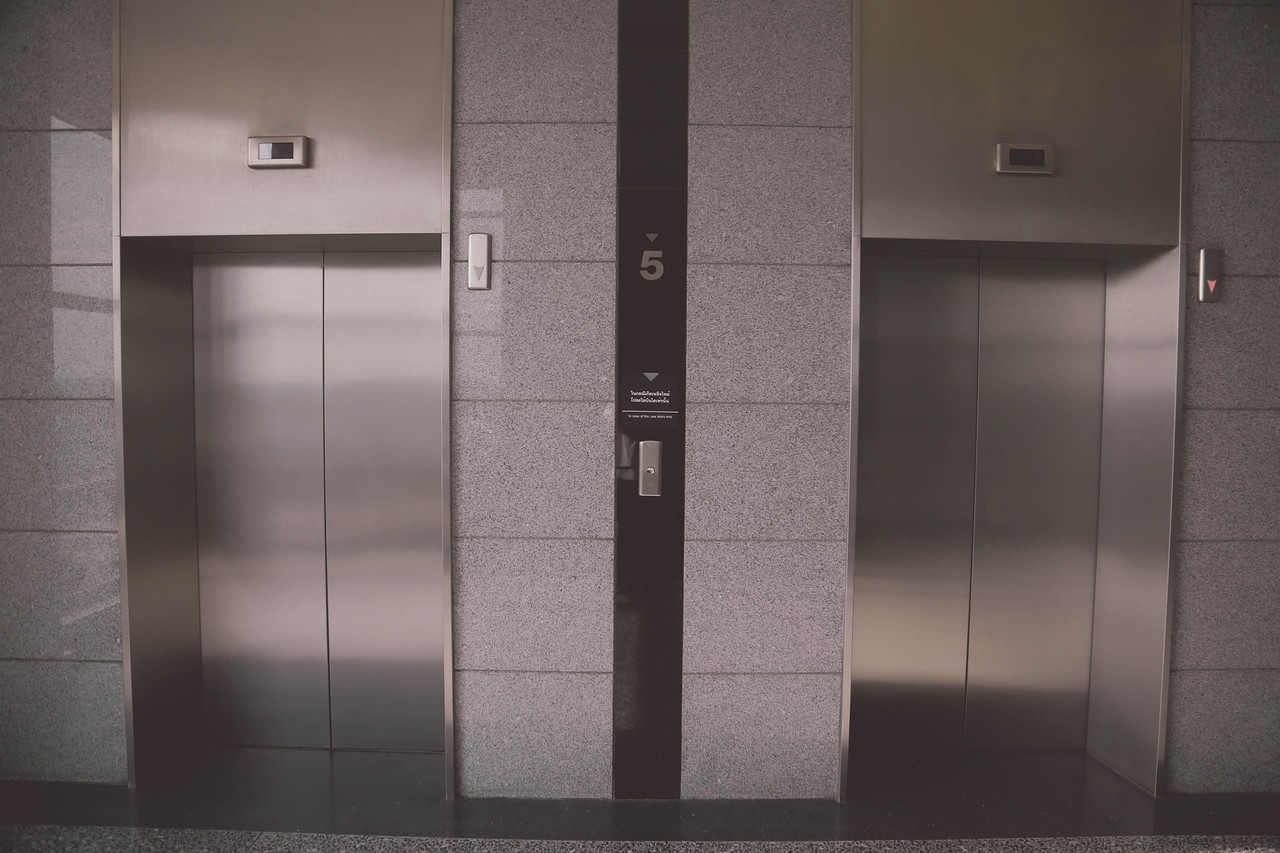
In particular, elevator emergency calling devices function as communication tools for trapped passengers to request rescue in the event of a malfunction or power outage. Accordingly, elevator emergency calling devices need a stable transition before the service ends.
Carriers are expressing their intention to shut down 3G services early, citing aging equipment and declining users. But 3G communication modules used in elevator emergency calling devices and similar equipment are directly tied to safety, leaving the transition of safety-critical facilities as an unresolved issue. As a result, the Ministry of Science and ICT is also taking a cautious stance on ending 3G services.
As of August, the total number of IoT lines stood at 33,820,962. Of these, vehicle fleet management accounted for 9,425,813, remote management for 19,659,462 and other IoT services for 335,875. However, a telecommunications industry source said it is difficult to disclose exact figures and application models for 3G IoT lines externally.
Carriers are holding transition discussions depending on contractual relationships and how the devices are used. Another telecommunications industry source said they are discussing LTE and 5G transition schedules with businesses that have direct contracts with telecom operators. Yet another source said that in cases where businesses use 3G services on IoT equipment purchased individually, they plan to continue cooperating with service providers on the transition.
While carriers are providing guidance on LTE and 5G transitions for general users, they are also coordinating with the government on plans to end the service.
A KT official said the company is in talks with the government. However, the official said it is difficult to disclose the specific timing of the shutdown and the status of the discussions.
An SKT official also said discussions with the government are under way. The official added that the company plans to sequentially pursue the process of phasing out 3G services by the end of 2027, but the actual shutdown date will be decided after government approval.
The government says it is reviewing the service shutdown issue with the highest priority on guaranteeing the basic rights of vulnerable telecom users and protecting existing subscribers.
In July, a meeting was held between Deputy Prime Minister Bae Kyung-hoon and the CEOs of the three mobile carriers. Choi Hyo-woo, head of the Information Security and Network Policy Bureau at the Ministry of Science and ICT, suggested that if stability has not been secured, discussions with mobile carriers should proceed under a predictable timetable rather than being pushed ahead immediately.
Source: IT DAILY · Seong Won-young
Original: https://www.itdaily.kr/news/articleView.html?idxno=242661
References
This article was produced with the help of an automated content generation algorithm.
Source: IT DAILY
View originalThis article was summarized and organized by BizCrush based on the original article from IT DAILY. For exact quotations and full details, please refer to the original article.