Samsung Electronics Sees Memory Supply Crunch Through 2028, Accelerates HBM and 2-Nanometer Lead
IT DAILY ·
✦ AI Summary
Samsung Electronics sees the strong demand for AI semiconductors as a long-term supply shortage, and expects the memory supply crunch to last through 2028.
In the memory business, next year's HBM supply has already been sold out, and Samsung Electronics is pursuing expanded LTA deals and plans to secure 60% to 70% of production capacity under long-term contracts through 2030.
In the foundry business, the company is expanding 2-nanometer orders, preparing to operate its Taylor, Texas fab, and expanding both advanced and mature process nodes to respond to AI and HPC demand.
Samsung Electronics views strong demand for AI semiconductors not as a short-term boom but as a long-term supply shortage. It forecasts that the memory supply shortage will persist through 2028 and is accelerating the expansion of both its memory business and foundry business.
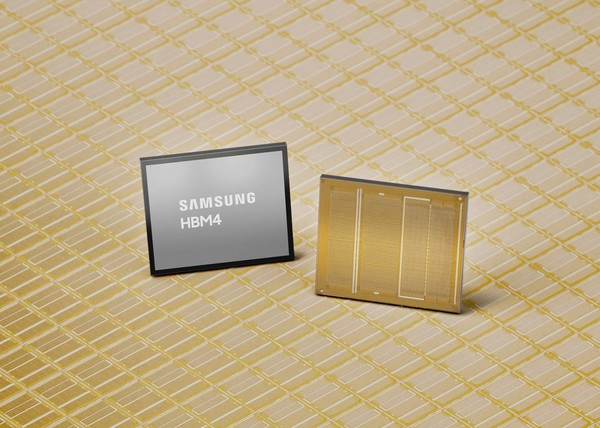
In memory, the HBM supply for next year has already been fully booked. Samsung Electronics is therefore expanding long-term supply contracts, or LTAs, to secure demand over the medium to long term. In foundry, it is pushing to expand 2-nanometer orders and prepare for the operation of its Taylor fab in the U.S. to respond to demand for AI and high-performance computing, or HPC. The photo shows Samsung Electronics' HBM4.
By contrast, rising semiconductor prices are adding to cost burdens for smartphones, TVs, and home appliances, increasing the cost pressure on finished-goods businesses. Samsung Electronics is responding by expanding the share of flagship products and pushing efficiency improvements across the business to defend profitability.
Samsung Electronics held its third-quarter earnings conference call on the 29th. The company posted third-quarter revenue of KRW 195.3 trillion and operating profit of KRW 107.4 trillion. It marked the fourth straight quarter of record-high revenue and the fourth straight quarter of record-high operating profit.
Samsung Electronics said this trend could continue, led by the DS(Device Solutions) division. The DS(Device Solutions) division posted third-quarter revenue of KRW 147.1 trillion and operating profit of KRW 106.5 trillion. Park Soon-cheol, Samsung Electronics' CFO and vice president, said the company expects to outperform this year based on the DS division's growth momentum.
Park Soon-cheol, Samsung Electronics' CFO and vice president, forecast that AI investment in 2027 will reach record levels and that supply constraints will continue. He also expected the semiconductor industry boom to persist in 2027. Samsung Electronics cited the expansion in AI investment and supply constraints as the basis for its upbeat view on the market.
On the memory side, the company said next year's HBM volume has already been sold out. It also said it has signed 10 LTAs and is negotiating 10 more LTAs. Samsung Electronics explained that the period of memory supply shortage is now expected to last through 2028.
Kim Jae-jun, vice president of Samsung Electronics' Memory Business Division, said increased capital expenditure does not immediately translate into higher bit output. He explained that lead times for semiconductor manufacturing equipment have become longer, making timely procurement difficult. He also said HBM4E and HBM5 will have larger die sizes and more metal process layers than previous generations. In addition, he forecast that expanded mass production of HBM will inevitably constrain DRAM production capacity for general-purpose use.
Samsung Electronics is pushing long-term contracts as a way to accelerate securing growing demand. It has already completed multi-year LTA agreements with 10 major customers and is negotiating with 10 additional customers.
The customer base seeking long-term supply is also expanding. In addition to existing hyperscalers, server OEMs, and SoC companies, mobile, automotive, and network companies have been added, while negotiations to extend contracts with some existing contract customers are in the final stages. Newly received requests for extensions have far exceeded initial expectations.
Given the current negotiations, Samsung Electronics said the likelihood of securing 60% to 70% of production capacity under long-term contracts through 2030 has increased.
At the same time, HBM sales are rising rapidly. Third-quarter HBM4 revenue more than tripled from the previous quarter, and HBM4 accounted for about 60% of total HBM revenue.
Samsung Electronics set its HBM market share target for the second half of this year at a level similar to its overall DRAM market share, and said it achieved that HBM share target early in the third quarter.
Samsung Electronics said its HBM supply volume for 2027 is sold out, adding that major customers continue to request additional supply.
The company also said AI-driven memory demand is spreading to NAND flash. It further predicted the spread of agentic AI, saying it expects agentic AI to drive additional demand for server SSDs.
Samsung Electronics explained that agentic AI has the characteristics of performing multiple stages of reasoning and tasks, which significantly increases KV cache usage compared with existing chatbot-style AI. It added that the increase in KV cache usage is expected to boost demand for high-performance, high-capacity SSDs.
The company also expects the number of users of personal AI agents to rise, and it anticipates greater demand for QLC SSDs as personal AI agents spread. It also pointed to the possibility of additional demand for QLC-based Gen6 SSDs and ultra-high-capacity QLC SSDs, and said it plans to commercialize a 256TB SSD next year.
Samsung Electronics plans to commercialize a 256TB SSD using 32-layer stacking technology in early next year in its memory business. In addition, it plans to expand HBM sales in the fourth quarter and increase the share of server DRAM and server SSD sales.
The company also plans to expand supply of high-speed DDR5 server modules in the fourth quarter and increase QLC supply. It will also push to expand sales of memory-related products, including HBM base dies.
In foundry, AI and HPC have emerged as key demand sources, and the company plans to expand capacity while also reviewing an additional fab in Taylor, Texas. Samsung Electronics expects the number of 2-nanometer process orders this year to more than double from a year earlier.
Samsung Electronics plans to expand strategic partnerships with major customers for leading-edge processes based on medium- to long-term LTAs. The goal is to improve business stability. It also expects HPC revenue to exceed 50% of total foundry revenue in 2027.
The company will also begin 2-nanometer second-generation mobile products in the fourth quarter and start mass production of 4-nanometer NPU products for major customers. It plans to accelerate foundry business development as it expands mass production of leading-edge products.
Samsung Electronics is expanding both its most advanced 1.4-nanometer process and mature-node processes while carrying out customer discussions and business expansion by product line. It is negotiating with multiple customers on the 1.4-nanometer process, and some customers have finalized development of 1.4-nanometer chips.
The direction of expansion for mature-node business is being defined by process and product. The company plans to expand 5-nanometer business around the automotive sector, 8-nanometer business around major tier-1 customers, 14-nanometer business around memory interface solutions, and 17-nanometer business around CIS logic.
Samsung Electronics is also pushing to expand production capacity. It said the pace of expanding leading-edge process capacity is slower than demand growth, and accordingly it plans to increase investment in new fabs in Korea and the U.S.
It also plans to secure advanced packaging capacity outside logic. The Taylor fab in the U.S. has begun cleanroom operations and equipment installation, and Samsung Electronics is also reviewing measures to expand capacity, including construction of an additional fab.
Meanwhile, rising semiconductor prices are affecting different divisions within Samsung Electronics in different ways. Higher memory prices are contributing to stronger DS results, while they are increasing cost pressure for the DX(Device eXperience) division, which handles finished products such as smartphones.
In the third quarter, Samsung Electronics recorded revenue of KRW 52.1 trillion and an operating loss of KRW 800 billion in the DX division. In MX and Network business, third-quarter revenue came to KRW 37.7 trillion and the operating loss was KRW 600 billion, leaving both businesses in the red.
The company forecast that the burden from high memory prices will continue in the fourth quarter. It also expects upward cost pressure to persist in 2027.
Accordingly, Samsung Electronics has set a policy to improve the smartphone profit structure by focusing on top-tier products. In the flagship market, it said it aims to broaden its premium customer base by increasing repeat purchases from existing customers and attracting users from competitors.
In the mid- to low-end market, it plans to redefine the role of products by price segment, ensure stable supply of entry-level products, and expand upselling opportunities for mid- and upper-tier products. It also plans to improve perceived value by enhancing hardware performance and pushing form-factor innovation.
The company also said it will respond to rising costs by improving efficiency across the business. Regarding the foldable smartphone market, it said it sees the entry of new competitors as an opportunity to expand the market.
Samsung Electronics explained its position in response to questions about the impact of intensifying competition. It said it views this as an opportunity to prove the value of the foldable market it has pioneered since 2019, and stated that it plans to use heightened competition as an opportunity to expand sales.
Samsung Electronics said it expanded its product lineup through the Fold8 series. It also said the product mix has been improved around foldables, and that it is seeing an increase in users switching from competitors' products as well as an increase in younger consumers.
Looking ahead, Samsung Electronics said it plans to strengthen the competitiveness of thin and lightweight foldable products. It added that it will continue developing form factors tailored to users' lifestyles.
Samsung Electronics forecast that the mainstream adoption of foldable smartphones will advance further in 2027. It said price increases stemming from rising memory prices could weigh on demand, but it expects AI features to spread and demand for foldables that offer both large screens and portability to rise. Based on that, Samsung Electronics said it plans to expand premium customer acquisition around the S26 series and Fold8, while also using sales support measures such as financing programs.
Samsung Electronics said it resolved to pay a third-quarter cash dividend of KRW 4,601 per common share and preferred share. The total third-quarter cash dividend amounts to KRW 30 trillion. The dividend is scheduled to be paid in November.
Samsung Electronics set its total shareholder return for 2026 at KRW 90–110 trillion. The amount executed and confirmed so far stands at KRW 35 trillion, leaving KRW 55–75 trillion in remaining resources.
Samsung Electronics said it plans to use the remaining resources for cash dividends and for substantial treasury share buybacks and cancellations. It also said it is aware of market interest in the price gap between common shares and preferred shares, and is reviewing a plan to adjust the proportion of preferred share buybacks in a way that reflects market conditions during the buyback and cancellation process.
The specific scale and method are to be decided at a board meeting at the end of January 2027. Samsung Electronics said it plans to finalize and announce the next shareholder return policy, the final size of the remaining 2026 resources to be returned, and the execution plan at that meeting.
Source: IT DAILY · Kim Byung-joo
Original: https://www.itdaily.kr/news/articleView.html?idxno=242540
References
This article was produced with the help of an automated content generation algorithm.
Source: IT DAILY
View originalThis article was summarized and organized by BizCrush based on the original article from IT DAILY. For exact quotations and full details, please refer to the original article.