Samsung Electronics Posts Record-High 3Q Operating Profit of KRW 107.4 Trillion, Semiconductor Division Earns KRW 106.5 Trillion
IT DAILY ·
✦ AI Summary
Samsung Electronics said on the 29th that, on a consolidated basis for the third quarter of 2026, it recorded sales of KRW 195.3 trillion and operating profit of KRW 107.4 trillion.
DS division operating profit reached KRW 106.5 trillion, accounting for most of the total operating profit, and quarterly operating profit surpassed KRW 100 trillion for the first time.
The DX division posted sales of KRW 52.1 trillion but an operating loss of KRW 800 billion in the third quarter, and Samsung Electronics expects further investment in AI-related areas and stronger memory demand in the fourth quarter.
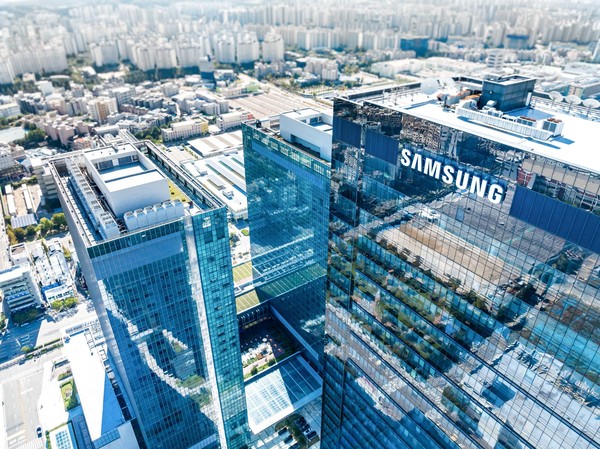
Samsung Electronics said on the 29th that, on a consolidated basis for the third quarter of 2026, it posted sales of KRW 195.3 trillion and operating profit of KRW 107.4 trillion, driven by stronger demand for artificial intelligence (AI) semiconductors. A photo of Samsung Electronics' Suwon Digital City was also included.
In particular, operating profit from the DS(Device Solutions) division accounted for KRW 106.5 trillion of the total operating profit. As a result, quarterly operating profit surpassed KRW 100 trillion for the first time.
Sales rose 127% from a year earlier and 14% from the previous quarter. Operating profit increased 783% year over year and 20% quarter over quarter. Sales and operating profit both set new records for the fourth consecutive quarter.
Overall net profit rose sharply to KRW 75.1 trillion from KRW 12.2 trillion a year earlier. The operating margin came to 55.0%, while the operating margin rose 2.8 percentage points from the previous quarter. Earnings per share (EPS) on a common stock basis came to KRW 11,462.
The earnings improvement was driven by the semiconductor business. DS division sales in the third quarter reached KRW 147.1 trillion, up 344% from a year earlier. DS division operating profit in the third quarter was KRW 106.5 trillion, up KRW 99.5 trillion from KRW 7 trillion a year earlier.
The DS division's operating margin was 72%. Memory sales came to KRW 140.7 trillion, up 427% from a year earlier.
Samsung Electronics said it managed its product mix with a focus on AI-oriented products within limited available production capacity. It also said it once again set record-high sales and operating profit as prices rose across all applications, including servers where demand remains strong.
Memory, foundry, and System LSI improved sales and results based on product competitiveness, new product supply, and expanded sales of leading-edge process technologies. In the HBM segment, the company substantially expanded sales of HBM4 based on product competitiveness and also responded to rising demand for server SSDs.
Foundry posted a sharp improvement in sales and results on the back of increased HBM B-Die sales and expanded sales of leading-edge process technologies. Foundry continued to win orders centered on 2-nanometer HPC customers, including large hyperscalers.
System LSI increased sales on the back of new SoC and sensor products. Through cooperation with new customers and partners, System LSI materialized its custom SoC business.
By contrast, the DX(Device eXperience) division remained in the red despite higher sales. DX division sales in the third quarter reached KRW 52.1 trillion, up 8% from a year earlier, but the third-quarter operating loss was KRW 800 billion.
The MX and Network businesses posted sales of KRW 37.7 trillion, helped by the launch of new products such as the Galaxy Z Fold8 and higher ASPs. Sales increased from the previous quarter and also rose from a year earlier. However, the operating loss for the MX and Network businesses was KRW 600 billion. Within MX, profit fell from a year earlier due to cost pressures, but performance improved from the previous quarter as the share of flagship products increased.
The Network business underperformed both from the previous quarter and from a year earlier, affected by lower sales in the highly profitable North American market and declining software sales. Sales in the VD and DA businesses came to KRW 13.9 trillion, and the operating loss was KRW 200 billion.
VD business sales declined due to the end of major sporting events. However, the decline in profitability was limited by premium product sales and cost efficiency efforts. DA business saw strong sales on the back of stronger domestic marketing, expanded subscriptions, and expanded B2B activity, but results weakened due to higher raw material and logistics costs.
Samsung Display (SDC) posted sales of KRW 8 trillion and operating profit of KRW 1.1 trillion. Sales and profit for small and medium-sized panels increased as customers supplied new products, while large-panel profitability improved through sales centered on high-end products and cost reductions. Harman posted sales of KRW 4.3 trillion and operating profit of KRW 600 billion. Harman's results were driven by solid sales of automotive products and audio products, U.S. tariff refunds, and the recognition of non-recurring factors.
Samsung Electronics forecast that it will continue investing in industry infrastructure to secure an early lead in the AI market in the fourth quarter as well. It expects memory demand to expand further in the fourth quarter, driven by the spread of personal AI agent services. The center of the demand expansion will be products for new GPU and CPU applications, and QLC demand is also expected to surge.
Samsung Electronics plans to further expand the share of HBM sales accordingly. It also plans to further expand the share of server DRAM sales and server SSD sales. It will also pursue greater supply of high-speed DDR5 server modules and expanded QLC supply.
Samsung Electronics forecast that in 2027, the expansion of the AI ecosystem and accelerated investment in AI server infrastructure will continue. Accordingly, it expects the pace of memory demand growth led by AI-related products to widen. It also forecast that the memory supply shortage in 2027 will deepen compared with this year.
The foundry plans to fully ramp up its second-generation 2-nanometer mobile new product in the fourth quarter. It also plans to fully ramp up 4-nanometer NPU mass production. The company is pursuing more than double-digit sales growth by expanding sales of memory products.
Samsung Electronics said it plans to expand sales centered on 4-nanometer and 2-nanometer leading-edge process technologies in response to strong AI and HPC demand in 2027. It also plans to begin operation of the first fab in Taylor, Texas. Through this, it aims to strengthen its global supply capabilities.
Source: IT DAILY · Kim Byeong-ju
Original: https://www.itdaily.kr/news/articleView.html?idxno=242530
References
This article was produced with the help of an automated content generation algorithm.
Source: IT DAILY
View originalThis article was summarized and organized by BizCrush based on the original article from IT DAILY. For exact quotations and full details, please refer to the original article.