SK Hynix Operating Profit Tops KRW 83.334 Trillion in Q3, a Record High, Operating Margin Reaches 80%
IT DAILY ·
✦ AI Summary
SK Hynix said it recorded consolidated sales of KRW 104.615 trillion and operating profit of KRW 83.334 trillion in the third quarter of 2026.
The operating margin was 80%, a quarterly record, while sales and operating profit rose 32% and 38%, respectively, from the previous quarter.
Net profit was KRW 39.776 trillion, down 58% from the previous quarter, reflecting operating non-operating losses of KRW 32.625 trillion.
According to IT Day, SK Hynix delivered significantly improved results in the third quarter of 2026 amid expanding AI memory demand and rising memory prices. On the 28th, SK Hynix announced that it posted consolidated sales of KRW 104.615 trillion and operating profit of KRW 83.334 trillion for the third quarter of 2026. Its operating profit exceeded KRW 83 trillion, and third-quarter operating profit hit an all-time high.
The operating margin was 80%, the highest on a quarterly basis. Sales rose 32% from the previous quarter and 328% from a year earlier. Operating profit increased 38% from the previous quarter and 632% from a year earlier.
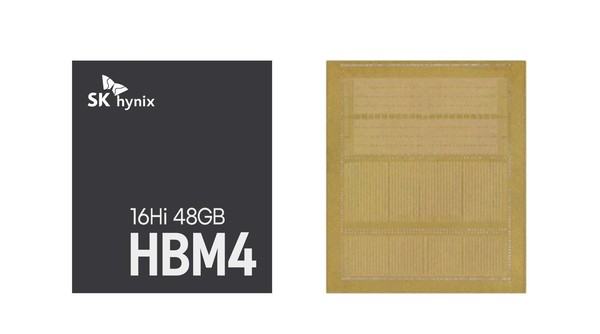
Profitability improved on the back of expanded HBM4 sales and stronger pricing for standard DRAM. SK Hynix said that, given customer demand, DRAM volume is effectively sold out through 2029, and HBM volume is also effectively sold out. The photo shows SK Hynix's HBM4.
Profitability was further strengthened by the rise in operating margin. The operating margin rose to 80% from 76% in the previous quarter, up 4 percentage points and marking a quarterly record. Park Jung-ho, CEO of SK Hynix, said that the company had set a new record for six consecutive quarters.
In the memory business, both DRAM and NAND saw higher ASPs. DRAM shipments in the third quarter rose about 10% from the previous quarter, and DRAM ASP increased by the high-20% range from the previous quarter. While the strong pricing trend for standard DRAM continued, the sales share of premium HBM4 products expanded, and server DDR5 sales volume rose more than 40% from the previous quarter.
For NAND, shipments declined slightly from the previous quarter, but NAND ASP rose by the mid-20% range from the previous quarter. Price increases also continued, centered on enterprise SSDs (eSSD).
Net profit, however, fell from the previous quarter as large non-operating losses were reflected. Net profit came to KRW 39.776 trillion, down 58% from the previous quarter. Non-operating losses of KRW 32.625 trillion were incurred, including foreign-exchange losses of KRW 11.633 trillion stemming from a weaker won and valuation losses on investment assets of KRW 22.92 trillion. Even so, net profit rose 216% from a year earlier.
SK Hynix said that, while improving profitability, it also saw medium- to long-term sales visibility improve on the basis of long-term supply agreements (LTA). The company said it had signed LTAs with 14 major customers, including global large cloud service providers (CSPs).
The secured LTA volume corresponds to more than 50% of total production capacity in 2027 and 2028. The contract period for LTAs is typically 5 years, and the company said it is also discussing options to extend the term further for some customers.
On the conference call, SK Hynix said that, considering the secured volumes and demand under discussion, DRAM and HBM volumes are effectively fully sold out through 2029. It added that the volumes under discussion are demand with a high likelihood of materializing, and said this has significantly improved medium- to long-term sales visibility.
SK Hynix expects the main drivers of AI investment to expand from big tech to general enterprises and countries. It said expanded AI investment will support memory demand.
It explained that while early AI investment was concentrated among a small number of big tech firms, self-built AI infrastructure by general enterprises is expanding, and sovereign AI and on-premises deployments are also spreading. With this broadening investment base, the company expects the impact of investment adjustments by individual companies on overall demand to diminish.
The company said it is difficult for supply expansion to keep pace with demand because advanced process technology is highly complex and fab construction takes time. As a result, it expects a demand-favored supply-demand environment to continue through 2030. The projected growth rate for DRAM demand in 2027, reflecting actual supply conditions, was given as the mid-20% range, while the growth rate for NAND demand was projected in the high-10% range.
Against this backdrop, the transition to the next HBM generation is under way in earnest. SK Hynix forecast that in the fourth quarter, both HBM4 shipment share and revenue share will exceed those of HBM3E.
The company said there are no problems with mass production of HBM4. It also said HBM4 yields are stable and that its HBM4 target yield has been raised. In addition, it said HBM3E yields exceeded the original plan.
Sample shipments of HBM4E were completed in the second quarter. HBM4E is currently under development and evaluation in line with customer schedules.
In addition to standard HBM, the company is also pursuing customer-tailored custom HBM projects. These custom HBM projects are being carried out with major customers.
SK Hynix said HBM demand currently far exceeds its supply capacity. While noting that some customers are moving to adjust the number of HBM stacks, the company said strong HBM demand continues because the HBM volumes requested by customers exceed twice its supply capacity.
Based on this trend, SK Hynix forecast a larger share of HBM4 next year. It also projected higher HBM prices next year, along with further improvements in yields and cost competitiveness next year.
SK Hynix expects sales next year to grow sharply from this year and profit next year to also post strong growth from this year. It also forecast a meaningful improvement in profitability next year and said it expects high profitability to continue. It explained that this level exceeds the previous peaks of the memory cycle on a comparison basis.
This expectation is not limited to HBM and extends to standard DRAM as well. The company expects standard DRAM profitability to improve and forecast higher pricing for standard DRAM and expanded sales of high-value-added server products. Accordingly, it expects the profitability gap between HBM and standard DRAM to narrow significantly.
SK Hynix forecast that DRAM shipments in the fourth quarter will rise in the mid-20% range from the previous quarter. To support this, the company is pushing ahead with the expansion of the 1cnm process and ramping up M15X in parallel, and it expects M15X to reach maximum production capacity by the end of the year. It also said it is pushing ahead with expanding the share of 1cnm products for servers, increasing sales of 1cnm-based DDR5, and expanding sales of LPDDR5 SOCAMM for AI servers.
SK Hynix aims to raise the production share of 321-layer NAND and to lift the share of 321-layer products within domestic capacity to more than 50% in the fourth quarter. The company said this is intended to respond to the surge in KV cache demand during AI inference.
SK Hynix is also expanding supply of high-performance, high-capacity eSSD products to address distributed demand for KV cache SSDs. The goal is to respond to changes in AI inference demand by increasing supply of 321-layer NAND and eSSD together.
SK Hynix's investment scale in 2027 is expected to increase significantly from this year. The company cited greater adoption of advanced processes, equipment investment for ramping up the first fab in Yongin, and full-scale infrastructure investment at home and abroad as the reasons for the expansion.
However, the company said that because of the increasing process complexity of high-performance products such as HBM, expansion of production facilities and increases in output are not proportional. Accordingly, it plans to execute investment in stages.
SK Hynix said it will reflect customers' financial soundness, their funding capacity, and the readiness of major supply chains in its investment plan, while managing investment size and timing on the basis of demand visibility and investment returns.
CEO Park Jung-ho said that while the company has set a new record for six consecutive quarters, changes in the business environment supporting the results are more important. He said medium- to long-term demand visibility has improved and conditions for securing stable profitability have been established.
Park Jung-ho said growth potential unlike the past is being expressed through concrete changes in the business structure. He added that the task ahead is to turn those changes into sustainable competitiveness.
Source: IT DAILY · Kim Byung-ju
Original: https://www.itdaily.kr/news/articleView.html?idxno=242495
References
This article was produced with the help of an automated content generation algorithm.
Source: IT DAILY
View originalThis article was summarized and organized by BizCrush based on the original article from IT DAILY. For exact quotations and full details, please refer to the original article.