Samsung Electronics Expands Samsung Wallet Money Overseas Payments, Targets China QR Payments
TECHWORLD ·
✦ AI Summary
Samsung Electronics signed a memorandum of understanding (MOU) with Tencent and Woori Bank at Tencent's headquarters in Shenzhen, China, on the 26th.
With the agreement, Samsung Wallet users in South Korea will be able to use Samsung Wallet Money for QR payments based on WeChat Pay when visiting China.
The three companies plan to expand QR payment methods in China to credit cards in the first quarter of next year.
Samsung Electronics, in collaboration with Tencent and Woori Bank, has expanded overseas payment support for
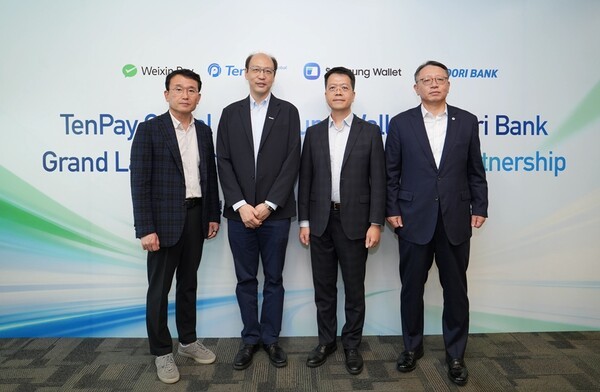
On the 26th, Samsung Electronics signed a memorandum of understanding (MOU) with Tencent and Woori Bank at Tencent's headquarters in Shenzhen, China. Samsung Electronics then disclosed the signing on the 27th. The purpose of the agreement is to strengthen support and cooperation for Samsung Wallet Money's overseas payment services.
The signing ceremony was attended by Cha Won-cheol, vice president and head of the Digital Wallet Team in Samsung Electronics' MX Division; Daniel Hong, vice president of Tencent's Financial Technology division; and Chung Jin-wan, president of Woori Bank.
As a result, Samsung Wallet users in South Korea will be able to use Samsung Wallet Money when visiting China. The service will use QR payments based on WeChat Pay, which is operated by Tencent, and can be used at WeChat Pay merchants across China.
Samsung Wallet Money is a prepaid simple payment service provided through cooperation between Samsung Electronics and Woori Bank. Users can top up and pay through the Samsung Wallet app, and Samsung Wallet points are also awarded when making payments.
China has an environment in which QR codes are widely used for table orders and payments at restaurants, as well as everyday small transactions. In line with the range of QR code use in the Chinese market, payments can be made by generating a payment QR code in the Samsung Wallet app and showing it to a staff member, or by directly scanning a QR code displayed in a store.
Samsung Electronics expects payment convenience for Galaxy users visiting China to improve during travel and business trips. A key feature is that users can use Samsung Wallet Money without preparing or registering a separate payment method, and it can be used without overseas payment fees.
For offline payments, 0.3% of the payment amount will be credited as Samsung Wallet points, with no limit on point accumulation.
The three companies plan to use this agreement as a springboard to improve overseas payment convenience for Korean users and to expand QR payment methods in China to credit cards in the first quarter of next year. They also plan to strengthen their mid- to long-term partnership in the digital payments field.
Samsung Electronics is launching an NFC-based contactless payment service using Samsung Wallet Money for overseas markets, including China. The NFC-based payment method completes a payment by tapping a smartphone against a payment terminal.
Samsung Electronics has already supported QR payments and is now adding contactless payments. Through this, it plans to expand the payment methods available overseas and also expand overseas acceptance locations.
Cha Won-cheol, vice president and head of the Digital Wallet Team in Samsung Electronics' MX Division, said the company is introducing the service through its partnership with Tencent and Woori Bank. He said the convenience of Samsung Wallet Money, which has been proven in South Korea, has been extended overseas, and added that the company will continue providing locally optimized payment experiences in collaboration with global partners.
Source: TECHWORLD · Park Gyu-chan
Original: https://www.epnc.co.kr/news/articleView.html?idxno=408789
References
This article was produced with the help of an automated content generation algorithm.
Source: TECHWORLD
View originalThis article was summarized and organized by BizCrush based on the original article from TECHWORLD. For exact quotations and full details, please refer to the original article.