AI Substrates Enter a New Era as Customers Fund Capacity Expansions
IT DAILY ·
✦ AI Summary
Package substrates for AI semiconductors are becoming harder to respond to with simple post-demand equipment expansion, as larger sizes and higher manufacturing difficulty raise the bar.
In response, customers are moving to help suppliers finance expansion and secure future production volumes in advance.
Nvidia said it would increase substrate production capacity for its products by 2.5 times over the next 3 years through Samsung Electro-Mechanics, Ibiden, and Unimicron.
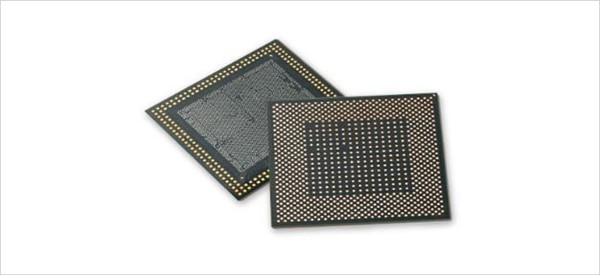
The way package substrates for AI semiconductors are being secured is changing. As substrates for AI semiconductors grow larger and manufacturing becomes more difficult, it has become hard to respond simply by adding equipment after demand emerges.
As a result, customers are not only placing orders but also helping suppliers finance capacity expansions and securing future production volumes in advance. This is broadening the response beyond simple purchasing commitments.
Against this backdrop, Samsung Electro-Mechanics has FC-BGA for high-performance semiconductors. On the 21st local time at GTC 2026 in Berlin, Germany, Nvidia said it would expand substrate production capacity for its products by 2.5 times over the next 3 years through Samsung Electro-Mechanics, Japan's Ibiden, and Taiwan's Unimicron. Nvidia said it would expand substrate production capacity through Samsung Electro-Mechanics, Ibiden, and Unimicron by 2.5 times over 3 years.
Nvidia and Ibiden are using advance payments to reserve production capacity. The advance payments amount to several billion dollars, and the purpose is to support expansion at the Ono plant in Japan. The Ono plant's production capacity will triple from current levels, and the expanded equipment is scheduled to begin operation in the first quarter of 2028.
Nvidia has signed a capacity reservation agreement with Unimicron and is jointly investing with Samsung Electro-Mechanics in Nvidia-dedicated production facilities at its Sejong and Busan sites, preemptively locking in the supply base for AI substrates. It is also supporting Unimicron's expansion of its KF substrate production facility in Taiwan.
The new facility at Unimicron is set to begin operation in the second quarter of 2027. Full-scale operation of the new facility is scheduled for mid-2028.
Along with the joint investment in Nvidia-dedicated production facilities at Samsung Electro-Mechanics' Sejong and Busan sites, the start of Samsung Electro-Mechanics' multi-year supply of package substrates for Nvidia is this year. The products supplied are Nvidia's compute chipsets and high-speed network switches for data centers. Samsung Electro-Mechanics' package substrate shipments to Nvidia are increasing by double digits each year. In 2028, Nvidia-related volumes are expected to account for a significant portion of Samsung Electro-Mechanics' annual package substrate production capacity.
Jensen Huang, CEO of Nvidia, said demand is unusual and the constraint is production capacity. The background to customers securing production volumes from facilities they will use years later is the growing size of AI semiconductor substrates.
As the performance of AI accelerators improves, the number of chips inside packages increases, and the number of I/O terminals also rises. As chips and terminals increase, the substrate area expands and the number of substrate layers also increases. When substrate area expands, the number of substrates that can be produced per panel of the same size declines. The difficulty of processes for implementing ultra-fine circuits also rises, as does the difficulty of suppressing substrate warping caused by heat.
Shan-Chieh Chien, chairman of Unimicron, said at an event hosted by the Taiwan Printed Circuit Association (TPCA) that substrates for AI accelerators are getting larger. He explained that the size of substrates for AI accelerators has grown from about 1 reticle in the early stages to 3 reticles in 2025, and is expected to expand to 5 reticles this year and 5 to 9 reticles in 2027-2028. He said a reticle refers to the size of the area in which a circuit pattern is formed in a single exposure step in semiconductor lithography.
He said that along with larger substrates, the burden of securing production equipment and materials is also increasing. He explained that equipment expansion lead times are getting longer, with more than 80% of the production equipment Unimicron purchases facing prolonged delivery schedules and some equipment taking up to 30 months from order to introduction. Supply of substrate materials is also tight, and low-CTE fiberglass, copper-clad laminate (CCL), and ABF film are in short supply.
He said that as equipment delivery delays and material shortages overlap, suppliers' investment approach is shifting from expanding capacity with their own funds after confirming demand to sharing risk with customers. He cited Samsung Electro-Mechanics' investment announcement for AI server flip chip ball grid array (FC-BGA) as an example. Samsung Electro-Mechanics announced an investment plan of KRW 6.78 trillion in September, with KRW 4.27 trillion to be invested in its Sejong plant and KRW 2.51 trillion in its Vietnam subsidiary, and said capital support from global big tech and semiconductor customers, along with guaranteed medium- to long-term volumes, would be provided as investment funding and conditions.
As customers' moves to secure future production volumes in advance spread, suppliers are using that to pursue expansions and secure utilization rates. Samsung Electro-Mechanics said it can ease the risk of new CAPEX based on customer support and secure medium- to long-term volumes to ensure utilization at new facilities. Investment at the Sejong plant will run through May 2028, and mass production will begin in September of that year.
However, gaps are emerging between reserved volumes and actual demand. That is because customers concerned about a shortage of AI semiconductor supply may sign capacity reservation agreements with multiple suppliers based on the same demand. In that case, the sum of reserved volumes across companies could exceed the actual required volume.
Suppliers can expand facilities based on reservations, but if actual orders fall short of reserved volumes, utilization at new facilities may be affected. Unimicron is expanding production capacity to respond to AI demand. However, the challenges Unimicron identified include equipment constraints, shortened product development cycles, and overlapping capacity commitments.
Whether reserved demand turns into actual orders is expected to become clear from 2027-2028, when major expanded facilities begin full-scale operation. That period refers to the time when major expansion facilities start full-scale operation.
Source: IT DAILY · Kim Byoung-joo
Original: https://www.itdaily.kr/news/articleView.html?idxno=242410
References
This article was produced with the help of an automated content generation algorithm.
Source: IT DAILY
View originalThis article was summarized and organized by BizCrush based on the original article from IT DAILY. For exact quotations and full details, please refer to the original article.