KT Cloud Breaks Ground on 50 MW Ansan AI Data Center, Expanding AI Infrastructure in the Seoul Metropolitan Area
TECHWORLD ·
✦ AI Summary
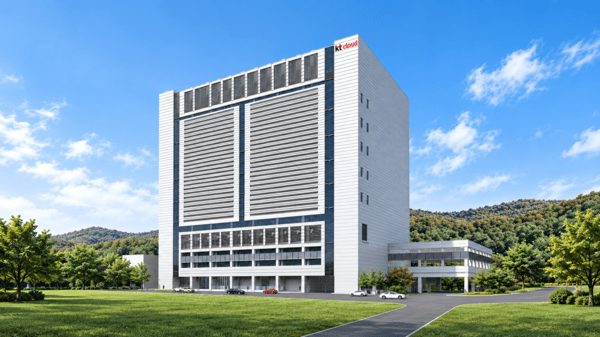
KT Cloud announced on the 22nd that it had broken ground on the Ansan AI Data Center (AIDC).
The Ansan AIDC will have a total floor area of about 36,878 square meters, 2 basement levels and 9 stories above ground, a total power capacity of 50 MW, and completion targeted for 2029.
KT Cloud plans to sequentially secure new data centers, including the one in Ansan, and aims to build capacity to supply 1 GW of AIDC by 2031.
KT Cloud announced on the 22nd that it had broken ground on the Ansan AI Data Center (AIDC). The groundbreaking is intended to meet demand for AI infrastructure in the Seoul metropolitan area, and the project is a company-owned data center. The Ansan AIDC will have a capacity of 50 MW, with completion targeted for 2029.
The Ansan AIDC will be built on a total floor area of about 36,878 square meters, with 2 basement levels and 9 stories above ground. Its total power capacity will be 50 MW.
The project is part of KT Cloud's "2031 1 GW AIDC supply strategy." KT Cloud plans to sequentially secure new data centers, including the one in Ansan. Through this, it aims to expand the supply base for AI infrastructure in the Seoul metropolitan area and respond to high-performance GPU environments.
The Ansan AIDC will be designed with high-density, high-heat AI server operations in mind. Liquid Cooling and a high-load-bearing structure will be applied to accommodate high-density AI servers. These specialized design features will be reflected across power, cooling, and the overall building structure.
All server rooms at the Ansan AIDC will be built with a design that responds to Liquid Cooling, and the facility will be designed to strengthen both cooling and load-bearing capacity on the premise of accommodating high-heat, high-performance AI equipment. Following last year's opening of the Gasan AI Data Center, this marks an expansion of cooling infrastructure for high-heat AI servers, and the company is also considering the introduction of high-performance equipment such as NVIDIA's next-generation AI GPU, Vera Rubin. In addition, a high-load-bearing structure will be applied.
To this end, KT Cloud will introduce a Free Cooling system to improve cooling efficiency. The system links cooling coils on the building's exterior walls with an enclosed cooling tower, and uses the lower outside air temperatures in the shoulder seasons and winter for cooling.
KT Cloud said the expected benefits of introducing Free Cooling include reducing the load on cooling tower fans and chillers. It plans to improve the data center's cooling energy efficiency through this system, and aims to improve both power supply and cooling efficiency at the same time while responding to rising power usage by high-density servers.
KT Cloud plans to use the Ansan AIDC as a new AI infrastructure hub in the Seoul metropolitan area. Going forward, it plans to expand supply by linking its own data centers with external infrastructure. KT Cloud's goal is to secure the capacity to supply a total of 1 GW of AIDC by 2031.
Kim Bong-gyun, CEO of KT Cloud, said the Ansan AI Data Center is a project that applies power and cooling infrastructure optimized for high-density AI servers and incorporates next-generation design technologies. He added that KT Cloud has accumulated experience in building and operating data centers and also has in-house technological capabilities, expressing its commitment to providing stable and efficient AI infrastructure based on those strengths.
Source: TECHWORLD · Kim Seung-gi
Original: https://www.epnc.co.kr/news/articleView.html?idxno=408628
References
This article was produced with the help of an automated content generation algorithm.
Source: TECHWORLD
View originalThis article was summarized and organized by BizCrush based on the original article from TECHWORLD. For exact quotations and full details, please refer to the original article.