Google Cloud Outage Disrupts UK Financial and Public Services, Exposing Risks of Cloud Concentration
IT DAILY ·
✦ AI Summary
According to Google Cloud's official service status page, multiple service outages occurred in the London region, europe-west2, on the 20th.
The outage began at 7:08 a.m. and ended at 3 p.m., and Google said the cause was a power-related issue in the europe-west2-b availability zone.
As a result, cloud service availability was lost, error rates rose for some services in the region, intermittent network issues occurred, and financial and public services were also disrupted.
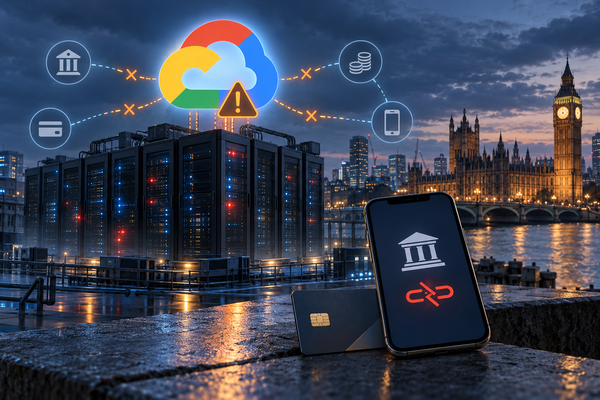
According to Google Cloud's official service status page, multiple service outages occurred in the London region, europe-west2, on the 20th local time. The outage began at 7:08 a.m. and ended at 3 p.m., lasting about 7 hours and 52 minutes. Google said the cause was a power-related issue in the europe-west2-b availability zone. As a result, cloud services in that availability zone became unavailable, error rates rose for some services in the region, and intermittent network issues also occurred within the region.
The impact of the outage spread across multiple sectors that use Google Cloud. In the UK, financial and public services were disrupted, and bank payment and withdrawal services were affected. Court remote-hearing systems were also impacted, and users continued to report outages in online public health services.
The case highlighted cross-sector spillover from problems with shared infrastructure used by multiple institutions and companies. As service disruptions simultaneously spread across finance, justice, and public health, it became clear that an outage in common cloud infrastructure can ripple across multiple sectors at once. This also exposed the risks of cloud concentration.
Google said most customers had seen their issues mitigated. It added, however, that a very small number of customers would need additional support. Google said it would release the findings of its incident analysis after completing its internal investigation.
The impact of the cloud outage spread to the financial sector and the public sector. The disruption affected bank payments and remote court hearings. In the financial sector, service disruptions occurred at Revolut, Lloyds, Halifax, and HSBC. According to Reuters and AP, Revolut saw effects on card payments and ATM withdrawals, and bank users had difficulty accessing online services. Revolut said customer funds were safe and data was also secure.
In the public sector, the video system that supports court operations experienced an outage. According to ITV in the UK, HMCTS was affected, and HMCTS is responsible for providing secure video links for court hearings in England and Wales. The affected system was the "Cloud Video Platform." The impact of this cloud outage went beyond website access problems and expanded to disruptions in the operational systems that support court participation.
Reports of access problems also continued in public health and government online services. According to Sky News, user reports were filed on Downdetector for NHS England-related services, and reports were also filed for government websites. In the public sector, reports related to healthcare and government web services piled up alongside the outage in the system supporting remote court hearings.
The incident highlighted the implication that if a shared external infrastructure on which multiple institutions depend goes down, financial and public services can be affected at the same time. It also confirmed that when underlying infrastructure is shared, outage risks can overlap regardless of whether the operators of individual services are different.
UK regulators had previously pointed out that if multiple financial firms use the same technology supplier, an outage at that supplier can affect several firms and the market at the same time. In response, the UK began direct supervision of major technology suppliers.
In July, the UK Treasury designated four entities related to Amazon Web Services (AWS), Google Cloud, Microsoft, and Oracle as "Critical Third Parties" (CTP). The Bank of England, the Prudential Regulation Authority (PRA), and the Financial Conduct Authority (FCA) have jointly supervised the resilience of core services those four provide to the financial sector since July 13.
Supervised firms are obligated to identify and manage risks to their critical services, and to provide timely information to the authorities and the financial firms that use them if a major incident occurs. However, separate from supplier supervision, each financial firm remains responsible for due diligence on external services, for risk management, and for drawing up contingency plans.
The incident raises the question of whether essential services can be maintained when common infrastructure goes down and whether rapid recovery is possible. At the time, Google advised customers who could do so to move workloads to another availability zone or region in connection with the outage.
Source: IT DAILY · Lee Jae-young
Original: https://www.itdaily.kr/news/articleView.html?idxno=242332
References
This article was produced with the help of an automated content generation algorithm.
Source: IT DAILY
View originalThis article was summarized and organized by BizCrush based on the original article from IT DAILY. For exact quotations and full details, please refer to the original article.