AI Adjusts MRI to Track Fetal Movement
AI TIMES ·
✦ AI Summary
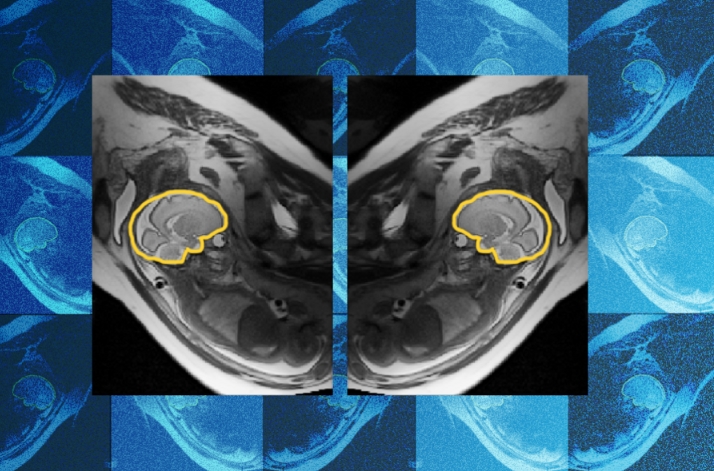
According to AI TIMES, a joint research team including MIT unveiled a deep learning model called E-Pose on October 19 that adjusts brain MRI…
According to AI TIMES, a joint research team including MIT unveiled a deep learning model called E(3)-Pose on October 19 that adjusts brain MRI scans in real time even when a fetus moves inside the womb. The technology is designed to reduce orientation mismatches and gaps that arise in the process of combining multiple 2D images into a 3D brain image, with a focus on improving the accuracy of prenatal diagnosis. The researchers said they directly incorporated the left-right symmetry of the fetal head and physical principles into the neural network architecture, designing it to intervene in the actual image acquisition stage rather than simply assist with interpretation. As a result, it is drawing attention for whether it can reduce the need for rescan due to incomplete exams and ease the burden of long scans on pregnant women. However, the current model has mainly been trained on late-stage fetuses, leaving limits to its direct application to scans at earlier stages. The research team plans to advance the system so it can stably track movement even in early and mid-pregnancy stages, with the goal of expanding it to detect fetal brain developmental abnormalities earlier.
Perspective
The significance of this research lies in expanding the role of medical imaging AI from reading support to scan control. If image quality is stabilized from the outset, uncertainty in the subsequent diagnostic process can also be reduced, potentially changing the workflow of prenatal diagnosis itself. In fields where data must be collected in highly dynamic environments, this kind of approach has substantial room to spread. In the end, the focus of competitiveness may shift from better interpretation algorithms alone to integrated designs that reduce failures at the imaging stage.
This perspective is BizCrush's own commentary and is not part of the reporting by AI TIMES.
This article was produced with the help of an automated content generation algorithm.
Source: AI TIMES
View originalThis article was summarized and organized by BizCrush based on the original article from AI TIMES. For exact quotations and full details, please refer to the original article.