Morphic Launches MCP Linking Claude and Codex, Connects Video Production Features
TECHWORLD ·
✦ AI Summary
Morphic announced the launch of "Morphic MCP" on the 20th.
This feature lets users access Morphic's image, video and audio creation tools from external AI and development tools through the MCP (Model Context Protocol) standard.
Morphic said it is available to all pricing plan users and that it has also applied access control and security management features for enterprise users.
Morphic announced the launch of "Morphic MCP" on the 20th. Rather than keeping its image, video and audio creation features confined to its own service, Morphic introduced a way to connect them to external AI and development tools through the MCP (Model Context Protocol) standard. MCP is a standard protocol for linking AI services and development tools with external service functions and data.
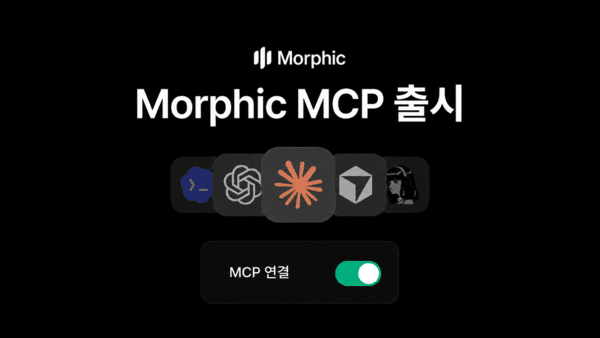
"Morphic MCP" allows external AI and development tools to use Morphic's image, video and audio creation features. It also supports integration with external environments such as Claude, Visual Studio Code (VS Code) and ChatGPT Codex. Supported environments include more than six options, including Claude Desktop, web, Claude Code, VS Code, ChatGPT Codex, Codex CLI and Zed.
Morphic users can copy the server address from the Studio MCP settings page and connect it to use the features across multiple environments. "Morphic MCP" is available to all pricing plan users.
This environment is designed to handle image, video and voice generation and editing within existing LLM workflows. For images, it can create up to four versions per request, and supports partial edits, outpainting, upscaling and image compositing.
Video can be generated from text, images and frames, and the service also provides lip-sync, video trimming, speed control and subtitle insertion features. For voice, it can generate dialogue, music and sound effects, and it also supports voice conversion and audio extraction. It also includes review features that let users check the video layout, audio volume and silent sections.
Work results are saved to the Morphic Studio project library. After storing the original and edited versions, users can move them to Morphic Studio Canvas and the video editing feature, "Compose," and continue working in "Compose."
It also offers cost management features. Before running a task, users can check the estimated credit usage for up to a 20-stage pipeline, allowing them to understand in advance how many credits a complex production process will consume.
As it pursued the launch of MCP, Morphic applied access control and security management features for enterprise users. Individual connection permissions can be revoked, and connections unused for 30 days are automatically terminated. Organization administrators can manage whether MCP is used across the organization, control credit usage by member, and manage external tool connection status.
Morphic said the purpose of launching MCP is to strengthen connectivity between existing AI tools and its own creation platform and to support continued production work without moving to a separate environment. Through this, it aims to let users keep working without switching environments.
J.D. Kanani, CEO of Morphic, said the company is launching MCP so enterprise customers and individual creators can use Morphic's creation features inside familiar LLMs. He said Morphic plans to continue expanding connectivity with external services and will also strengthen its workflow environment for film and AI drama production.
Source: TECHWORLD · Kim Seung-gi
Original: https://www.epnc.co.kr/news/articleView.html?idxno=408467
References
This article was produced with the help of an automated content generation algorithm.
Source: TECHWORLD
View originalThis article was summarized and organized by BizCrush based on the original article from TECHWORLD. For exact quotations and full details, please refer to the original article.