Lablup Targets Global AI Infrastructure With KOSDAQ Listing, Expands from GPUs to Tokens
TECHWORLD ·
✦ AI Summary
Lablup said it is moving ahead with a KOSDAQ listing and plans to use the listing as a springboard to expand overseas business and increase investment in technology development.
About half of the offering proceeds will be used to secure hardware for verifying next-generation AI semiconductors, while the rest will go toward expanding overseas business, among other purposes.
Lablup is broadening its business from GPU resource management to model inference, token usage, and cost management, while targeting the global neocloud market.
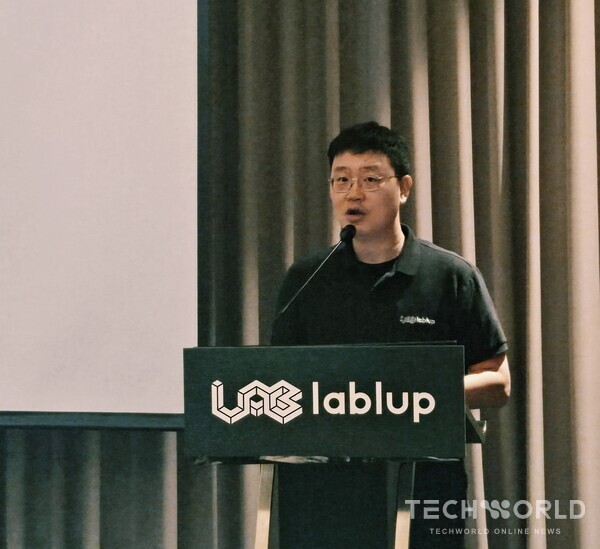
Lablup is moving ahead with a KOSDAQ listing. The company plans to use the listing as a springboard to expand its overseas business and step up investment in technology development. On the 19th, Lablup held an IPO press conference at the Conrad Seoul in Yeouido, Seoul, and outlined its growth strategy after the listing.
Lablup plans to allocate about half of the offering proceeds to securing hardware for verifying next-generation AI semiconductors. The rest will be used for expanding overseas business, among other purposes. Lablup is broadening its business scope from managing AI accelerators such as GPUs to model inference, token usage, and cost management, while targeting the global neocloud market.
CEO Shin Jeong-kyu said the AI industry has moved beyond the research and development and technology optimization stages and entered an industrialization phase that requires large-scale capital investment. Shin said it would be difficult to keep up with the speed of market growth through reinvestment of profits from existing businesses alone.
Shin said the time has come when capital scale matters more than technology scale at the industrial stage. He said he believes that the scale of profit reinvestment alone has limits in keeping pace with the speed of business expansion driven by industrialization.
Founded in 2015, Lablup develops software for AI infrastructure management and operations. Its flagship platform is Backend.AI.
Backend.AI is operated in a way that supports GPU resource allocation, AI model development and training, and inference and serving, while providing a single operating environment. The platform's core technologies are GPU partitioning virtualization and an orchestration engine that automatically allocates resources for AI workloads.
GPU partitioning virtualization increases resource utilization by allowing multiple users to share a single GPU. Lablup supports NVIDIA, AMD, and Intel GPUs, as well as domestically produced neural processing units (NPUs), for a total of more than 11 types of AI accelerators.
Shin cited NVIDIA's acquired Run:ai as a competing solution and highlighted integrated operations, rather than a specific feature, as Lablup's differentiator. Lablup said it provides a single platform for GPU resource management, model training, and inference, and can also integrate and operate AI accelerators from manufacturers other than NVIDIA.
Lablup also presented its real-world customer operating experience as a competitive advantage. The company said its products are operating at more than 120 sites in Korea and abroad, and that it has managed more than 2,000 GPUs at a single site. It also said that at some clients, GPU utilization rose from 30% to 85%, while related budgets were cut by 40%.
Lablup said it is participating as an infrastructure partner in the Upstage consortium for the government's independent AI foundation model project. In the process, it supported model training on more than 2,500 cumulative NVIDIA B200 and H100 GPUs and handled automatic failure recovery and data supply optimization. According to Lablup, the expected training period was shortened from 120 days to 66 days.
The company is monetizing its technology through an annual subscription business model. License fees are set based on the number of GPUs and performance tier. When a customer adds or replaces equipment, the contract size also expands.
Under this business structure, recurring revenue accounted for 94.7% last year. The average net revenue retention (NRR) over the past 2 years was 131.9%. Based on this, the company plans to use the funds secured through the listing for verifying next-generation AI semiconductors and expanding overseas business.
Lablup plans to verify compatibility with new GPUs and NPUs. It also plans to expand test infrastructure to address real-world operational issues such as power outages and network failures.
Shin said the company is not a hardware supplier or cloud operator, but that hardware-based verification is necessary to stably operate the platform across diverse infrastructure at each customer site. He also said tests need to be conducted under various scenarios, including power outages and network failures.
The company plans to use the equipment it secures not merely to hold it, but to verify the profitability of its AI inference business. Shin proposed using 30% of equipment operating time for technical verification and 70% for token generation through AI inference. The tokens produced in this way will be supplied to external services, with the goal of covering part of operating costs.
Through this operating model, the company aims to secure cost and revenue data from actual operations. Overseas, it is targeting a total of 163 companies, including 120 emerging neocloud companies and 43 sovereign neocloud companies. It also plans to expand cooperation with local resellers in the U.S., the U.K., and Singapore to pursue customer acquisition, system build-out, and technical support together.
Lablup is currently estimating mid- to long-term revenue prospects based on its current sales pipeline, the likelihood of closing deals with each customer, and initial supply volumes. It is also in discussions with overseas neocloud operators over deployment scale and supply terms.
Shin said negotiations are under way with neocloud companies in the double digits. Depending on the counterpart, some are at the stage of presenting quotes, while others have just started discussions, he said.
Regarding concerns about overinvestment in AI infrastructure, Shin said the company is focusing on demand for software that improves the efficiency of existing equipment operations. He said Lablup is not a company that directly leases hardware such as GPUs.
According to the company, this business structure means the burden of capital expenditure is relatively light. It also said that if investment conditions worsen, demand is expected to rise for improving utilization of existing resources.
Shin said he is not forecasting a decline in AI investment. However, he said he does not expect the current trend of expanding investment to continue as it is.
Meanwhile, Lablup is expanding its GPU management business, which has centered on data centers, into the personal PC and AI service operations segments. The company is preparing to release version 2.0 of AIGO, which runs AI models directly on PCs, later this month, and has set a revenue target of KRW 57.9 billion for 2029.
Lablup is currently supporting enterprise AI service operations by providing Continuum Suite, which consists of AI inference products Continuum Router and Continuum Hub. Continuum Router automatically connects users to the model best suited to their request, while Continuum Hub supports token usage and cost management.
Lablup plans to launch Lablup Token Factory Suite early next year, linking its existing infrastructure operations technology with Continuum Suite. To that end, the company is developing a platform that provides integrated support for GPU resource management, AI model inference, and token usage and cost management.
Lablup's earnings forecast for this year is revenue of KRW 9.9 billion and operating profit of KRW 1 billion, while its target performance for 2029 is revenue of KRW 57.9 billion and operating profit of KRW 25.5 billion. Shin said the mid- to long-term forecast figures reflect the current sales pipeline and the likelihood of closing deals with each customer, and that expected revenue from new products such as Continuum was not included.
To achieve its growth goals, Lablup needs to convert ongoing discussions with overseas neocloud companies into actual contracts and secure revenue from new products.
Lablup has also set the total number of shares to be offered at 2.18 million and proposed an offering price of KRW 19,000–22,000 per share. The expected proceeds from the offering are KRW 41.4–48 billion, and the estimated market capitalization is KRW 276.3–320 billion. The general subscription period is the 22nd to the 23rd, and the planned KOSDAQ listing date is November 3. NH Investment & Securities is the lead underwriter.
Source: TECHWORLD · Kim Seung-gi
Original: https://www.epnc.co.kr/news/articleView.html?idxno=408391
References
This article was produced with the help of an automated content generation algorithm.
Source: TECHWORLD
View originalThis article was summarized and organized by BizCrush based on the original article from TECHWORLD. For exact quotations and full details, please refer to the original article.