LG Electronics Unveils Brand Heritage Video on Its Endless Home Appliance Innovation Journey to Global Customers
TECHWORLD ·
✦ AI Summary
LG Electronics said it has produced a brand heritage video that captures its home appliance innovation journey since its founding in 1958 and its future vision.
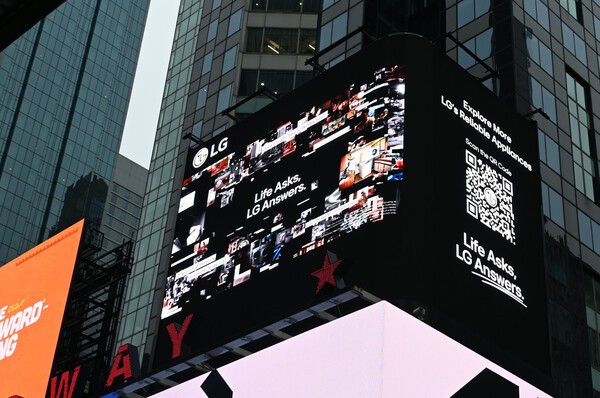
The video, themed “Life Asks, LG Answers,” was unveiled on outdoor billboards in New York’s Times Square.
LG Electronics said it contains its “Zero Labor Home” vision aimed at reducing household labor, as well as its AI home and home robot-based physical AI vision.
LG Electronics said it has continued its home appliance innovation journey since its founding in 1958 and produced a brand heritage video to introduce that journey and its future vision to global customers. The video is themed “Life Asks, LG Answers.”
The video was unveiled on an outdoor billboard in New York’s Times Square. LG Electronics said the purpose of the video is to share its “Zero Labor Home” goal for the home appliance business, which seeks to reduce the burden of household chores, with global customers.
“Zero Labor Home” is a goal of enabling customers to focus on more valuable tasks at home. The video highlights the home appliance innovation journey centered on solving inconveniences in customers’ daily lives.
It also presents the customer understanding and technological capabilities LG Electronics has accumulated through its home appliance business, as well as its vision to expand innovation into AI home and into the physical AI field, including home robots.
The video spotlights the innovation journey in washing appliances, showing the changes that led from the 1969 “Baekjo Washing Machine(WP-181)” to “LG TwinWash” and “LG WashTower.”
In this process, LG Electronics unveiled “LG TwinWash” in 2015, reflecting customer demand to wash different types of laundry at the same time. “LG TwinWash” combines a small top-load washer called “MiniWash” with a drum washer.
LG Electronics launched “LG WashTower” in 2020. “LG WashTower” improved space efficiency by applying an integrated washer-dryer design.
The video then introduces the refrigerator innovation process. The refrigerator innovation case begins with the 1965 “Nunpyo Refrigerator(GR-120)” and continues with “Magic Space(door-in-door)” and “Knock-on(InstaView).” “Magic Space(door-in-door)” is a function that lets users take out frequently used food without opening the refrigerator door fully. “Knock-on(InstaView)” is a function that allows users to check the inside by knocking on the door. This flow developed in the direction of enhancing customer convenience.
This content shows how home appliance design has changed in line with shifts in living environments over time, along with the development of key component technologies that supported those changes. Along with the introduction of changes in home appliance design, it also reflects the flow of responding to customer preferences and changes in residential spaces.
On the design side, it began with refrigerators finished with wood materials during the GoldStar era in the 1980s and evolved into the customizable, color and material selection-focused interior line “LG Objet Collection,” before expanding into built-in appliances designed to harmonize with spaces and the ultra-premium built-in appliance brand “SKS.”
On the key component technology side, the video includes a look at core component technologies and presents the start of motor development for fans in 1962. The starting point of LG Electronics’ motor technology was a motor for fans. Later, based on accumulated motor and control technologies in the home appliance sector, it developed into the “inverter DD motor,” which directly connects the washing tub and motor for drive, and then into the “AI DD motor,” which detects laundry characteristics and delivers optimal washing motions. More recently, it developed “LG AXIUM(AXIUM),” an actuator that serves as a robot joint.
The video LG Electronics is unveiling centers its ending theme on the company’s accumulated robot technology and its future vision for physical AI, and is structured so that the flow continues from its past robot development history to the recent unveiling of home robots and its AI home concept. LG Electronics began developing educational robots in 1983 and introduced a cleaning robot in 2003. It then unveiled the service robot “LG CLOi” in 2018, which performs guidance, delivery, and serving, and has continued to advance related robot technologies.
This flow continues into the home robot “LG CLOiD(CLOiD)” unveiled this year. “LG CLOiD(CLOiD)” presents the future of an AI home led by home robots.
LG Electronics plans to unveil the video on a billboard in New York’s Times Square to deliver this vision to global customers, and also plans to unveil it on a billboard in Piccadilly Circus in London, U.K. It will also be unveiled on major OTT platforms.
Ryu Joo-hyun, head of HS Marketing Communications at LG Electronics, said that through this unveiling, the company plans to share its innovation heritage and future vision with global customers and continue delivering differentiated brand value.
Source: TECHWORLD · Lee Gwang-jae
Original: https://www.epnc.co.kr/news/articleView.html?idxno=408347
References
This article was produced with the help of an automated content generation algorithm.
Source: TECHWORLD
View originalThis article was summarized and organized by BizCrush based on the original article from TECHWORLD. For exact quotations and full details, please refer to the original article.