Kohman Technology Executive Lee Moon-ki: “Defense AI Will Automate Everything From Intelligence Discovery to Draft Reports”
TECHWORLD ·
✦ AI Summary
Konan Technology is building a defense AI platform.
The platform is pursuing automation of open-source intelligence collection, translation, and draft report writing.
In connection with the company’s AX-Sprint task worth KRW 2.5 billion, it plans to build an open-source intelligence analysis platform for North Korean and overseas defense and security over 17 months.
Konan Technology is building a defense AI platform. The platform is being developed to include functions for automating open-source intelligence collection, translation, and draft report writing, each of which accounts for a large share of repetitive work in the defense intelligence analysis process. The goal is to reduce the burden of repetitive data searching and organization.
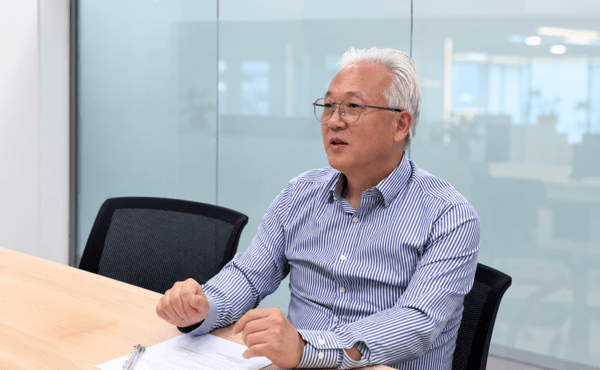
Through this, the company aims to help shift analysts’ work from data collection and organization to information review and judgment. Lee Moon-ki, a director at Konan Technology’s Data Science Division, gave an interview to TechWorld on the 8th, where he explained the direction of automation in defense intelligence analysis work and ways to ensure reliability.
Lee said he handled data collection work at Konan Technology for about 23 years and has been in charge of analysis work for about the past 12 years. The Data Science Division is responsible for analyzing domestic and overseas news and online materials, with analysis targets including corporate supply chain risks, public opinion on policy, and reactions from foreign media. Konan Technology has accumulated experience in these civilian and public-sector areas, and is applying it to defense intelligence analysis.
Last September, the company launched a task under the Ministry of National Defense’s “AI Application Product Rapid Commercialization Support (AX-Sprint)” project for automatic open-source intelligence (OSINT) collection and analysis, and signed an agreement with the company and IITP. The total project cost is KRW 2.5 billion, and the project period is 17 months. The target is an open-source intelligence analysis platform for North Korean and overseas defense and security fields.
In connection with this, the “5th Defense AI Summit” is scheduled to be held on November 13 at Nine Tree Lokhaus in Yongsan, Seoul. At the event, the company will introduce and demonstrate its all-source intelligence analysis platform, “Konan ARGOS.”
The event will also discuss ways to advance open-source intelligence analysis work. The company plans to showcase related technologies and applications alongside the project.
Konan Technology has accumulated search and information management technologies in the defense sector since launching a naval search engine project in 2006. It later combined search with natural language processing (NLP) and expanded its business area into intelligence analysis.
Lee said the emergence of LLMs has made it easier to develop functions that were previously difficult to implement. He added that this has also increased the possibility that other companies can offer similar functions, deepening the challenge of differentiation for established technology firms.
Lee said the level of technological progress since LLMs emerged was beyond expectations. He added that among NLP specialists, it feels as if the world has been completely turned upside down.
These changes are also affecting the way work is handled. The conventional method involved analyzing materials based on a fixed process and then having a person review the results. Now, multiple tasks can be linked automatically, and it is also possible to add LLM comments to analysis results.
In defense intelligence analysis, information searching is often cited as the first area that needs improvement. Information searching requires continuously checking needed information, selecting what to include in reports, and reviewing reliability. However, this work takes a great deal of time.
Foreign-language materials are selected, translated, and then delivered internally. Analysts compile the translated materials and write reports.
When unusual situations arise, additional materials must be collected and detailed reports written. In such cases, the workload increases significantly.
Lee said that searching, translation, and draft report writing can be automated. However, he explained that reviewing and revising drafts, as well as completing the final report, remain the analyst’s responsibility. He also said it is still difficult for AI to replace final judgment.
OSINT is the activity of collecting and analyzing materials such as news, websites, and public reports to derive the information needed. Media coverage is used as a key analysis source.
In this process, it is important to distinguish whether the same information has been cited repeatedly, and also to determine whether an independent source has been verified. Reliability assessments focus more on confirming the original source of information than on the number of reports. Konan Technology plans to reduce duplication through similarity analysis between materials, and to group articles about the same event so that related information can be reviewed together.
Lee explained the standard for judging the number of article sources, saying that reports that simply accept and rework a single tip have one original source, while articles independently reported through multiple channels have multiple sources.
He added that, as a method for assessing reliability, the company is reviewing a journalist’s past reporting record and a media outlet’s reporting tendencies, but the specific method has not yet been finalized. He also said about 12 methods are under consideration for reliability assessment, and that the company is looking at a scale of 4 to 5 methods for actual application.
For this project, the company plans to use multilingual original texts and translation data, a North Korean language dictionary, a military terminology dictionary, person-recognition training data, and equipment-recognition training data. For the items provided in the analysis results, it was designed to present the basis and the original source together so analysts can verify them directly.
He also said the project is aimed at presenting a link between tactical response and long-term geopolitical analysis. Lee added that in existing defense projects, there were many tactical requirements tailored to the mission and intelligence sources of specific units.
Representative functions include identifying targets based on video and images, and supporting responses tailored to on-site situations. These functions are intended for use in individual operations.
Konan ARGOS is an analysis platform for supporting analysts’ work based on integrated analysis of diverse information sources, scheduled for release in November. The company plans to develop Konan ARGOS into a system that simultaneously supports on-site tactical judgment and long-term strategic judgment.
In this structure, the OSINT project places weight on geopolitical analysis centered on long-term observation of North Korea and surrounding countries’ movements. The open-source intelligence to be analyzed includes the United States, China, Japan, Europe, and the Middle East, and the OSINT project concept is geared toward understanding South Korea’s security implications through open-source intelligence analysis.
The speaker said OSINT is more strategic than tactical in nature. He also said the company reviews how North Korean movements are detected and how authenticity is judged, while also examining the impact on South Korea and the situation in neighboring countries.
The defense AI assistant is being pursued in a way that supports commanders’ decisions through the accumulation of related information. When assessing whether a specific situation constitutes signs of provocation, the defense AI assistant is tasked with presenting the basis for judgment and supporting confirmation of other possible interpretations of the same situation.
Lee explained that the company repeatedly asks and answers questions based on accumulated information. He then said it reviews whether opposing hypotheses exist and comprehensively examines other facts that support those hypotheses. He said the commander makes the final judgment after going through this process.
He explained that after operations, the contents of the work are documented, and performance and problems are also documented. He said the records left in this way are fed back into the system.
He stressed the need to use records in the analysis of the next operation. He also stressed that records should be used in decision-making for the next operation.
Lee said the company’s competitiveness lies in its experience of continuously securing and processing vast amounts of data and extracting the information needed. He also explained that, apart from the ease of developing software functions, using large-scale data in real-world work requires separate capabilities.
He said the company intends to expand its business by leveraging its experience in data acquisition and analysis. In particular, he said it will focus on the securing, processing, analysis, and use of large volumes of data, and pursue specialization in areas that can preemptively assess and detect risks that may arise in corporate supply chains.
Going forward, the Data Science Division plans to continue supporting customized open-source intelligence analysis for defense agencies, while also expanding its civilian business. The expanded civilian areas include early detection of risks based on supply chain and overseas geopolitical changes.
In addition, Konan Technology plans to build a defense AI brand system centered on Konan ARGOS. The company intends to brand its defense DX and AX support OSINT analysis and decision-support platform as “Konan-ARGOS by OSINT” (tentative) in the future.
Source: TECHWORLD · Kim Seung-gi
Original: https://www.epnc.co.kr/news/articleView.html?idxno=408132
References
This article was produced with the help of an automated content generation algorithm.
Source: TECHWORLD
View originalThis article was summarized and organized by BizCrush based on the original article from TECHWORLD. For exact quotations and full details, please refer to the original article.