Sony Releases ECM-AX10 Spatial Audio Microphone for Smartphones in South Korea
IT DAILY ·
✦ AI Summary
Sony Korea announced on the 16th that it has released the smartphone-direct spatial audio microphone ECM-AX10 in South Korea. The price is KRW 299,000.
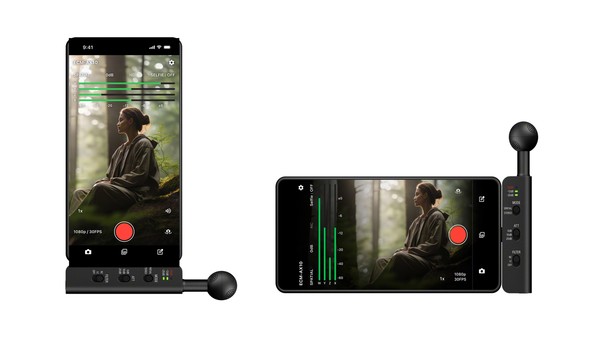
The ECM-AX10 can be connected directly to a smartphone via USB-C and supports shooting through editing without separate recording equipment.
The product uses 4 omnidirectional microphone capsules and Sony's spatial audio processing technology, and supports 3 recording modes: ambisonics, binaural, and stereo.
Sony Korea announced on the 16th that it has released the smartphone-direct spatial audio microphone ECM-AX10 in South Korea. The price is KRW 299,000. Sony Korea said the ECM-AX10 can be connected directly to a smartphone for use as it announced the domestic release.
Sony Korea said the product's key feature is that no separate recording equipment is needed. It explained that users can capture the direction and distance of surrounding sounds with a smartphone and then link spatial audio recording with video shooting and editing on the device.
The product uses a spherical microphone module. It also comes with 4 omnidirectional microphone capsules to capture sound from multiple directions.
Sony's spatial audio processing technology is also applied. Sony Korea described it as a product that records sound direction, distance, and spatial characteristics.
Sony Korea introduced the ECM-AX10 as the world's first spatial audio microphone for smartphones and a product certified for Eclipsa Audio. Eclipsa Audio is based on the IAMF (Immersive Audio Model and Formats) standard of AOMedia. Sony said the ECM-AX10 obtained Eclipsa Audio certification on the 15th of last month.
The ECM-AX10 supports 3 recording modes: ambisonics, binaural, and stereo. The ambisonics mode records multidirectional sound information and is used for producing spatial audio content. The binaural mode is designed to deliver a three-dimensional sense of direction when played back through headphones. The stereo mode records 2-channel left-right sound and is suited for producing general video and social media content.
Recordings made in ambisonics mode can be linked with Sony's dedicated app, Spatial Audio Video Tool. Spatial Audio Video Tool supports content creation based on Eclipsa Audio. Eclipsa Audio-based content can be posted on YouTube.
The dedicated app supports video shooting and clip review. It also supports simple editing and exporting content with spatial audio applied.
As a result, users can carry out the production process from shooting to editing on a smartphone without separate professional editing equipment.
The product's binaural mode is designed to support headphone-based immersive audio listening even in environments that do not support Eclipsa Audio. The stereo mode can be used not only with Sony's dedicated app but also with general recording apps and video shooting apps.
The ECM-AX10 measures about 35.1×116.1×21.2 mm and weighs about 24 g. The product connects directly to compatible smartphones through a USB-C port and can be used without a separate recorder.
Sony included Xperia, Samsung Electronics' Galaxy S25 and S26 Ultra, Apple's iPhone 15, 16 Pro, and 17 series, and Google's Pixel 10 series in the compatibility tests it disclosed. However, supported functions and recording quality may vary depending on the smartphone model and performance.
Sony PCL, a Sony Group affiliate, participated in product development. Drawing on its experience accumulated in video and audio post-production, Sony PCL supported tuning the sound quality of the ECM-AX10.
Michihiko Iwana, a sound engineer at Sony PCL, cited the ECM-AX10's quick response in the low and mid-low frequency ranges as an acoustic characteristic. He also said it richly reproduces the sense of three-dimensional sound and the openness of a 360-degree sound field when recording ambient environmental sounds.
A Sony Korea official said the ECM-AX10 was developed as a product that makes it easy to capture the three-dimensional sound and sense of space at a scene using only a smartphone.
Source: IT DAILY · Kim Byeong-ju
Original: https://www.itdaily.kr/news/articleView.html?idxno=242244
References
This article was produced with the help of an automated content generation algorithm.
Source: IT DAILY
View originalThis article was summarized and organized by BizCrush based on the original article from IT DAILY. For exact quotations and full details, please refer to the original article.