VESSL AI Pushes for 200,000 GPUs by 2030, Aiming to Become a Global Neo Cloud Leader
IT DAILY ·
✦ AI Summary
VESSL AI said it has unveiled a roadmap to push ahead with securing 200,000 GPUs by 2030 and leap into the ranks of a global top-tier neo cloud company.
To that end, it plans to expand its business on the basis of its self-developed distributed orchestration, Fluid Computing, and broaden its scope to include hardware-software integration and token-level compute supply.
VESSL AI said first-half sales this year reached KRW 130 billion, projected annual sales at KRW 250 billion, and also disclosed plans for 8 AIDC hubs nationwide in 2027 and a DGX Vera Rubin NVL72 cluster opening in the first half of 2027.
VESSL AI said it has declared a mid- to long-term roadmap to become a global top-tier
neo cloud
company centered on securing 200,000 GPUs by 2030. This article was reported by IT Daily.
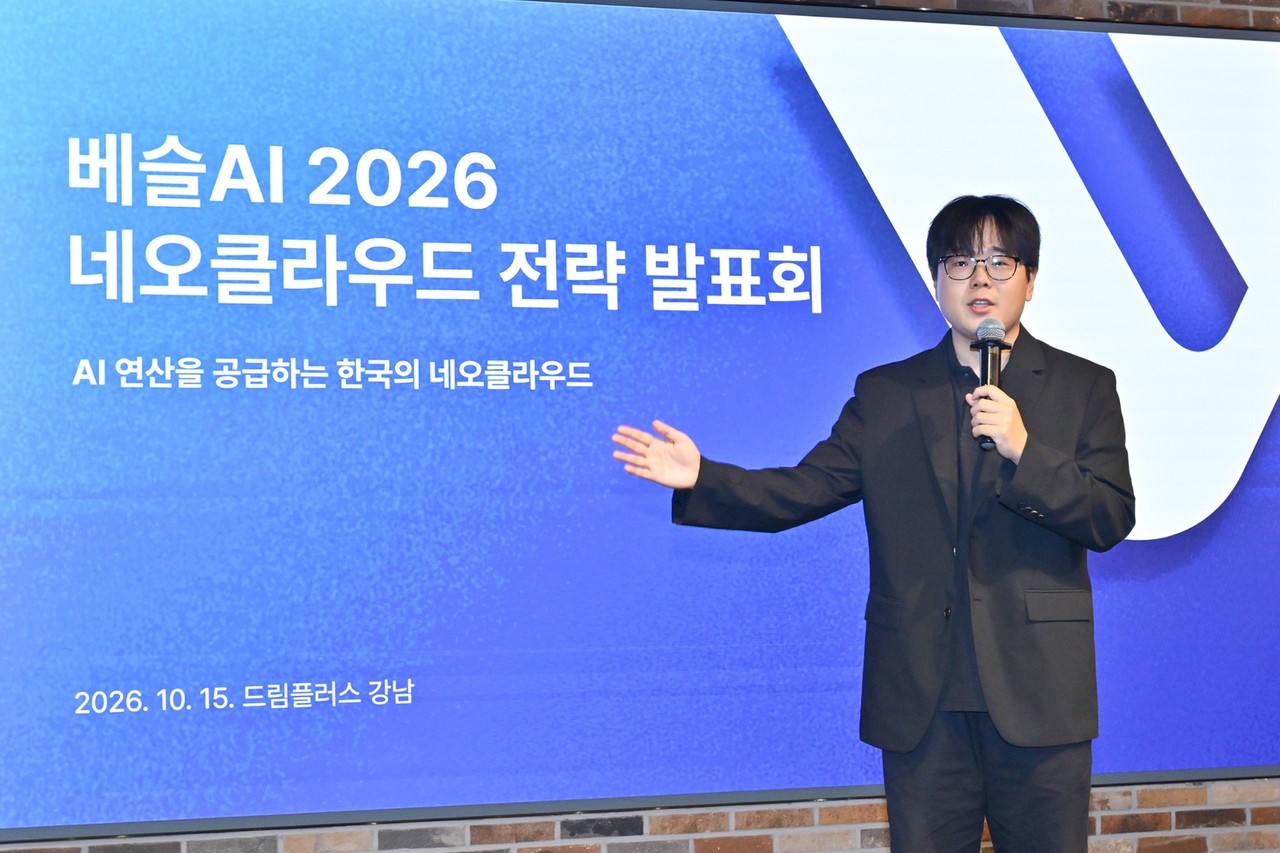
The announcement was made by An Jae-man, CEO of VESSL AI. The article included a photo of CEO An speaking at the event, and the photo was provided by VESSL AI.
Founded in 2020, VESSL AI initially started as an MLOps platform that made it easier to develop, train, deploy, and operate AI models in complex heterogeneous GPU environments. VESSL AI posted KRW 130 billion in revenue in the first half.
As generative AI and agentic AI spread and global compute demand surged, VESSL AI expanded its business in a direction that combines its accumulated software capabilities with physical compute resources. The expanded business area is a Neo Cloud that supplies large-scale training and inference resources.
An Jae-man, CEO of VESSL AI, explained that the industry has moved from simple question-and-answer AI to an era of agents that carry out autonomous work all day long. He added that compute token consumption is rising exponentially, and that GPU supply shortages are worsening due to limits in HBM memory and power grids. An said VESSL AI has software technology that efficiently links distributed infrastructure, and that it has succeeded in establishing itself in the Neo Cloud market based on that capability.
VESSL AI said its revenue in the first half of this year was KRW 130 billion. The company projected full-year revenue of KRW 250 billion. An Jae-man, CEO of VESSL AI, presented these details at the event.
VESSL AI has completed a Series B funding round and is currently pursuing a Series C round. The company announced a plan to pursue global GPU financing worth KRW 400 billion for GPU infrastructure expansion.
To that end, VESSL AI plans to work with global investment banks and others. The company plans to reduce risk by using a structure backed by confirmed revenue. Through this, it aims to support infrastructure expansion on a trillion-won scale.
As the core of its infrastructure expansion roadmap, VESSL AI proposed phased GPU additions and the distribution of regional hubs. The company is currently operating about 7,000 GPUs. It proposed 8 nationwide AIDC hubs in 2027.
VESSL AI is targeting 10,000 GPUs by the end of this year. It also set a goal of securing 50,000 GPUs in 2027. By 2030, it has set a target of securing 200,000 GPUs.
VESSL AI said its pipeline of customers waiting to onboard exceeds 30,000 GPUs. It explained that 70% to 80% of that onboarding pipeline comes from demand from frontier AI labs in Silicon Valley, the United States. The company set its phased targets based on the GPUs it is currently operating and the demand in the pipeline.
Taking into account power grid and site conditions in the Seoul metropolitan area and other regions across the country, VESSL AI is planning to build 8 nationwide hub AIDCs by 2028. Based on a strategy of distributing compute hubs across the country, it will pursue the business in cooperation with specialized data center partners, while also applying a strategy to minimize debt burden.
The company plans to open an Nvidia next-generation architecture 'DGX Vera Rubin NVL72' cluster in the first half of 2027. The cluster was presented as the first group deployment planned in South Korea.
VESSL AI plans to own and supply a lineup of high-performance GPUs, including A100, GB300, and Vera Rubin. It also plans to prioritize supply to foundation model developers and support training for next-generation frontier models.
At the event, An Jae-man, CEO of VESSL AI, took the stage for the presentation. The photo was taken by reporter Kwon Young-seok.
The technical presentation was given by Jeon Ji-hwan, CTO of VESSL AI. Jeon Ji-hwan, CTO of VESSL AI, unveiled the company's in-house core software, 'Fluid Computing,' and also unveiled its token-level 'inference service' and new 'reasoning service.'
Through Fluid Computing, VESSL AI operates virtualization technology that bundles heterogeneous GPU clusters across multiple geographically distributed data centers into a single pool. The technology flexibly allocates compute resources according to customer workload characteristics — training, post-training, and inference — and is based on agentic interfaces (CLI/SDK). The company said this reduces manual operational intervention by about 30% and maximizes resource utilization.
In addition to renting GPU instances, VESSL AI expanded its business into an 'inference service.' The 'inference service' is a model in which customers pay computing costs in token units based on API usage. CTO Jeon Ji-hwan said that by performing D2E optimization based on an understanding of both infrastructure and AI workloads, and by applying dedicated kernel design and acceleration, the company improved customers' inference token processing efficiency by 2.7 to 3 times.
VESSL AI said it is supplying global inference infrastructure for Upstage's large language model (LLM) 'Solar Pro 4' and is handling large-scale traffic for 'Solar Pro 4.' The company emphasized that it is responding to hyperscale cluster environments where frequent node disconnections occur, and that it is maintaining 99.9% availability by preemptively detecting and isolating more than 80% of hardware failures.
An Jae-man, CEO of VESSL AI, explained that the company's differentiated competitiveness lies in having started from AI development sites and solving bottlenecks in resource acquisition and operations through software. He added that the company aims to connect Korea's infrastructure with global AI demand based on 8 nationwide hub AIDCs and next-generation GPU infrastructure, and expressed its intention to establish itself as a national neo cloud company.
Source: IT DAILY · Kwon Young-seok
Original: https://www.itdaily.kr/news/articleView.html?idxno=242215
References
This article was produced with the help of an automated content generation algorithm.
Source: IT DAILY
View originalThis article was summarized and organized by BizCrush based on the original article from IT DAILY. For exact quotations and full details, please refer to the original article.