SKT Wins International Award for AI-RAN-Based Autonomous Vehicle Marshalling Technology
IT DAILY ·
✦ AI Summary
SK Telecom (SKT) announced on the 15th that it won an award at the 'Network X Awards,' held in Vienna, Austria. SKT won in the 'Most Innovative 5G Communication Service' category. The award-winning technology was AI wireless base station (AI-RAN)-based autonomous vehicle marshalling (AVM, Autonomous Vehicle Marshalling) technology.
SK Telecom (SKT) announced on the 15th that it won an award at the 'Network X Awards,' held on the 14th local time in Vienna, Austria. SKT received the award in the 'Most Innovative 5G Communication Service' category in recognition of its competitiveness in communication network AX technology.
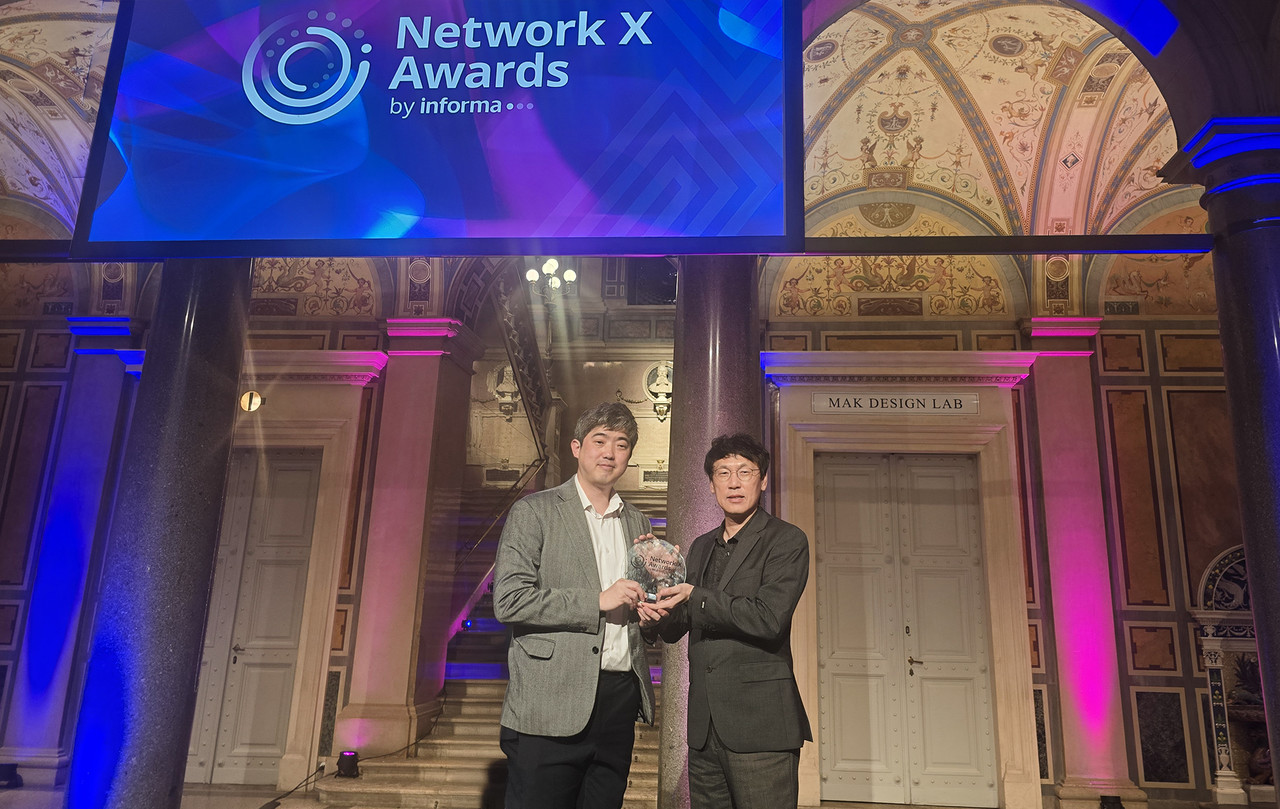
The award was given for its 'AI wireless base station (AI-RAN)-based autonomous vehicle marshalling (AVM, Autonomous Vehicle Marshalling)' technology for finished vehicles. In the related photo, Na Min-soo, manager of SKT's Biz Tech team, and Shin Hong-seok, manager of the wired Tech team, are shown.
'Network X' is an international event in the wired and wireless communications network sector hosted by Informa, a global ICT media and research company. This year's event ran from the 13th to the 15th.
More than 100 expert speakers participated in the event. More than 1,000 global telecom companies, large corporations and startups also took part.
The category is an award for communication services that present new service value and business models based on 5G networks. SKT was recognized for its achievement in implementing a new type of communication service that directly detects and controls vehicles on site with AI-RAN.
AI-RAN is a next-generation network infrastructure that provides communication services and AI services at the same time. AVM is a service based on this AI-RAN.
AVM performs the function of automating the process of moving finished vehicles, which had previously been done by people driving them directly, through an unmanned system. AVM carries out vehicle transport and alignment tasks over an intelligent network-based system.
LiDAR sensors are installed on site to transmit point cloud data that represents the shape and location of surrounding objects in 3D. The AI-RAN base station builds a real-time digital twin based on this point cloud, calculates a collision-free travel path and then sends driving commands to the finished vehicle. This method can also be applied to ordinary vehicles without autonomous driving functions, and unmanned transport is possible if modules and programs are installed in ordinary vehicles.
This proof of concept was carried out in the form of a demonstration of autonomous valet parking at an actual parking facility. The entire process, from sensor data collection to AI judgment and transmission of driving commands, was completed within the time required for unmanned vehicle control, and the demonstration vehicle completed autonomous parking normally without human intervention.
If commercialized, the technology would allow telecom operators to provide control services for multiple vehicles based on existing 5G infrastructure. In addition, once commercialized, it could offer new subscription-based revenue models by scale.
Through the government-funded 'Hyper-AI network infrastructure development' project, SKT plans to apply the technology to domestic finished vehicle factories in 2027 and demonstrate it in real industrial environments. It also plans to expand the application range to large-scale logistics sites such as ports and airports, and to develop it further into an AI-RAN-based physical AI service.
Source: IT DAILY · Seong Won-young
Original: https://www.itdaily.kr/news/articleView.html?idxno=242209
References
This article was produced with the help of an automated content generation algorithm.
Source: IT DAILY
View originalThis article was summarized and organized by BizCrush based on the original article from IT DAILY. For exact quotations and full details, please refer to the original article.