POSCO Future M Holds AI Festival to Expand On-Site AX
TECHWORLD ·
✦ AI Summary
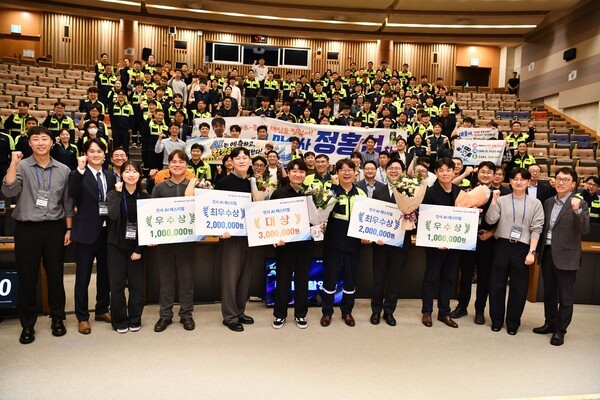
POSCO Future M held an "AI Festival" at POSTECH in Pohang, North Gyeongsang Province, on the 13th and wrapped up the results of the "AI 100-Day Challenge" that began in June.
At the event, 28 best practices were awarded, and the "Kiln Heater Status Prediction Model" was selected as the grand prize winner.
POSCO Future M plans to broaden the scope of AI use to the stages of proposing improvement measures and carrying them out, and apply it to actual work by the first half of 2027.
POSCO Future M said it held an "AI Festival" on the 13th at POSTECH in Pohang, North Gyeongsang Province. The event was held to wrap up the results of the "AI 100-Day Challenge" that began in June, and aimed to share AI use cases developed directly by employees. POSCO Future M also said the event was intended to expand AX across manufacturing, R&D and office operations.
At the event, 28 best practices were awarded. The winning cases came from two areas: AI app development to improve office and manufacturing work efficiency, and AI video production for in-house promotion, safety and training.
Using the event as a turning point, POSCO Future M plans to expand the scope of AI use beyond simple work support. The application range will be broadened to include the stages of proposing improvement measures and carrying them out.
Based on this expansion, POSCO Future M is envisioning the establishment of an "AI-Native" work system. The company said this system would allow AI to take part in the work improvement process, while people handle final judgments and decision-making.
During the event, employees in charge of operations whose systems were nominated for the grand prize and the top prize introduced systems they had developed themselves. The final winners were selected by combining the results of preliminary screening and real-time mobile voting.
The grand prize went to the "Kiln Heater Status Prediction Model." The model automatically collects and analyzes kiln heater operation data with AI, calculates failure risk and inspection priority, and supports proactive equipment inspections and replacement.
In cathode material production, maintaining a constant calcination temperature is a critical condition. For this reason, identifying heater conditions in advance is directly linked to production stability.
POSCO Future M believes the model can reduce sudden repair work and improve production efficiency. Top-prize winners included the "AI-based Integrated MRO Materials Management and Intelligent Purchasing System" and "Unmanned Acquisition and Analysis Automation of SEM Data."
The automation cases selected as best practices included the integrated MRO materials management system and the unmanned acquisition and analysis automation of SEM data. The integrated MRO materials management system is built on AI based on material-name search, and has functions that search information scattered across multiple systems and recommend materials that can be purchased together as well as domestic substitutes. It plans to use the system to simplify purchasing procedures, save work time, and cut costs.
The unmanned acquisition and analysis automation of SEM data is a case that automated the entire process from imaging product particles to analysis and results generation. Previously, people repeatedly photographed particles with a scanning electron microscope (SEM) and organized the data, but in this implementation, particle size and particle shape were set to be automatically analyzed. As a result, a reduction in repetitive work is expected.
The selected best practices were tested on site, and employee feedback was also collected. Through that process, they are scheduled to be applied to actual work by the first half of 2027.
POSCO Future M is linking these on-site application cases with its mid- to long-term AX strategy. In July, POSCO Future M presented its digital innovation vision, the "BoT(Battery of Things) Ecosystem Game Changer," and also established an AX promotion roadmap for the entire company.
The company has set a goal of improving manufacturing productivity by 30% and shortening product development time by 50% by the first half of 2028, and is pursuing tasks such as AI agent-based process optimization, data hub establishment, and intelligent factory implementation to achieve that. Separately, in September the company launched a PI-based AX project to accelerate AI adoption in major operations, and is stepping up AI deployment in manufacturing, R&D and marketing.
Source: TECHWORLD · Kim Seung-gi
Original: https://www.epnc.co.kr/news/articleView.html?idxno=408179
References
This article was produced with the help of an automated content generation algorithm.
Source: TECHWORLD
View originalThis article was summarized and organized by BizCrush based on the original article from TECHWORLD. For exact quotations and full details, please refer to the original article.