GIST, KETI and Laboro AI Team Up on Care and Creative Robotics Research
AI TIMES · · 1 views
✦ AI Summary
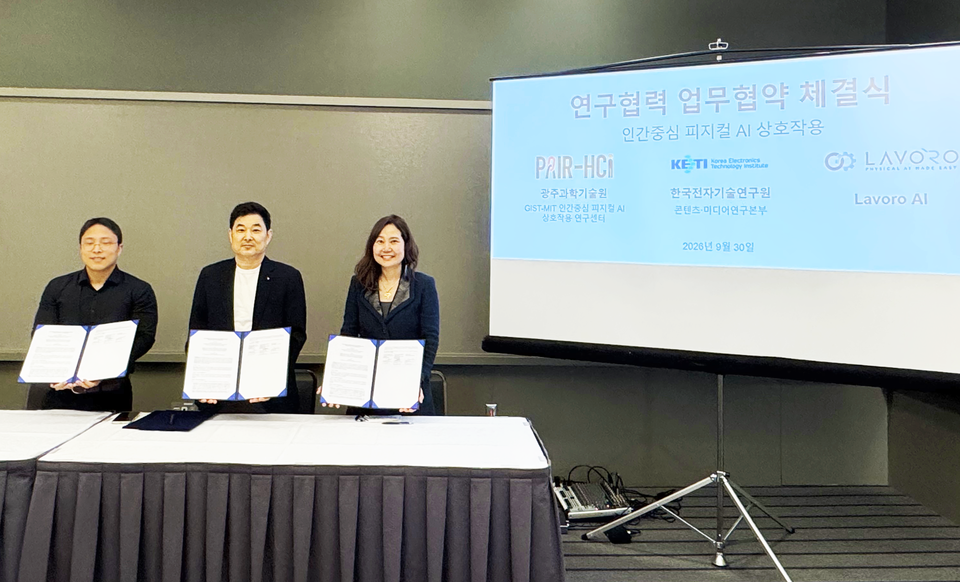
According to AI TIMES, GIST signed a joint research agreement on human-centered physical AI with KETI and Laboro AI on Sept. 30 and has begu…
According to AI TIMES, GIST signed a joint research agreement on human-centered physical AI with KETI and Laboro AI on Sept. 30 and has begun developing robot technologies to be used in creative and care settings. The collaboration focuses on research that links robot control frameworks with physical AI models, aiming for interaction technologies that can work alongside people and support daily life. The partnership brings together the university's basic and applied research, the government-funded institute's technical capabilities, and the company's experience in control and model development. In particular, it seeks to connect multiple robot hardware platforms and AI on a common foundation, reducing the burden of repeated integration during development and expanding the potential for application. However, the announcement did not disclose specific joint development models, demonstration targets, or schedules for each technology. GIST plans to use this as a springboard to expand into international joint research and personnel exchanges, building a hub for human-centered physical AI research.
Perspective
This collaboration is significant not simply because it adds more research partners, but because it seeks to bring together control systems, model development, and real-world application discussions into a single flow after they have long been fragmented. For physical AI to enter actual living environments, performance competition alone is not enough; design centered on interaction with people becomes increasingly important, and this move can be seen as an attempt to test that standard first in sensitive areas such as care and creative work. In the end, it once again shows the industry that the next source of competitiveness lies in how to build a general-purpose technology base and connect it to a trustworthy user experience.
This perspective is BizCrush's own commentary and is not part of the reporting by AI TIMES.
This article was produced with the help of an automated content generation algorithm.
Source: AI TIMES
View originalThis article was summarized and organized by BizCrush based on the original article from AI TIMES. For exact quotations and full details, please refer to the original article.