LG Electronics Filled the 'IoT' Gap in Its AI Home, Connecting to Apple's 2.5 Billion Devices (Combined)
IT DAILY ·
✦ AI Summary
LG Electronics and Apple unveiled seven jointly developed IoT devices on the 13th (local time) in Manhattan, New York City.
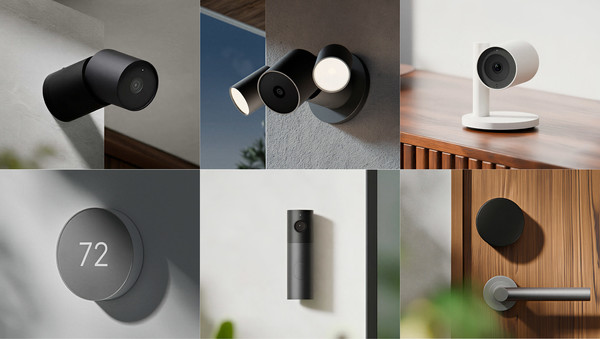
The seven products unveiled were an indoor camera, two outdoor cameras, a doorbell, a door lock, a thermostat, and a temperature sensor.
These products connect to Apple Home and LG ThinQ, and LG Electronics plans to launch them first in North America and the UK.
LG Electronics is expanding its AI home lineup by adding seven types of IoT devices co-developed by LG Electronics and Apple to its existing AI appliances and AI home centered on 'ThinQ' and 'ThinQ ON.' The expansion goes beyond appliances. The lineup includes indoor cameras, outdoor cameras, doorbells, door locks, thermostats, and sensors. By fronting the seven devices, LG Electronics aims to add capabilities for sensing conditions inside and outside the home, controlling access, and managing heating and cooling, while broadening the range of devices needed for AI home.
The new products connect to Apple Home and also to LG ThinQ. Through this, LG Electronics aims to compensate for the shortage in its own AI home IoT lineup. At the same time, it is moving to expand user touchpoints by connecting to more than 2.5 billion active Apple devices worldwide.
This is a different path from Samsung Electronics. Samsung Electronics, which is often cited as a comparison, is integrating its smartphone, TV, and home appliance lineup into SmartThings. In contrast, LG Electronics is taking a different route from Samsung Electronics, expanding the range of devices needed for AI home while also connecting to Apple mobile devices.
This type of integration is creating a new variable in market competition. By adding the seven jointly developed IoT devices to its own AI home and connecting Apple Home and LG ThinQ together, LG Electronics is simultaneously pursuing compensation for gaps in its own lineup and linkage based on a massive active-device base.
LG Electronics and Apple unveiled seven jointly developed IoT devices on the 13th (local time) in Manhattan, New York City. The two companies collaborated from the early concept stage of the products.
The seven products unveiled were an indoor camera, two outdoor cameras, a doorbell, a door lock, a thermostat, and a temperature sensor. Existing flagship appliances such as refrigerators and washing machines were excluded from this seven-product lineup.
These devices are made up of equipment that handles conditions inside and outside the home, indoor environments, access, and heating and cooling. The cameras monitor inside and outside the home, the temperature sensor detects indoor conditions, the door lock controls access, and the thermostat adjusts heating and cooling.
These products go beyond remotely controlling individual appliances; they are designed to understand the state of the home and make devices operate accordingly. An LG Electronics official said that, from an AI home perspective, the missing element had been IoT devices, and explained that the unveiling of these IoT devices has secured the product lineup needed to implement AI home.
The rollout plan is to first launch them in North America, including the United States and Canada, and in the UK by the end of this year.
LG Electronics has expanded its AI home business around AI appliances, ThinQ, and ThinQ ON. In 2024, it acquired an 80% stake in Dutch smart home platform company Athom. Athom's platform, Homey, connects a wide range of appliances and IoT devices regardless of manufacturer.
LG Electronics has also expanded the scope of its own hardware. It applied vision AI to the indoor and outdoor cameras and the doorbell. The vision AI function distinguishes between people, pets, vehicles, and deliveries. The indoor camera detects abnormal situations such as a baby crying or the sound of breaking glass.
The thermostat identifies a user's location based on the iPhone and Apple Watch, and adjusts heating and cooling by reflecting the time of day and weather. The door lock uses sensors to determine user movement and the intent to enter, and supports opening the door without any separate operation. In this way, the role of devices has expanded beyond carrying out commands to proactively identifying the state of people and the home.
LG Electronics is broadening user touchpoints by expanding integration with Apple Home. LG Electronics supports ThinQ integration and Apple Home integration for the seven products. Product registration through the iPhone is also possible.
When using Apple Home, the LG app is not needed, and creating an LG account is also unnecessary. Users can use the devices with an Apple account. An LG Electronics official said the Apple ecosystem and user base are vast, and noted that the purpose of linking with Apple is to expand the LG Electronics ecosystem and secure scalability.
Apple has more than 2.5 billion active devices worldwide. Even after exiting the smartphone business in 2021, LG Electronics can secure touchpoints between users and LG Electronics AI home through integration with personal devices such as the iPhone and Apple Watch. This kind of touchpoint expansion is possible without reentering the smartphone market.
Conversely, Apple is also expanding cooperation with LG Electronics to strengthen its smart home hardware. Apple is developing smart home products with LG Electronics, Schneider Electric, and others. This product lineup is grouped under the 'Apple Home Collection.'
This approach differs from 'Works with Apple Home' or Matter integration. Rather than connecting external finished products, it is a method of co-developing from the initial planning stage. This shows that Apple also needs LG Electronics hardware.
On the same day, Apple unveiled 'Home View,' a smart home hub with a 7-inch screen, and strengthened its smart home strategy by highlighting Siri enhanced with AI features and Apple Intelligence. 'Home View' controls in-home devices through Siri and Apple Intelligence. This collaboration is a means for Apple to make another push into the smart home market. Apple has previously launched the Home app and HomePod, but it has been regarded as a later entrant in the smart home field compared with Amazon and Google. Accordingly, Apple is pursuing both its own hub and AI enhancements while also adopting a method of co-developing home hardware with outside manufacturers from the product planning stage.
In this collaboration, the iPhone, Apple Watch, and Home View play the role of connecting users with the AI home. LG Electronics' cameras, sensors, door locks, and thermostats play the role of understanding the state of the home, controlling access, and managing the indoor environment.
Meanwhile, the competitive conditions in the smart home market are also changing. With the spread of Matter, the connectivity standard used by Apple, Google, Amazon, Samsung Electronics, and others, the foundation for devices from different manufacturers to use the same platform has expanded. As a result, competitive factors are shifting beyond connectivity itself to user location and home-state awareness, automatic operation across multiple devices, and easy control from smartphones, TVs, speakers, and other devices.
Amazon and Google secured early user touchpoints based on smart speakers, displays, and voice assistants. Samsung Electronics directly owns Galaxy smartphones, watches, TVs, and home appliances, and it sees the ability to connect those devices through SmartThings as a competitive strength.
As of this month, SmartThings has 470 million registered users worldwide. The number of brands certified under 'Works with SmartThings' exceeds 430. Samsung supports Matter and also supports products from other manufacturers, so the real competitive landscape cannot be explained simply as Samsung being closed and LG open.
The real difference is not openness, but whether Samsung Electronics connects external devices around its own product lineup such as smartphones, TVs, and home appliances, or whether LG Electronics adds the IoT lineup that had been missing from its AI appliances and ThinQ, ThinQ ON. LG Electronics is also expanding personal-device touchpoints to the iPhone and Apple Watch.
Samsung Electronics has implemented a significant portion of the 'personal device-home platform-home appliance' connection within one company. In contrast, LG Electronics and Apple are now beginning to build that link by interlocking their own strong products and platforms.
Still, some say it is too early to conclude that the competitive landscape has changed based only on the announcement of the collaboration. That is because there are still many factors that have not been verified when judging the actual results of this connection.
First, LG Electronics' new products have not yet gone on sale. These products are scheduled for an early launch in North America and the UK, and the domestic launch plan has not been disclosed at this time.
Actual sales volume has not yet been verified, and the effect on expanded ThinQ usage has also not yet been verified. Accordingly, it has not yet been confirmed what results the collaboration will produce in the market.
So far, the only revenue LG Electronics has been confirmed to secure directly from this business is product sales. An LG Electronics official also said there is revenue from manufacturing and selling the products. However, whether there will be separate revenue from linking with Apple Home services has not been disclosed, and if separate revenue is generated, the sharing structure between the two companies has also not been disclosed. The LG Electronics official said it is still difficult to disclose whether additional revenue will arise from linking with Apple services.
LG Electronics is enabling the new products to connect with Apple Home and LG ThinQ, securing touchpoints with Apple's user base while also securing a structure for using the IoT devices within its own AI home.
Apple Home Collection will begin sales in the United States, Canada, and the UK in December, with some products to be released early next year. U.S. prices are USD 199.95 for the LG Electronics indoor camera, USD 249.95 for the video doorbell, starting at USD 299.95 for the outdoor camera, USD 349.95 for the door lock, USD 199.95 for the thermostat, and starting at USD 39.95 for the temperature sensor.
Source: IT DAILY · Kim Byung-joo
Original: https://www.itdaily.kr/news/articleView.html?idxno=242175
References
This article was produced with the help of an automated content generation algorithm.
Source: IT DAILY
View originalThis article was summarized and organized by BizCrush based on the original article from IT DAILY. For exact quotations and full details, please refer to the original article.