Applied Aims to Outpace Equipment Market Growth on AI Chip Investment
TECHWORLD ·
✦ AI Summary
Applied Materials said it expects expanded AI infrastructure investment to translate into growth in the semiconductor manufacturing equipment market, and unveiled its long-term growth strategy on the 13th, local time.
The company highlighted materials engineering technology, eBeam equipment and its services business as growth drivers, and set goals of expanding WFE market share by more than 2 percentage points from 2025 to 2030 and reaching a Non-GAAP gross margin of about 54% and an operating margin of about 40% in 2030.
It also forecast revenue of USD 2 billion in 2026 and services revenue of more than USD 12 billion in 2030, while planning to more than double its R&D research facilities and manufacturing capabilities by 2030.
Applied Materials said it plans to capitalize on the growth in the semiconductor manufacturing equipment market, backed by expanding AI infrastructure investment. The company said the spread of AI computing is driving demand for expanded semiconductor production capacity and greater process innovation.
The company cited materials engineering technology, eBeam equipment and its services business as key growth levers. Based on those, it said it aims to deliver above-market growth and achieve results that outpace market growth.
Applied Materials unveiled the long-term growth strategy at the "2026 SEMICON West Investor Breakfast Presentation" on the 13th, local time.
Gary Dickerson, chairman and CEO of Applied Materials, said expanding global AI infrastructure investment is driving a new growth phase in the WFE market. He added that the company is building leadership in high-growth areas that have a major impact on the performance, power efficiency and cost of AI computing.
Applied said that as use cases expand from generative AI to agentic AI and physical AI, semiconductor demand will increase and, accordingly, investment in manufacturing equipment will also rise. It also forecast continued technological innovation to improve AI computing performance, along with further capacity expansion.
Against this backdrop, Applied said the semiconductor manufacturing equipment market will face a growth opportunity larger than the historical drivers of growth. It also forecast that about 75% of total WFE market growth from 2025 to 2030 will come from three areas: advanced foundry and logic, DRAM, and advanced packaging. The company explained that advanced logic processes are an area responding to the need to improve computing performance in AI chips; DRAM is an area responding to demand for high-performance memory such as HBM; and advanced packaging is an area for realizing increasingly complex semiconductor structures. Applied said these three areas are expected to emerge as the main growth engines for the equipment market.
Applied said it holds the No. 1 position in process equipment across all three areas: advanced foundry and logic, DRAM, and advanced packaging. Based on that, the company set a goal of expanding its WFE market share by more than 2 percentage points from 2025 to 2030.
Aiming to strengthen process control capabilities in response to semiconductor miniaturization and rising process complexity, the company is using eBeam technology and service solutions to speed the transition of customers' next-generation processes to mass production. Through this, the company is pursuing improvements in yield, throughput and cost efficiency in mass production.
The company is also pushing a strategy to expand its business competitiveness by improving customer productivity and operational efficiency even after equipment delivery. In addition to equipment sales, it plans to expand its services business to support customer capacity expansion and yield improvement, with the goal of securing a sustainable revenue base. Applied highlighted its eBeam equipment and services businesses as growth engines.
Applied said it has an eBeam equipment portfolio that offers industry-leading resolution and imaging speed. The company expected its eBeam equipment portfolio to generate USD 2 billion in revenue in 2026. It projected services revenue to grow more than 20% this year and said services revenue will exceed USD 12 billion in 2030. That would correspond to a mid-teens CAGR.
Applied disclosed its profitability targets for 2030. While pursuing expansion in equipment and services businesses to meet demand for AI chips, the company said it will focus on improving the quality of growth by boosting profitability and operating leverage, and set a 2030 Non-GAAP gross margin target of about 54% and an operating margin target of about 40%.
Brice Hill, senior vice president and CFO of Applied Materials, said the company has continued making strategic investments over the past 10 years to build an industry-leading portfolio to support the AI computing era. He said AI is driving WFE market growth, and that the company aims to continue outperforming the market while pursuing higher profitability and operating leverage, while also maintaining R&D investment.
Applied also set out a long-term plan to return 80% to 100% of free cash flow to shareholders. The company said it intends to improve capital allocation predictability through its shareholder return policy while pursuing growth investment and better profitability.
Applied is pursuing expansion of R&D facilities and manufacturing capabilities based on its medium- to long-term growth strategy. In line with the semiconductor industry's growth outlook, the company plans to more than double its R&D research facilities and manufacturing capabilities by 2030 from current levels.
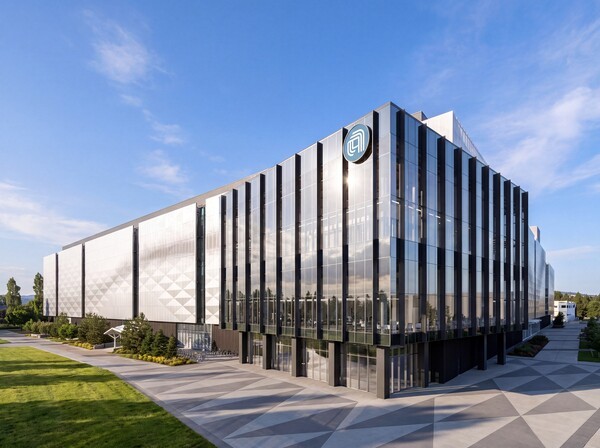
As a concrete example of that direction, the company unveiled the EPIC (Equipment and Process Innovation and Commercialization) Center in Silicon Valley on the 12th, local time. The EPIC Center is the world's largest collaborative R&D facility for semiconductor process technology and manufacturing equipment research and development, and aims to support the development and commercialization of next-generation process technologies through collaboration among semiconductor manufacturers, systems companies, equipment partners and universities.
To date, Applied has announced a total of 15 EPIC Center partnerships. EPIC Center partners include major semiconductor manufacturers, systems companies, equipment partners and universities. Applied is also expanding manufacturing infrastructure in Austin, Texas; Singapore; and Treviso, Italy.
Source: TECHWORLD · Park Gyu-chan
Original: https://www.epnc.co.kr/news/articleView.html?idxno=408171
References
This article was produced with the help of an automated content generation algorithm.
Source: TECHWORLD
View originalThis article was summarized and organized by BizCrush based on the original article from TECHWORLD. For exact quotations and full details, please refer to the original article.