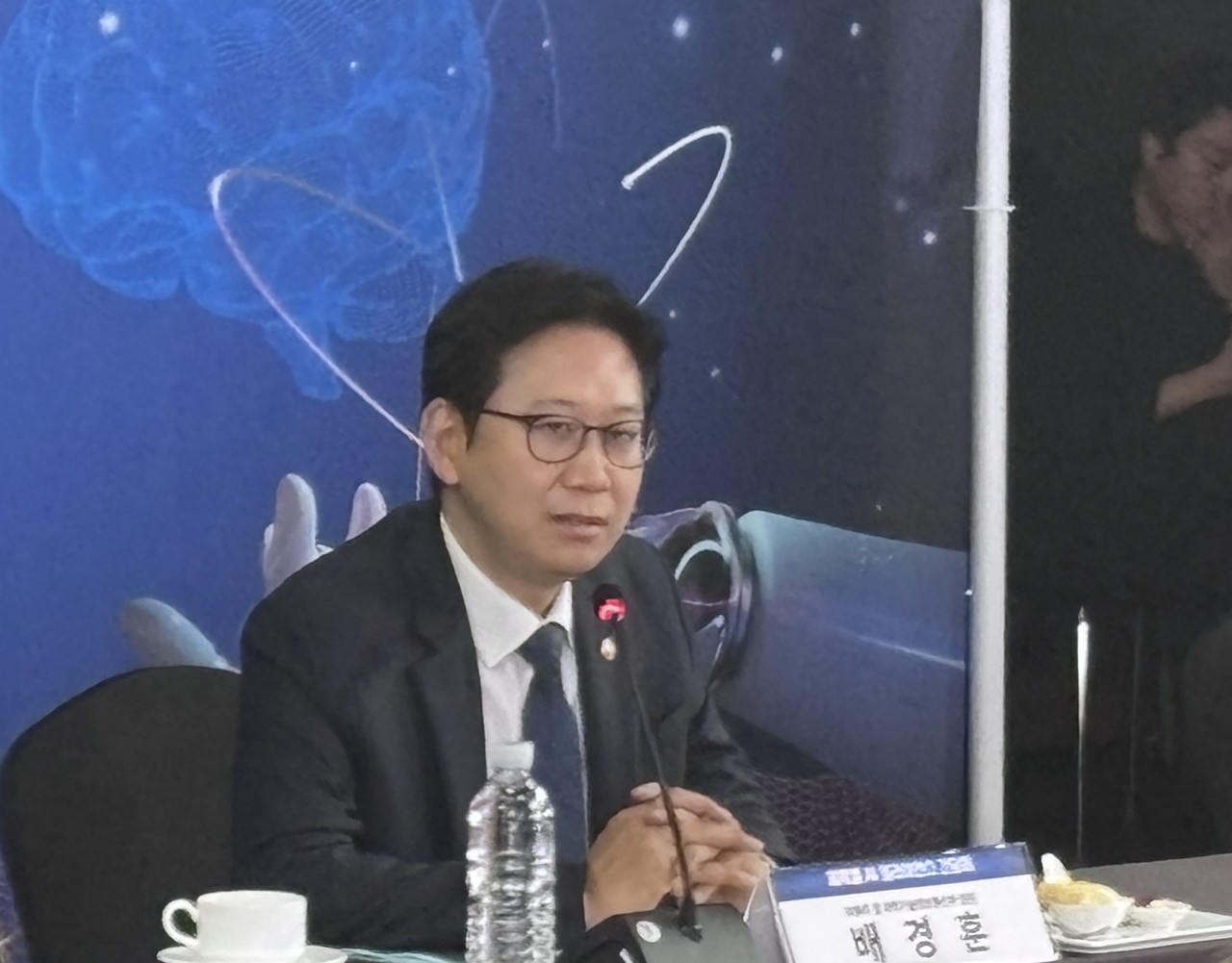
Deputy Prime Minister Bae Kyung-hoon:
IT DAILY ·
✦ AI Summary
The government said it views physical AI as a key driver of the country’s future growth engines and that the public and private sectors should jointly set goals to secure a lead in the global market.
The Ministry of Science and ICT held the 'Physical AI Alliance Performance Review and On-Site Discussion' on the 13th and discussed the second phase of alliance activities and future directions for public-private cooperation.
Deputy Prime Minister Bae Kyung-hoon said physical AI is central to creating a huge market and stressed that the highest possible goals should be set and pursued so that there will be no regret in 3 years or 5 years.
The government has identified physical AI as a key driver of the country’s future growth engines and said the public and private sectors should jointly set goals to secure a lead in the global market and strengthen execution. Deputy Prime Minister Bae Kyung-hoon said that setting goals in the physical AI sector should be done without regret.
The Ministry of Science and ICT held the 'Physical AI Alliance Performance Review and On-Site Discussion' on the 13th. The meeting reviewed the progress of the alliance's second phase of activities.
The discussion also covered future directions for public-private cooperation. Deputy Prime Minister and Science and ICT Minister Bae Kyung-hoon and Korea Software Industry Association (KOSA) Chairman Cho Jun-hee attended, and the two serve as co-chairs of the Physical AI Alliance.
Officials from the Ministry of Science and ICT, officials from the National IT Industry Promotion Agency (NIPA), and subcommittee chairs also attended and took part in the discussions.
In his remarks, Bae pointed out that standalone AI models have limits when it comes to opening up real markets. He then defined physical AI, which is linked to the actual physical world, as a core area for creating a huge market.
Against this backdrop, the government is pursuing 3 mega projects. Bae said major countries, including China, are rapidly deploying humanoid robots to the field and that massive data accumulation is also under way in major countries, including China.
Bae said the speed of technology and data advancement at demonstration sites is outpacing expectations. He stressed that the government must ensure it does not later regret having lacked investment and challenges in 3 years or 5 years. He also urged the public and private sectors to set the highest possible goals and pursue them.
The total AI budget across all ministries currently stands at KRW 16 trillion. Of that, about 20% is being invested. The government plans to continue expanding support and investment linked to market demand, rather than limiting itself to building the foundation.
Co-chair Cho emphasized the alliance's role in bringing together the private-sector ecosystem. Noting that more than 400 companies joined in less than a year after the alliance launched, Cho said industry interest is high and the willingness to execute is strong.
Cho also explained that the physical AI structure is built on an extensive supply-chain network that includes foundation models, robots, devices, and security. He said simple cooperation alone would not be enough to build a complete industrial ecosystem, stressing the need for strong 'alliance' -style cohesion and expressing his resolve to work toward securing real global competitiveness through active government support and close public-private coordination.
Source: IT DAILY · Kwon Young-seok
Original: https://www.itdaily.kr/news/articleView.html?idxno=242156
References
This article was produced with the help of an automated content generation algorithm.
Source: IT DAILY
View originalThis article was summarized and organized by BizCrush based on the original article from IT DAILY. For exact quotations and full details, please refer to the original article.