SpaceX Secures U.S. 800 MHz Spectrum, Drawing Attention to Satellite-Terrestrial Network Convergence
IT DAILY ·
✦ AI Summary
SpaceX announced an agreement to acquire Grain Management's nationwide 800 MHz spectrum license portfolio in the United States.
The 800 MHz band is a low-band spectrum with value for wide-area coverage and smartphone-based service expansion.
Starlink is currently providing direct satellite-to-mobile-phone connectivity services in the United States and Japan, while enterprise satellite communications use is drawing attention in South Korea.
As SpaceX pushes to secure low-band spectrum in the United States, expectations are growing that Starlink could expand its mobile communications business. SpaceX is led by Elon Musk.
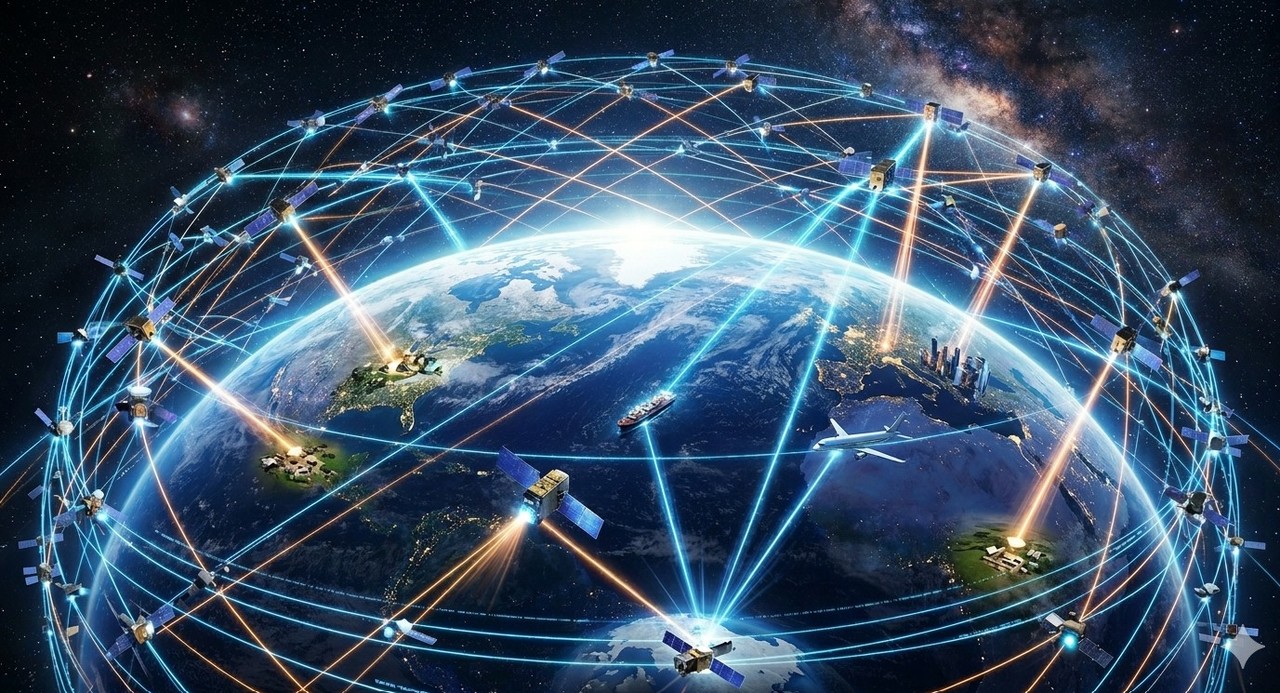
The move is seen not only as part of efforts to pursue direct satellite-to-smartphone connectivity services, but also as a strategy to expand service coverage by combining with terrestrial mobile networks. Observers say the prospect of Starlink's business expansion is also linked to that direction.
On the 8th, SpaceX announced that it had signed an agreement to acquire a nationwide 800 MHz spectrum license portfolio from Grain Management. Grain Management is a U.S. private equity manager specializing in telecommunications. The deal is valued at about USD 8 billion, or about KRW 4 trillion, and is pending approval from the FCC.
The United States and South Korea differ in how spectrum is assigned, traded, and leased. In the United States, private companies have a high degree of freedom to trade and lease spectrum. South Korea's spectrum allocation system is a national auction led by the Ministry of Science and ICT. South Korea's spectrum management approach strongly reflects the view that spectrum is a public resource, and the government also plays a relatively large direct control role.
In the United States, the primary allocation method is FCC auctions. Secondary transactions involve spectrum that has already been assigned, and private companies can trade and lease it. This structure highlights the differences in how the two countries operate their spectrum systems.
The 800 MHz band is a low-band spectrum. It offers long propagation distance and relatively good penetration through buildings and structures. As a result, the 800 MHz band is useful for efficiently covering wide areas. It is also suitable for mobile communications services.
The 800 MHz band also has value in linking satellite communications with terrestrial networks. Another feature is that existing smartphones support the band. This means there is a possibility of using ordinary smartphones without a separate satellite-only terminal. That could become a basis for expanding services built around standard smartphones.
However, actual service coverage and quality may vary. Depending on how the spectrum is used, variables may arise, and differences can also emerge depending on the level of network buildout. Terminal support is also a factor that affects actual service coverage and quality.
SpaceX's Starlink is already providing D2C services that directly connect satellites with mobile phones. In the United States, it has partnered with T-mobile and launched nationwide service under the U.S. service name 'T-Satellite' since last July. The service is available in remote areas beyond cellular coverage and supports text messaging, location sharing, and some app data.
In Japan, KDDI offers 'au Starlink Direct,' and the Japanese service launched last year. Through this, coverage has expanded to mountainous and island regions. KDDI recently signed a 'Starlink Mobile V2' contract with SpaceX, and the agreement includes the use of next-generation satellites. KDDI plans to support high-speed data and voice calls via D2C by the end of 2027.
Based on this trend, there is discussion domestically that satellite networks have limits when it comes to replacing terrestrial networks. Accordingly, the use of satellite communications for enterprise applications is drawing attention in South Korea.
The deal is expected to become a variable in the U.S. mobile communications market. After the announcement, AT&T shares fell 8.8%, Verizon shares fell 9.8%, and T-mobile shares fell 13.3%. The stock declines are being attributed to expectations that SpaceX will expand its mobile communications services business, and SpaceX's expansion direction is being discussed as moving beyond satellite communications to combining terrestrial networks.
By contrast, the impact on South Korea's mobile communications market is expected to be limited. Choi Yoo-jin, an analyst at Mirae Asset Securities, said the competitiveness of the U.S. mobile communications industry may strengthen, but that it is unlikely to have the same level of impact on South Korea's three major telecom companies. In South Korea, given regulations, service quality, and the economics of existing terrestrial networks, satellite communications are seen as unlikely to replace existing mobile services in the short term.
Therefore, to secure competitiveness in the domestic market, it will be necessary to prove indoor and underground connectivity. In addition, demonstrating performance comparable to terrestrial networks in real-world usage environments, such as network capacity in congested urban areas, is presented as a condition for securing competitiveness in the domestic market.
Satellite communications can be used in offshore, mountainous, and industrial sites where building terrestrial networks is difficult. Satellite communications serve as a supplementary connectivity option in areas where communication stability is important. Accordingly, the areas where demand for Starlink arises are considered to be B2B markets such as aviation and shipping.
KT SAT and SK telink are the official Starlink resellers in South Korea. KT SAT and SK telink target enterprise customers, and the services they provide are satellite communications. An industry source said that while the domestic enterprise satellite communications market is expected to expand, it remains uncertain whether D2C services for general consumers will be introduced in the short term.
An industry source said domestic adoption is still a long way off. Accordingly, the industry is not putting a fixed date on when broader adoption may come. However, the source said SpaceX's moves in the United States are likely to become a benchmark for whether a satellite-terrestrial convergence model can succeed.
Source: IT DAILY · Seong Won-young
Original: https://www.itdaily.kr/news/articleView.html?idxno=242161
References
This article was produced with the help of an automated content generation algorithm.
Source: IT DAILY
View originalThis article was summarized and organized by BizCrush based on the original article from IT DAILY. For exact quotations and full details, please refer to the original article.