Nutanix: “AI Silos and Soaring Costs Can Be Tackled With a Single Platform”
IT DAILY · · 2 views
✦ AI Summary
Nutanix said the main barriers to the spread of enterprise AI are soaring costs and infrastructure silos.
It explained that, during the adoption of virtualization, cloud, and Kubernetes, fragmentation accumulated between compute, storage, and network; on-premises and public cloud; and platform engineers and infrastructure teams.
In response, it proposed a single platform that integrates virtualization servers, containers, and AI workload architectures, while providing a sandbox computing environment that preserves data control and safely isolates AI agents.
Nutanix said the main barriers to the spread of enterprise AI are soaring costs and infrastructure silos, and that it will address those issues with a single platform. With server prices rising as much as 5-fold, AI infrastructure operating separately from existing VM and container environments was presented as a target for integration.
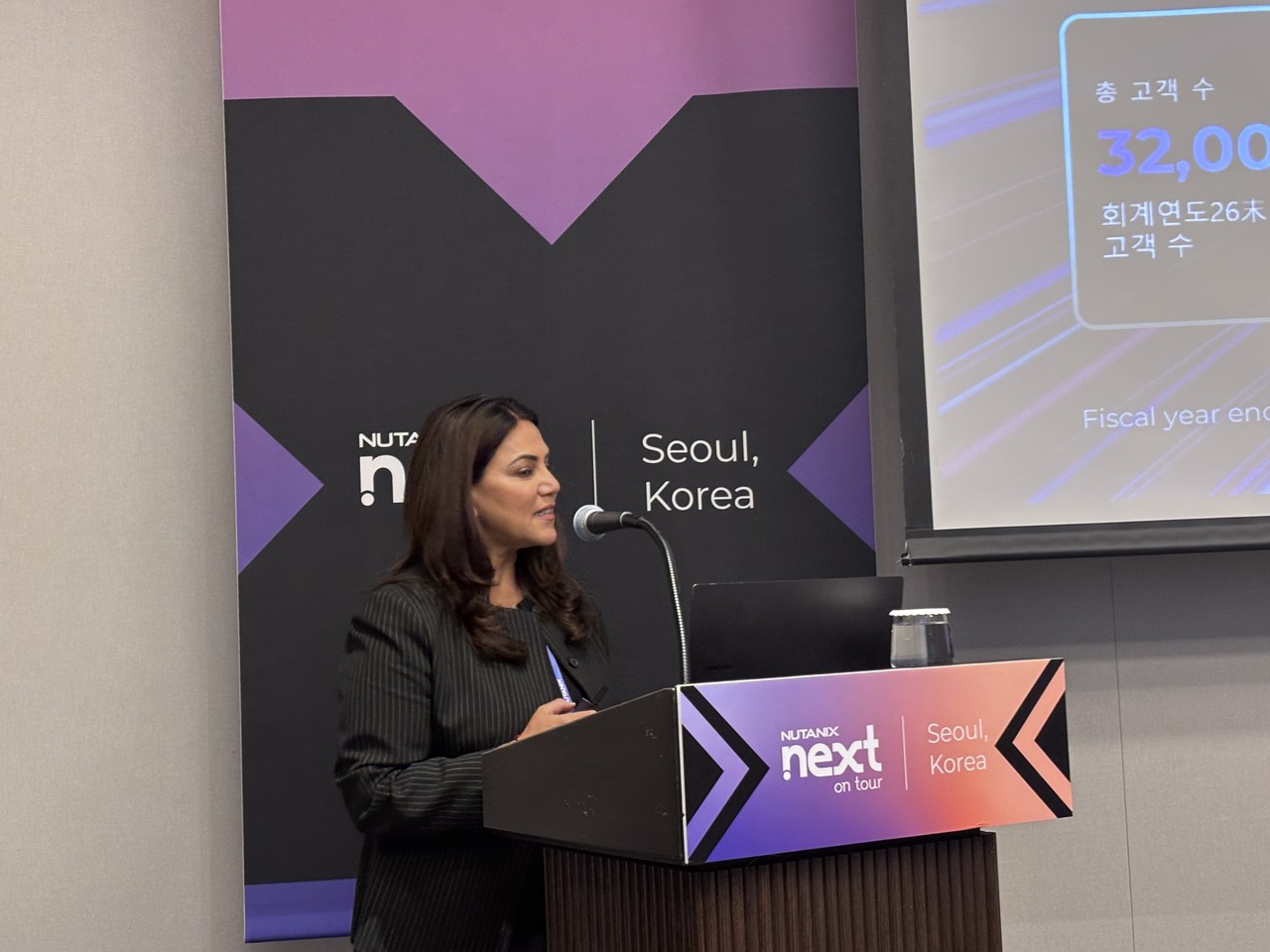
Nutanix held a media roundtable for “DotNext On Tour Seoul 2026” on the 13th. At the event, the company shared its global AI business strategy and examples of domestic enterprise infrastructure innovation.
The presentation that day was delivered by Mandy Dalalwal, CMO of Nutanix. Dalalwal said that infrastructure silos have deepened with each stage of technological evolution.
He pointed to compute, storage, and network as the areas that became fragmented in the early days of virtualization. He then said that during the cloud expansion phase, operational duplication emerged between on-premises and public cloud environments.
He also explained that after Kubernetes adoption, segmentation emerged between platform engineers and infrastructure teams. He said these accumulated silos are now part of the backdrop to the spread of enterprise AI.
Dalalwal, CMO, said new silos are forming across the AI sector, from CPU, GPU, physical AI, and quantum computing. He identified three key issues in the process: lack of usage visibility, absence of governance, and excessive cost overruns.
In response, Nutanix proposed a solution that unifies virtualization servers, containers, and AI workload architectures. It said it would run them with the same operational experience on a single platform, while providing a sandbox computing environment that can safely isolate and run AI agents while preserving enterprise data control.
The background to this approach lies in Nutanix's experience overcoming a crisis during its own AI adoption. Dalalwal said that in Nutanix's internal software development process, the company consumed more than 1 trillion LLM tokens per month and faced a 350% surge in token costs.
The Nutanix engineering team pushed to reduce dependence on external commercial API services, directly securing NVIDIA GPUs and also securing AMD GPUs. At the same time, it built its own optimized model.
As a result of those efforts, Nutanix succeeded in cutting operating costs by 50%. The company packaged the token-efficiency know-how it secured in the process into an enterprise solution called “Tokenomics.”
The packaged solution is now being supplied to customers. This was presented at the event by Byun Jae-geun, president of Nutanix Korea.
At the event, President Byun also introduced an ecosystem expansion strategy to respond to the sharp rise in hardware prices. As Nutanix pushes to break free from hardware vendor lock-in, it is expanding beyond support centered on its own HCI-dedicated appliances.
Nutanix is expanding support for HCL-compliant standard rack servers and also expanding support for HCL-compliant blade servers. Through this, it is enabling existing customer server assets to be reused and aiming to minimize infrastructure transition costs. Photo credit: Reporter Kwon Young-seok.
The company outlined a coalition structure by concretizing cooperation with major semiconductor industry companies. It is making a USD 250 million equity investment in AMD and is also carrying out USD 100 million worth of joint technology development with AMD. It has maintained a cooperative relationship with NVIDIA for more than 10 years.
The company said it was listed as a third-party solution in 3 of the 6 software areas in the “NVIDIA AI Factory Whitepaper.” The listed areas are the AI software platform, Kubernetes platform, and storage. Based on this, the company also presented a line that it would establish itself as a next-generation platform partner.
Byun said customers are struggling with confusion over deployment architecture and 100% utilization methods after securing expensive GPUs. He also said investment protection for existing infrastructure is needed. He emphasized that providing the flexibility to manage systems consistently without idle GPUs is key to enterprise AI.
These details were presented through the event remarks of Kim Myeong-gu, team leader at Hanwha Systems. Photo by Reporter Kwon Young-seok.
Nutanix's unified platform approach has led to a large-scale enterprise deployment case, and Kim Myeong-gu, team leader at Hanwha Systems and the person overseeing the build of Hanwha Group's next-generation infrastructure, AON Cloud, introduced the related details. Hanwha Group selected Nutanix as the standard platform for the infrastructure of its second data center.
Kim said that in the defense, shipbuilding, and aerospace industries, security and data control are top priorities. He explained that, given the nature of these industries, moving all workloads to the public cloud is not possible. Accordingly, he said the key evaluation criterion was whether a consistent operational model could be maintained between on-premises and the cloud, and that another key criterion was whether step-by-step expansion to cloud-native and AI services would be possible on a single platform in the future.
Nutanix said its global revenue grew 12% in the last fiscal year. It also said it secured more than 3,000 new customers. In the Korean market, it said revenue grew 30% year over year based on the last quarter.
Source: IT DAILY · Kwon Young-seok
Original: https://www.itdaily.kr/news/articleView.html?idxno=242147
References
This article was produced with the help of an automated content generation algorithm.
Source: IT DAILY
View originalThis article was summarized and organized by BizCrush based on the original article from IT DAILY. For exact quotations and full details, please refer to the original article.