PIPC Chair Song Kyung-hee Says, 'I Feel a Heavy Sense of Responsibility Over Personal Data Breaches ... We Will Investigate Thoroughly'
IT DAILY ·
✦ AI Summary
Song Kyung-hee, chair of the Personal Information Protection Commission, expressed a heavy sense of responsibility over the string of personal data breaches in the public and financial sectors.
She said the commission will work with ministries in charge of finance and security to launch a thorough investigation and response, and will focus its investigations on breaches at major public institutions and in the financial sector.
The PIPC also said it will introduce punitive fines, strengthen the effectiveness of investigations, conduct preemptive inspections, and push ahead with a special provision for the use of personal information to develop AI technology.
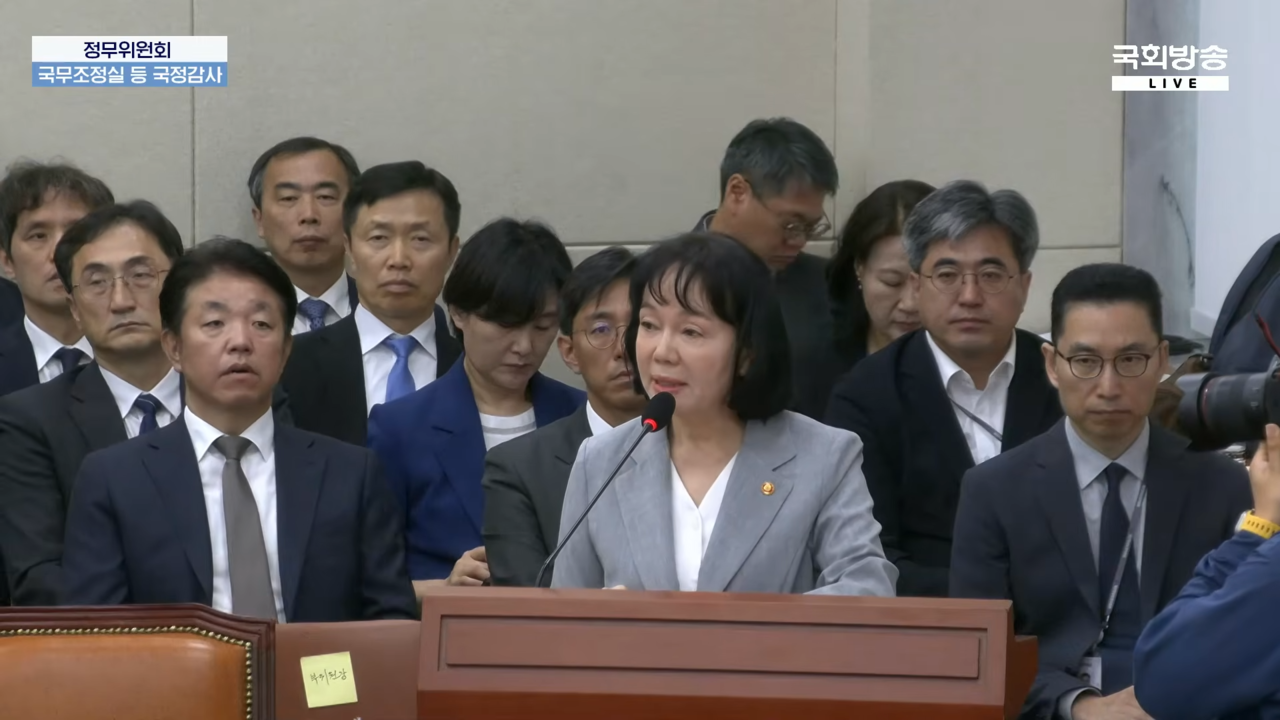
Song Kyung-hee, chair of the Personal Information Protection Commission, expressed a heavy sense of responsibility over the string of personal data breaches that have recently occurred in the public and financial sectors. Song said this while reporting on the commission's work status at a National Assembly audit of the Strategy and Finance Committee on the 13th.
Song said she feels deeply responsible for the personal data breaches and that she will work closely with ministries in charge of finance and security. She also said the commission will launch a thorough investigation and response to prevent the spread of harm to the public caused by the leaks.
Song said large-scale breaches have continued since last year, adding that this has further heightened the need for a fundamental shift in the personal information protection system. She then outlined the response direction against the backdrop of repeated incidents.
Song said she would introduce strict sanctions centered on punitive fines to strengthen deterrence and push ahead with building a prevention system so that investment in personal information protection becomes a clear benefit. She also said the commission will continue cooperation among ministries in the course of these responses.
Under the revised Personal Information Protection Act, starting in September, punitive fines of up to 10% of sales can be imposed for certain cases. The conditions for applying punitive fines require intent or gross negligence, and they apply when violations are repeated within 3 years or when large-scale harm affecting more than 10 million people occurs.
With this system overhaul, sanctions for delayed reporting and for abetting the spread of harm will also be strengthened alongside the introduction of punitive fines. A system to strengthen the effectiveness of investigations will also be put in place, with compulsory fines imposed on those who fail to cooperate with investigations and fines available if evidence is concealed or destroyed.
Song said she will do everything possible to ensure the effective operation of the new fine system. She also said the commission will form dedicated investigation teams for major cases and conduct strict investigations.
Song said the commission will focus its investigations on recent leaks at major public institutions and in the financial sector. Accordingly, responses to serious cases and inspections of recent breaches are expected to be pursued in parallel.
Meanwhile, the PIPC also plans to expand a preventive management system. This year, it will operate a preemptive status inspection system and plan to identify risk factors in areas closely tied to people's daily lives in advance. In the public sector, inspections will extend to subordinate agencies under each ministry, while major systems will be managed more tightly through cooperation between ministries and the PIPC.
Song said she will work to strengthen the response capabilities of security-related ministries and the private and public sectors in relation to recent AI hacking threats. She stressed that it is important to establish a safe personal information protection system for AI innovation.
He then explained that a special provision for the use of personal information to develop AI technology was newly introduced in this year's revision bill to the Personal Information Protection Act. The special provision allows personal information to be used when AI development is difficult using only pseudonymized or anonymized information, and when public interest or social necessity is recognized. However, it requires deliberation and resolution by the PIPC, and the data subject to use must be lawfully collected personal information, while the purpose of use is AI technology development.
Based on this, Song said she will work to resolve difficulties at AI development sites. She also said she will work to support solutions to social challenges and industrial development. In addition, she said the commission will push ahead with the nationwide expansion of pseudonymized data use, respond to privacy issues related to agentic AI, and review and improve whether the current system is suitable for the AI era.
The PIPC said it plans to establish a fund to use fines for remedying citizens' rights and recovering damage. To that end, Song asked the commissioners to help ensure the swift passage of the currently proposed amendments to the Personal Information Protection Act.
Source: IT DAILY · Kim Ho-jun
Original: https://www.itdaily.kr/news/articleView.html?idxno=242151
References
This article was produced with the help of an automated content generation algorithm.
Source: IT DAILY
View originalThis article was summarized and organized by BizCrush based on the original article from IT DAILY. For exact quotations and full details, please refer to the original article.