Kolon Benit: After “AI Adoption” Comes “Results”...It Will Walk With Companies Through Their AX Journey
IT DAILY ·
✦ AI Summary
Kolon Benit said it supports the AX journey from identifying customer challenges to generating business results.
Last year, it focused on supporting companies’ data preparation and AI adoption, and it said it plans to broaden its scope going forward to connect AI use with tangible management results.
CEO Kang Eui-gu said AI adoption and improved work efficiency do not automatically translate into sales and profits, and that setting agent roles by task and redesigning processes are necessary.
Kolon Benit said it supports the AX journey from identifying customer challenges to generating business results. Last year, it focused on helping companies prepare their data and supporting AI adoption as an AX enabler.
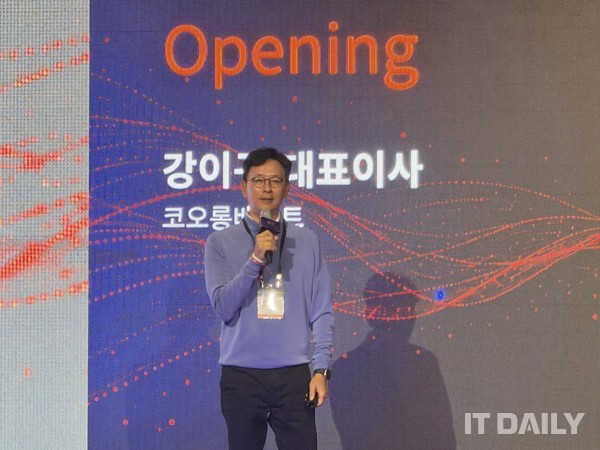
Kolon Benit said it plans to expand its support to help link AI use to tangible management results. Kolon Benit CEO Kang Eui-gu disclosed the company’s AX journey support and results-focused direction at the “Kolon Benit AX Boost Summit 2026” held on the 13th at Seoul Dragon City in Yongsan District, Seoul.
The theme of the event was “Customer’s AX Journey.” At the event, Kolon Benit shared execution strategies that connect AI adoption to business results, along with industry case studies.
Kang said that AI’s ability to shorten work hours does not automatically translate into higher sales or improved profits. He explained that to connect individual work efficiency gains to corporate results, companies need to examine both the areas where AI is applied and the way work is done.
Kang said there are many AI use cases in support organization work. Examples of AI use in support organizations included news briefings and visualizing data during the planning stage. However, he said it remains an issue whether such use cases are making a meaningful contribution to company sales and profits.
In this situation, management’s concern is shifting toward the efficiency of AI investment. The burden of AI adoption costs and rising costs from token usage are cited as reasons, and as a result, concerns about investment efficiency are deepening. Kang said these concerns are shared not only by Korean companies but also by global companies.
Kang said that, on the premise of improving productivity across the entire company, it is necessary to specifically analyze which tasks are suitable for AI rather than focusing on AI adoption itself. He explained that work once handled by three or four people is now being quickly processed by one manager- or senior-level employee. He also said that the speed of data aggregation, analysis, and systematization is improving as well.
However, Kang said that analyses requiring actual decision-making and important context are still handled by people. While acknowledging the speed gains in repetitive and standardized processing, he said areas that require judgment and contextual understanding remain the responsibility of people.
Accordingly, Kang said it is necessary to define the role of agents for each task, set usage cycles for each task, and quickly determine whether they are truly helping the business and productivity. He added that design reflecting such judgments has become more important than anything else.
A redesign of work processes was presented as a way to connect AI use to management results. Specifically, the explanation was that companies need to distinguish between tasks performed by AI and tasks requiring human judgment, then change organizational operations and workforce management accordingly. He said AX investment can produce meaningful results only when organizational and workforce management change.
Kolon Benit conducts its AI business by making understanding of work by industry and the ability to select and apply technologies its competitive edge. Based on its understanding of customer businesses and operations, it has the capability to identify AI application tasks and to discover and apply technologies for solving those tasks, and it has an AI alliance with global solution companies and more than 100 participating companies as a cooperative foundation. Based on this, it is providing AI solutions suited to customer challenges by using global corporate solutions and the specialized capabilities of alliance members.
The speaker emphasized that identifying areas where results are possible and selecting technologies are important in AI adoption. He then noted that reflecting business understanding in systems and solutions will become a core know-how for SI and solution providers. He also said the company plans to continue developing industry-specific packages and provide services so AX can be used faster and more conveniently.
Hong Sung-hwa, head of the AX Innovation Center at Kolon Industries, cited cost competition, oversupply, and supply chain risk as the main management challenges in the petrochemical and materials industries. Hong said that in such an environment, AX needs to be pursued with a focus on the value created by AI rather than the scale of AI adoption.
He then presented six factors from the perspective of setting the direction for AX: value and KPI, data, process, architecture, talent, and organization, and shared on-site application results. In a case using a shipping document automation agent, processing time per shipping document was reduced from 4 hours to 5 seconds, and in a vision AI case, recognition accuracy reached 99.8%.
Source: IT DAILY · Yang Seung-gap
Original: https://www.itdaily.kr/news/articleView.html?idxno=242143
References
This article was produced with the help of an automated content generation algorithm.
Source: IT DAILY
View originalThis article was summarized and organized by BizCrush based on the original article from IT DAILY. For exact quotations and full details, please refer to the original article.