Hyundai Motor and Kia Make Strategic Investment in VAST Data to Strengthen Physical AI Data Infrastructure
TECHWORLD ·
✦ AI Summary
Hyundai Motor and Kia have made a strategic investment in VAST Data to strengthen data infrastructure for developing Physical AI such as autonomous driving and robotics.
The investment involved 42dot, which operated VAST AI OS in real-world research and development environments to confirm its technology and efficiency.
42dot said it plans to integrate AI development environments across mobility, including ADAS, LLM, and robotics, into a single data architecture.
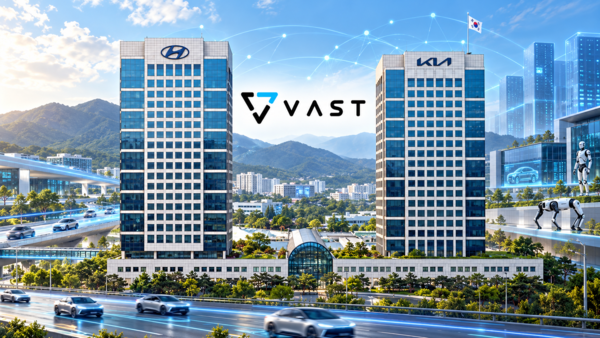
Hyundai Motor and Kia have made a strategic investment in VAST Data, a global AI infrastructure company, to strengthen data infrastructure for developing Physical AI such as autonomous driving and robotics.
The investment involved 42dot, the global software center of Hyundai Motor and Kia. 42dot has operated VAST AI OS in real-world research and development environments for years, confirming its technology and efficiency.
42dot previously had ADAS and LLM development environments scattered across multiple vendor platforms. It has since applied the VAST Data platform to its ADAS and LLM development environments.
Based on this, the company plans to integrate AI development environments across mobility, including ADAS, LLM, and robotics, into a single data architecture. The integrated environment is based on NVIDIA Hopper-based NVIDIA DGX SuperPOD and aims to standardize AI data architecture. It will also be built as a Data Flywheel system that links data collection to model training and deployment.
The company said it supports multi-protocols such as S3 and NFS, and that by operating simulation, training, and validation pipelines under the same namespace, it removed the need to duplicate data separately. It added that in actual production environments, it recorded a data reduction rate of 2 to 1 for sensor and video data.
According to the company, the main use case for this structure is large-scale data processing in the autonomous driving development process. Test vehicles equipped with cameras, LiDAR, and radar generate several TB of data per day, and when expanded to the entire global fleet of test vehicles, the volume could reach hundreds of PB.
To respond to such data-intensive environments, VAST Data applied its proprietary DASE (Disaggregated Shared-Everything) architecture. The DASE architecture is designed to ease input/output bottlenecks in traditional HPC file systems and reduce data fragmentation, while continuously supplying data to large-scale GPU clusters.
Jeong Ho-geun, vice president and head of Hyundai Motor and Kia's Future Strategy Division, said that after Hyundai Motor and Kia integrated their ADAS and language model development environments into a single platform, the speed from data collection to validation model derivation improved. He said the investment was decided based on verification results in actual development environments, and that it also aims to continue long-term cooperation with VAST Data.
Renen Hallak, founder and CEO of VAST Data, said the scale of data challenges faced by Physical AI development companies is far greater than that of conventional enterprise AI. He said Hyundai Motor and Kia's investment proves the importance of data infrastructure that supports future mobility and AI demand.
Source: TECHWORLD · Kim Seung-gi
Original: https://www.epnc.co.kr/news/articleView.html?idxno=408099
References
This article was produced with the help of an automated content generation algorithm.
Source: TECHWORLD
View originalThis article was summarized and organized by BizCrush based on the original article from TECHWORLD. For exact quotations and full details, please refer to the original article.