Nobel Prize in Economics Returns to Macroeconomic Models That Incorporate Expectations
AI TIMES ·
✦ AI Summary
According to AI TIMES, the 2026 Nobel Prize in Economics was awarded to Professor Robert Hall and Professor Michael Woodford for building th…
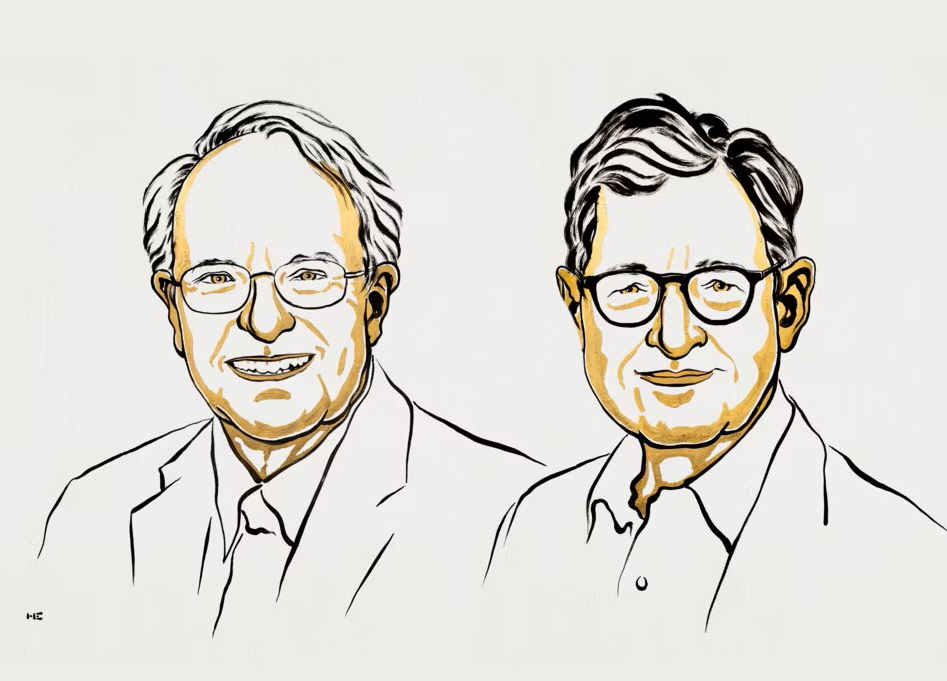
According to AI TIMES, the 2026 Nobel Prize in Economics was awarded to Professor Robert Hall and Professor Michael Woodford for building the microeconomic foundations of macroeconomic stabilization policy. On October 12, the Royal Swedish Academy of Sciences said the two scholars expanded the basis for policy analysis by advancing macroeconomic models that reflect household and business decision-making, especially future expectations. The research strengthened a line of inquiry that seeks to explain how economic actors' choices spread through the economy as a whole, moving beyond simple correlations between macro variables such as prices and output. As a result, it has become possible to examine more systematically the channels through which interest-rate and fiscal policy affect the real economy. In particular, it highlighted that not only the timing and intensity of policy, but also the credibility of official communication, can change current decisions on consumption and investment. The article said this approach has become the theoretical foundation supporting central banks' and governments' responses to business-cycle shocks that are difficult to anticipate.
Perspective
This award once again confirms the view that the success or failure of macro policy should be read less through simple statistical relationships than through the management of expectations and signals. As the standards for explaining policy effects become more sophisticated, authorities must manage both the design of announcements and the credibility behind them, while markets also come to interpret policy wording and direction more sensitively. In the end, it becomes clearer that responding to the business cycle is not only a matter of choosing tools, but also of how to shape the reactions of economic actors.
This perspective is BizCrush's own commentary and is not part of the reporting by AI TIMES.
This article was produced with the help of an automated content generation algorithm.
Source: AI TIMES
View originalThis article was summarized and organized by BizCrush based on the original article from AI TIMES. For exact quotations and full details, please refer to the original article.