Unmanned System Takes Part in Korea Meteorological and Climate Industry Expo
IT DAILY ·
✦ AI Summary
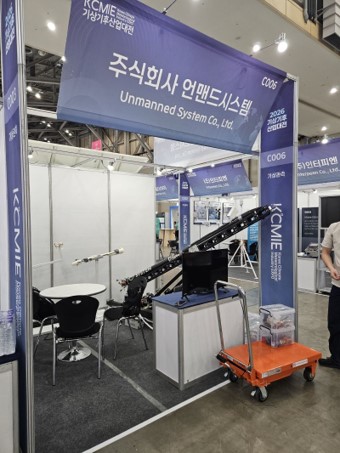
Unmanned System took part in the "2026 Korea Meteorological and Climate Industry Expo (KCMIE)" to showcase its unmanned aircraft-based atmospheric environment observation technology and related systems.
The event was held last month at BEXCO in Busan and was staged in conjunction with the "2026 Climate Industry International Expo (WCE)."
The exhibits included a launch device and a foldable unmanned aircraft prototype, and Unmanned System focused on showing how the technologies that make up the entire observation platform are interconnected.
Aerospace platform company Unmanned System took part in the "2026 Korea Meteorological and Climate Industry Expo (KCMIE)" to showcase its unmanned aircraft-based atmospheric environment observation technology and related systems. The company is led by CEO Jeong Seong-hoon.
The event was held last month at BEXCO in Busan and was staged in conjunction with the "2026 Climate Industry International Expo (WCE)." At the event, Unmanned System introduced its unmanned aircraft-based atmospheric environment observation technology and related systems.
Unmanned System has positioned the convergence of rocket and unmanned aircraft technologies as its core capability and possesses technology for collecting weather and environmental data at various altitudes and locations. It is also developing unmanned observation systems that complement existing observation infrastructure, based on its integrated capabilities in airframe design, sensor installation, and flight control technologies.
The exhibits included a launch device and a foldable unmanned aircraft prototype. Rather than simply presenting individual equipment, the company focused on showing how the technologies that make up the entire observation platform are interconnected.
Weather and environmental observation requires different equipment and operating methods depending on the location, altitude, and observation cycle where data are needed. In response, Unmanned System aims to expand the range of applications for unmanned platforms by mounting observation sensors that reflect these conditions and to implement systems tailored to the missions of client institutions.
The platform under development by Unmanned System is called "HyRUS." "HyRUS" is a high-altitude weather observation and environmental monitoring platform that combines rocket-based deployment technology with a foldable fixed-wing unmanned aircraft. The platform aims to acquire high-altitude atmospheric environment data, with targets including temperature, pressure, humidity, wind direction, and wind speed. It is also being developed as an observation platform for weather research and environmental monitoring.
When designing a foldable airframe structure, storage, transportation, and integration with a launch device must be taken into account. In actual flight, a wing deployment concept is applied, and structural stability, deployment timing, and flight control after deployment must be reviewed together. Unmanned System has integrated design capabilities that link airframe structure, propulsion systems, and control algorithms, and it is developing related technologies based on those capabilities.
Requirements for putting an observation platform to practical use include verifying target-altitude performance, sensor measurement accuracy, communication status, and recoverability. Accordingly, Unmanned System is pursuing development in a way that confirms system operation through simulation-test linkage. It is also pursuing development to secure data reliability and platform operability through demonstrations under different operating conditions.
Based on these verifications, Unmanned System plans to expand its business area from unmanned observation equipment and platforms to services for acquiring and providing weather and environmental data. In this process, it aims to verify both equipment performance and the usability of observation data to respond to the needs of actual demand customers such as research institutes and public institutions.
Jeong Seong-hoon, CEO of Unmanned System, said it is important to secure reliable data from the locations and altitudes needed for climate crisis response and environmental research. He added that the company is pursuing the expansion of observation options with a platform that combines unmanned aircraft and observation sensors, and that it is developing this into a solution that can be used in the field.
Source: IT DAILY · Kim Ho-jun
Original: https://www.itdaily.kr/news/articleView.html?idxno=242118
References
This article was produced with the help of an automated content generation algorithm.
Source: IT DAILY
View originalThis article was summarized and organized by BizCrush based on the original article from IT DAILY. For exact quotations and full details, please refer to the original article.