AMD Deepens HBM Alliance With Samsung and SK hynix, to Sharply Expand AI Chip Supply in 2027
TECHWORLD ·
✦ AI Summary
AMD plans to sharply expand chip supply in 2027 in response to surging demand for AI chips.
It aims to extend supply chain planning from 1 to 2 years to 3 to 5 years and secure GPU, CPU, HBM, and advanced packaging capacity together.
CEO Su visited Korea to reaffirm next-generation HBM cooperation with Samsung Electronics and SK hynix, and also outlined expanded cooperation with domestic AI chip companies and the government.
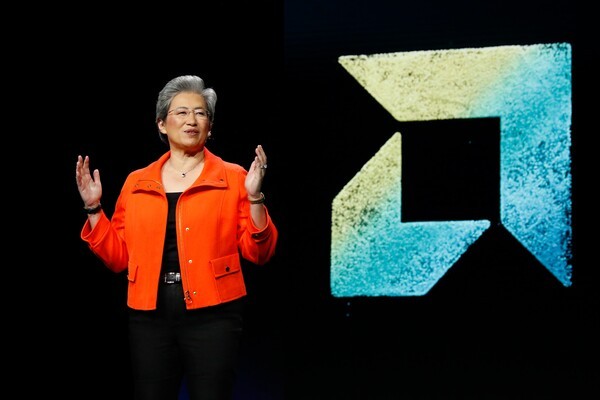
As demand for AI chips rises rapidly, AMD plans to sharply expand chip supply in 2027. According to industry sources on the 12th, AMD is extending its supply chain planning horizon for securing production capacity from the existing 1 to 2 years to 3 to 5 years in response to surging demand for AI chips. Lisa Su, AMD Chair and CEO, also said that the company is extending its supply chain planning horizon for securing production capacity from the existing 1 to 2 years to 3 to 5 years.
AMD recently visited Korea. During its recent visit to Korea, AMD reaffirmed cooperation on next-generation HBM with Samsung Electronics and SK hynix. It also outlined a policy of expanding cooperation with domestic AI chip companies and the government during the visit.
AMD is chasing Nvidia in the AI accelerator market and is pushing to expand GPU supply. At the same time, AMD is broadening the scope of cooperation to memory, advanced packaging, foundry, and the domestic AI ecosystem. The key areas for expanded supply are GPU, CPU, HBM, and advanced packaging.
As AMD strengthens HBM cooperation with Samsung Electronics and SK hynix and expands its areas of collaboration to memory, advanced packaging, foundry, and the domestic AI ecosystem, attention is mounting over the possibility of greater business opportunities for South Korea's semiconductor industry.
At a press briefing in Taipei, Taiwan, on the 6th, CEO Su said semiconductor supply was increasing in 2026. However, she explained that demand is currently outstripping supply and that the company plans to sharply expand supply in 2027. She added that even after increasing production, it may still be difficult to meet all demand.
Accordingly, AMD is focusing its supply expansion strategy not only on GPUs for AI accelerators, but also on securing server CPUs, memory, production, and packaging capacity at the same time. The company said it has shifted the cycle for planning production capacity with supply chain partners from the past 1 to 2 years to a 3 to 5 year advance approach. It said this was because it judged that the existing 1 to 2 year demand forecasting method has limitations in responding to the long-term growth of the AI infrastructure market.
AMD also emphasized the need to expand the overall supply chain, including advanced wafer production capacity, packaging, and substrates. One of the main pillars of this supply expansion strategy is the AI server rack Helios. AMD plans to combine next-generation Instinct GPU and EPYC CPU in Helios to meet large-scale AI computing demand.
Helios is a system that integrates 72 Instinct MI455X GPUs and 18 Venice CPUs. AMD announced that it plans to begin mass shipments of Helios starting in the fourth quarter of 2026.
As rising demand for AI chips and HBM converge, alternative packaging technologies are being reviewed. The technologies under review include TSMC CoWoS (Chip on Wafer on Substrate) and fan-out panel-level packaging (FOPLP).
The purpose of this review is to reduce dependence on a specific packaging method and secure production capacity. The direction is to secure manufacturing headroom while reducing the burden concentrated on a single method.
Amid this trend, CEO Su visited Korea after her trip to Taiwan. Su's visit to Korea this time came about 7 months after her last visit in March, and she attended the 'AMD Gamer Day 2026' event held in Yongsan-gu, Seoul, on the 7th. She then met with Samsung Electronics executives and also with SK hynix executives to discuss memory supply chain cooperation.
CEO Su mentioned support for next-generation HBM supply from Samsung Electronics and SK hynix. She also said HBM cooperation is not limited to a single generation but continues across multiple generations, and explained that she is satisfied with HBM4 performance and is pushing to expand HBM4 supply.
In March, AMD agreed with Samsung Electronics to expand cooperation and designated HBM4 supply for the next-generation AI accelerator Instinct MI455X and DDR5 memory for the next-generation EPYC CPU and Helios platform as areas of collaboration. In this process, Samsung Electronics was selected as a key supplier of HBM4 for the MI455X. Samsung Electronics and AMD also explored the possibility of cooperation in foundry and advanced packaging in addition to memory, but they did not disclose any specific new foundry contract or production volume.
Afterward, CEO Su met with Samsung Electronics Vice Chairman Jun Young-hyun and also met with SK hynix CEO Kwak Noh-jung. CEO Su discussed ways to expand cooperation with both companies. In this regard, speculation arose that AMD is pursuing coordination with Samsung Electronics and SK hynix on long-term production capacity securing plans.
This is linked to the strain on memory supply and demand caused by the spread of AI data centers. CEO Su compared the semiconductor industry to a team sport and said close communication and cooperation among supply chain partners are important. She also explained that AMD is continuously seeking diverse cooperation opportunities spanning memory and foundry with Samsung Electronics.
During this visit to Korea, AMD unveiled additional plans to establish an AI research base in Korea and presented the government with a plan to create an AI research base in the country.
On the 7th, CEO Su met with Ryu Je-myung, Second Vice Minister of Science and ICT, and said AMD plans to establish an AI Center of Excellence (CoE) in Korea within the year. She also said the company plans to hire hundreds of AI researchers.
This center will be promoted as a base to support AMD's AI software development. It will also play a role in supporting joint research with domestic universities, research institutes, and companies.
AMD will be responsible for investments related to hardware and other areas. Specific locations and operating plans are to be decided in consultation with the government.
Along with this, AMD also concretized cooperation with domestic AI chip companies. AMD held a meeting with 13 domestic AI chip, software, and infrastructure companies, including FuriosaAI, DeepX, Mobilint, and Nota AI, and discussed ways to combine AMD CPU and GPU with domestic neural processing units (NPU) as well as ways to build heterogeneous AI computing infrastructure.
The two sides agreed to demonstrate heterogeneous computing infrastructure in Korea and to develop it further into a model that can be used in overseas markets based on demonstration cases. They also discussed expanding domestic company participation in the AMD open-source-based AI software platform ROCm ecosystem and ways to connect domestic companies' technologies and services with global markets.
This direction aligns with AMD's strategy of expanding its own GPU and CPU supply and promoting the establishment of an open AI computing ecosystem that combines diverse semiconductors. As a result, domestic NPU companies are expected to gain opportunities to enter AMD's software ecosystem and AMD's global business ecosystem.
Source: TECHWORLD · Park Kyu-chan
Original: https://www.epnc.co.kr/news/articleView.html?idxno=407995
References
This article was produced with the help of an automated content generation algorithm.
Source: TECHWORLD
View originalThis article was summarized and organized by BizCrush based on the original article from TECHWORLD. For exact quotations and full details, please refer to the original article.