LGU+ Cuts Search Area in Mountain Rescue by 99% Using Telecom Data
IT DAILY ·
✦ AI Summary
LG Uplus announced a demonstration of technology that reduces the search area for missing people in mountainous areas by using mobile base station information and mobile phone connection records.
The demonstration was carried out in cooperation with Solbit System in the Unjangsan area of Jinan County, North Jeolla State, under the assumption that GPS signals were not received or mobile phones were powered off.
The previously estimated search area of 706.86 square kilometers was reduced to 45.94 square kilometers after base station analysis, and then to 4.13 square kilometers after adding time-based connection records, which the company said was about a 99% reduction.
LG Uplus said on the 11th that it had announced a demonstration of technology that reduces the search area for missing people in mountainous areas by using mobile base station information and mobile phone connection records. The demonstration was carried out in cooperation with Solbit System in the Unjangsan area of Jinan County, North Jeolla State.
The demonstration assumed situations in which GPS signals could not be received in mountainous areas or a mobile phone was powered off, making it difficult to pinpoint an exact location. Previously, when GPS-based location tracking was not possible, search operations were conducted over a broad area based on the last connected base station of the missing person's mobile phone.
The simulation used Solbit System's intelligent search support system, iSAR (Intelligent Search and Rescue). The system further analyzed the radio coverage of base stations and time-based mobile phone connection records to gradually narrow the area with a high probability of a missing person. The headline search area reduction is 99%.
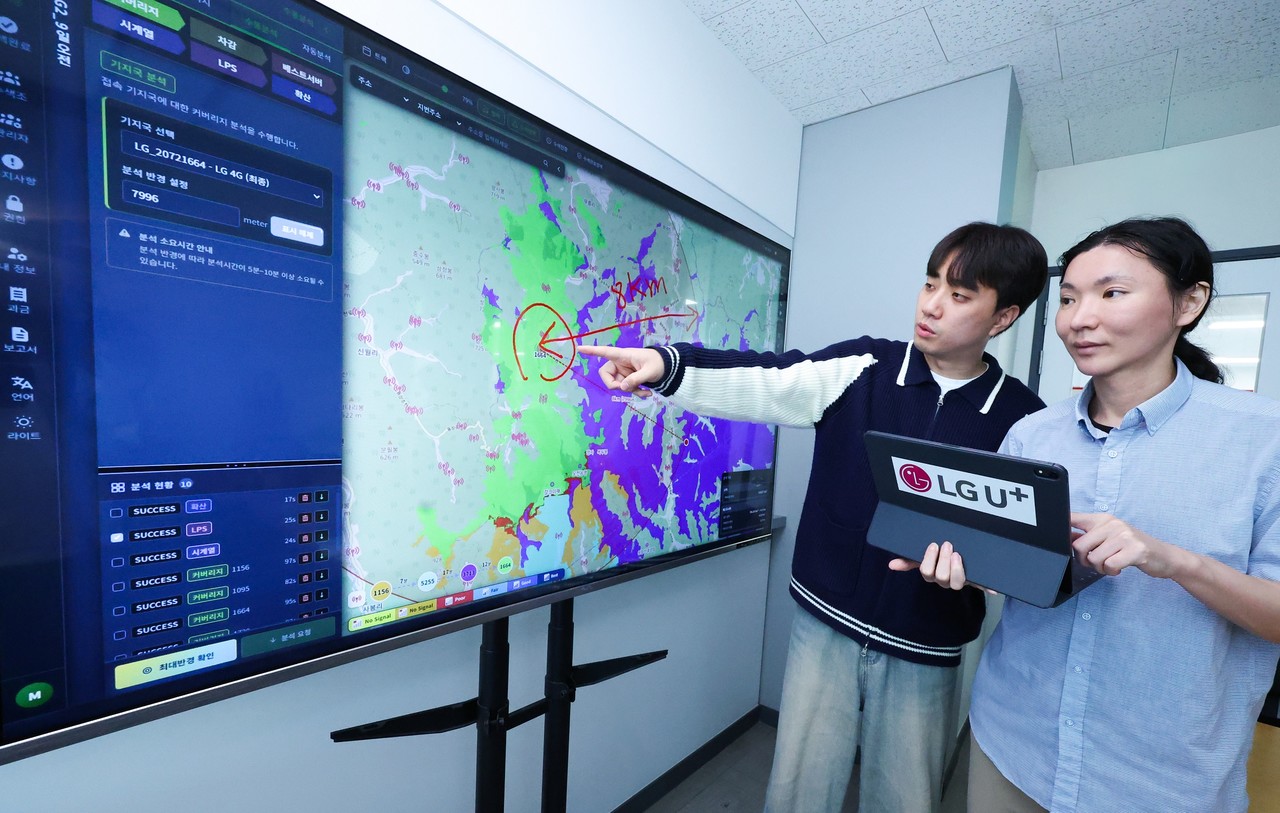
The photo shows Solbit System researchers reviewing the results of rescue demonstration work using iSAR.
Previously, the search area was estimated by applying a 15-km radius centered on the last connected base station, and the estimated search area under the existing method for the area was 706.86 square kilometers.
After analyzing the base station location, antenna direction, and radio coverage area, the search area was reduced to 45.94 square kilometers. By additionally using time-based mobile phone connection records, the search area was further narrowed to 4.13 square kilometers. The company said this meant the search area had been cut by about 99% compared with the existing method.
The approach is significant in that it can make use of telecom information even when GPS cannot be used to determine an exact location, and it was presented as showing the potential to use telecom data in search operations. If applied in real rescue situations, it is expected to quickly narrow the search area for rescue teams.
The two companies plan to carry out additional tests and continue verifying the accuracy and usability of the related technology. They also plan to review ways to apply it to emergency rescue agencies' search support systems.
LG Uplus said based on the results of this demonstration that it had confirmed the potential for using telecom network information for customer safety and emergency rescue support. It added that it had also confirmed the potential to help protect customers' lives and support rapid rescues through such use, as well as the potential to strengthen the company's social responsibility through these efforts.
Source: IT DAILY · Seong Won-young
Original: https://www.itdaily.kr/news/articleView.html?idxno=242104
References
This article was produced with the help of an automated content generation algorithm.
Source: IT DAILY
View originalThis article was summarized and organized by BizCrush based on the original article from IT DAILY. For exact quotations and full details, please refer to the original article.