World Proposes Ways to Use Proof of Human to Verify the 'Real Person' Behind AI Agents
TECHWORLD ·
✦ AI Summary
World announced that it has introduced ways to use "Proof of Human" to verify whether an AI agent is acting on behalf of a real person.
Users can delegate World ID proof to an agent, and websites and services can verify whether a request is made on behalf of a real user without personal data.
World presented examples of applying Proof of Human to "one person, one agent, one allocation" and to approvals for key tasks.
World announced that it has introduced ways to use "Proof of Human" to verify whether an AI agent is acting on behalf of a real person. As AI agents have recently taken hold as services that act as personal assistants and handle consumers' daily tasks, World proposed a method for determining whether an agent's request is actually made in place of a real person.
Users can delegate World ID proof to an agent. As a result, websites and services can determine whether an agent's actions are requests made on behalf of a real user without receiving personal data.
Even when one person uses multiple agents, limits such as the number of requests and purchase quantities can be set based on the actual user. This approach allows services to apply limits on a per-user basis without handing over personal information.
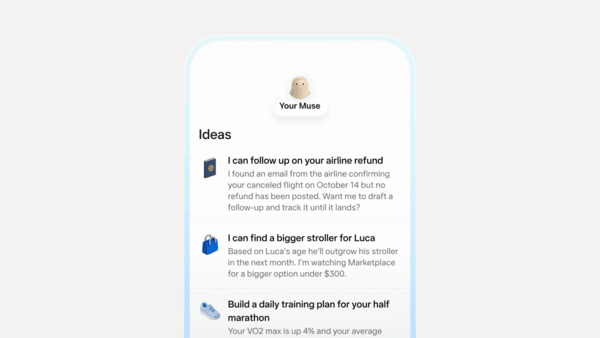
World explained in connection with this trend that Meta introduced Muse in September, which performs tasks such as sending emails, booking travel, filling out forms, and purchasing products. World added that OpenAI released dots three weeks later.
The spread of agent services such as dots and Instinct, which operate on behalf of users, is being highlighted. dots keeps a cloud computer running at all times and connects with more than 4,000 apps. OpenAI is also presenting a concept in which teams of multiple dots collaborate on behalf of users. Instinct operates on an invitation-only basis, is rapidly growing its user base, requires no separate app, and can be used through text messages on a mobile phone or computer.
If these agents use websites on users' behalf, friction can arise with service operators. Amazon blocked shopping through Muse on its site shortly after Muse's launch. One reason cited for the block was that Muse did not comply with a rule requiring it to disclose that it is an AI agent when browsing the site.
In response, World said websites and services will need to identify the source of requests as agents proliferate. It said they should also, if possible, identify the developer behind the agent, and explained that they must also verify whether the agent is acting on behalf of a real person.
World presented World ID as a means of such verification. World said that Proof of Human in World ID can prove that a real person is acting on a user's behalf while keeping personal information private.
World explains that one person can create and use multiple AI agents. Accordingly, it sees a possibility that the number of agents and the number of actual users may not match.
For that reason, it said that website and service operations need both a process to determine the number of request-sending agents and a process to determine the number of actual users using those agents. It explained that this is especially important in cases such as limiting the number of requests routed through agents, identifying the number of users interested in a product, and setting per-person purchase quantities.
World ID supports Proof of Human and also supports various proofs related to users. Users can delegate the Proof of Human stored in the World ID app to their own agents, helping distinguish between the number of agents and the number of actual users.
Zero-Knowledge Proof is applied in this process. As a result, websites and services can verify whether an agent is acting on behalf of a real person without receiving personal information.
World spelled out use cases for a method that proves a connection to a real person when an agent acts in place of a human. It cited limited-edition product sales and approval of key tasks as application areas.
For limited-edition product sales, it said it is necessary to verify the proxy subject of the purchasing-requesting agent. The object of verification is whether that agent is acting on behalf of a unique real person. In this case, the governing principle is "one person, one agent, one allocation."
It also said that for high-value purchases and contract signings, and other tasks that require user approval, it uses "human in the loop" authentication. This was presented as a way to apply Proof of Human to approvals for important tasks.
World forecast that, as AI agents increase and superintelligence technologies advance, more websites and services will in the future check whether agent requests originate from real people. It said that if this cannot be proven, access by agents could be blocked and users who assign tasks to agents could also face inconvenience. It added that developers can implement Proof of Human functionality in their agents with AgentKit, which is currently in beta, and can also use AgentKit to respond to verification requests.
Source: TECHWORLD · Lee Gwang-jae
Original: https://www.epnc.co.kr/news/articleView.html?idxno=407927
References
This article was produced with the help of an automated content generation algorithm.
Source: TECHWORLD
View originalThis article was summarized and organized by BizCrush based on the original article from TECHWORLD. For exact quotations and full details, please refer to the original article.