Young People's Concerns Shift From “Giving Up” to “How To Prepare” as Options Expand in Housing, Jobs, and Mobility
TECHWORLD ·
✦ AI Summary
Young people's concerns are shifting from giving up to preparing.
Salaryman Rich, Itta, and GCOO presented data on asset building, jobs, and mobility at a joint media seminar on the 7th.
The three presentations showed that, despite housing, employment, and mobility pressures, young people's responses are moving toward action and becoming more concrete.
As high housing prices and a prolonged job market slump persist, young people's concerns are shifting from “What should I give up?” to “How should I prepare?” The article shows that, amid continued pressure on housing and employment, young people's response is moving from giving up to preparing.
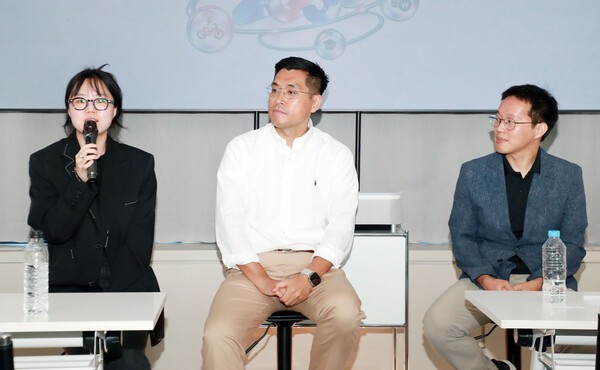
On the 7th, Salaryman Rich, Itta, and GCOO held a joint media seminar at PR Bridge Storyum in Seodaemun-gu, Seoul, titled “2026 Korea's Young People's Concerns: The term N-po generation is not enough.” Based on data each company holds, they presented changes in young people's asset building, jobs, and mobility.
The common thread across the three presentations was the growing specificity of young people's response strategies. In housing, there was a trend toward seeking ways to increase income and assets, and for homebuying, the presenters pointed to looking for additional income sources. In employment, there was a trend toward proving oneself by accumulating experience, and for job seeking, they pointed to concerns about work experience and how to use AI.
In mobility, there was a trend toward using transportation as a means to maintain a wider daily radius. Mobility was used as a way to connect school, work, and side jobs, and as a result, the daily range of life expanded. The seminar brought together the trend that, across housing, jobs, and mobility, young people are choosing more concrete ways to respond.
Kim Ji-yeon, team lead at Salaryman Rich's class team, said young people's desire to buy a home continues to remain at a high level. According to the Office for Government Policy Coordination's “2024 Survey on the Lives of Young People,” 89.6% of respondents aged 19 to 34 said owning a home was necessary. As for why homeownership was needed, 29.3% cited housing stability, the largest share.
The same trend toward greater interest in homebuying also appeared in platform usage indicators. Based on Salaryman Rich usage data, searches for information related to homebuying increased, and views of real estate columns by members aged 25 to 44 rose 2.5 times from last year. Views of the homebuying series increased fourfold, and the share of Q&A writers in the same age group rose from 70.3% to 80.1%.
Both survey results and platform usage indicators show growing interest in homebuying among young and middle-aged people alike. However, the practical barriers to entry remain high compared with that interest.
Lead Kim Ji-yeon said that to buy a home in Seoul, it would take about 14 years on the basis of saving one's entire annual income. At the same time, the homeownership rate among young households stood at 12.2%, revealing a gap between high interest and reality.
Young people's asset-building strategies are expanding from salary savings to securing additional income sources. Lead Kim cited side jobs, tax-saving accounts, and solo media as examples, explaining that people are increasingly looking for income sources beyond their paychecks. As a result, Salaryman Rich's educational scope is also expanding from real estate to basic financial management, stocks, and side jobs.
Kim said the principle is to support people in starting from where they are, regardless of their starting point. She added that the company helps reduce gaps that are hard to narrow with monthly income alone and supports the expansion of new income sources through content monetization education and other programs. She also introduced cases in which side-job experience was reflected in educational planning. Kim said team members personally do side jobs, identify the points where users get stuck, and then incorporate those findings into the curriculum.
A blog education program was presented as one such example. One student was introduced as having earned about KRW 1 million a month through Google AdSense after running the blog for about 10 to 12 months.
Questions from young people are changing in the job market. Jo Yoon-jin, CEO of Ready and Start, which operates the practitioner mentoring platform Itta, said analysis of accumulated question-and-answer data on Itta shows a shift in the direction of job-seeking concerns before and after the launch of ChatGPT.
According to CEO Jo, past questions tended to focus on whether it was possible to enter a given profession. In fact, from 2020 to 2022, 25.7% of questions were about exploring entry into specific occupations.
By contrast, recent questions have increasingly focused on how to prepare and how to respond in the AI era. From 2025 to 2026, the share of questions about exploring entry into specific occupations fell to 17.3%.
Over the same period, the share of questions related to documents and portfolios rose from 8.9% to 14.7%. During the same period, the share of AI-related questions also rose from 0.4% to 9.1%.
CEO Jo explained that young people's questions have moved from “Can I do it?” to “How can I get in?” and then to “What should I show?” She said this means that while the focus was initially on confirming whether a person could enter a profession, it later shifted to preparing for hiring, application materials, and, beyond that, the competencies to demonstrate in the AI era.
Practitioners' responses are also shifting from explaining job duties to emphasizing experience. Advice is increasingly centered on accumulating practical experience through projects and portfolios. CEO Jo said the share of advice telling people to try it themselves and learn by doing rose from 21% to about 40%.
AI-related responses are also increasing in this trend. Practitioners tend to recommend using AI as a tool to generate results and experiences rather than seeing it as a replacement threat. CEO Jo explained that in the field, AI is being used directly and recognized as a means of creating and expanding value.
A proposal was then made that there should be a short period of work experience between education and hiring. As a way to do this, companies were suggested to open part of their actual work to young people. Examples of participation periods included one day, three days, and one week. The goal is to expand opportunities for young people to gain direct work experience.
He said even a one-day experience can be meaningful. He added that finding out something is not a fit after trying it oneself is also experience. He also said that dismissing such experience as not counting as an outcome is a traditional way of thinking.
Mobility was presented as a means of connecting housing and jobs, and it is also tied to young people's living conditions. Yoon Jong-soo, CEO of Gbike, introduced mobility patterns among people in their 20s and 30s based on data from the shared micro-mobility service GCOO.
Among GCOO users, people in their 20s and 30s accounted for 53%. Based on GCOO's monthly active users, people in their 20s and 30s made up 57.56%. The number of members in their 20s was estimated at about 2.2 million.
Usage showed clear changes depending on academic schedules and commuting routines. In university districts, usage was 2.6 times higher immediately after the semester started than during vacation, and usage during final exam periods increased fivefold. In Seoul, usage from 8 a.m. to 9 a.m. was up 50% from normal, and usage from 5 p.m. to 7 p.m. was also up 50% from normal. In Pyeongtaek, usage at 6 a.m. increased by 30%, and it was explained that many industrial complexes are located in Pyeongtaek.
CEO Yoon explained that shared micro-mobility does not replace public transportation but rather plays a role in connecting short distances between residential areas, stations, schools, and workplaces. It was also presented as a means of complementing short trips between station areas and living and labor hubs.
CEO Yoon said this means of transportation is used not only for commuting to school and work but also for side jobs and late-night returns home. He added that shared micro-mobility is being used as a means of transport that connects daily life and livelihoods.
CEO Yoon said that even if someone has a home and a job, if they cannot travel between the two, a young person's day cannot begin. He explained that mobility is not merely a change of location but a means of achieving a desired purpose, and pointed out that for young people, mobility is a prerequisite for both daily life and achieving goals.
As usage has increased, parking problems and safety issues have emerged as challenges. In response, CEO Yoon said it is necessary to clearly define riding standards rather than restrict mobility, and added that user education and expanded parking space are also needed.
As specific solutions, CEO Yoon proposed a PM licensing system, penalties for violators, and expanded bicycle lanes. He also said it is possible to both maintain necessary mobility and ease inconvenience for pedestrians, and explained that clearly designated parking areas could significantly reduce parking problems.
The three presentations, including these discussions, showed that even amid continuing housing, employment, and mobility pressures, young people's responses are becoming more concrete through action rather than giving up. They also showed a move to expand options through income, experience, and transportation, making it difficult to explain these changes with the term “N-po generation” alone.
Source: TECHWORLD · Kim Seung-gi
Original: https://www.epnc.co.kr/news/articleView.html?idxno=407903
References
This article was produced with the help of an automated content generation algorithm.
Source: TECHWORLD
View originalThis article was summarized and organized by BizCrush based on the original article from TECHWORLD. For exact quotations and full details, please refer to the original article.