MIT Presents Drone Path That Guarantees Collision Avoidance in Unknown Environments
AI TIMES ·
✦ AI Summary
According to AI TIMES, MIT researchers have developed an autonomous path-planning technology called SANDO that mathematically guarantees a d…
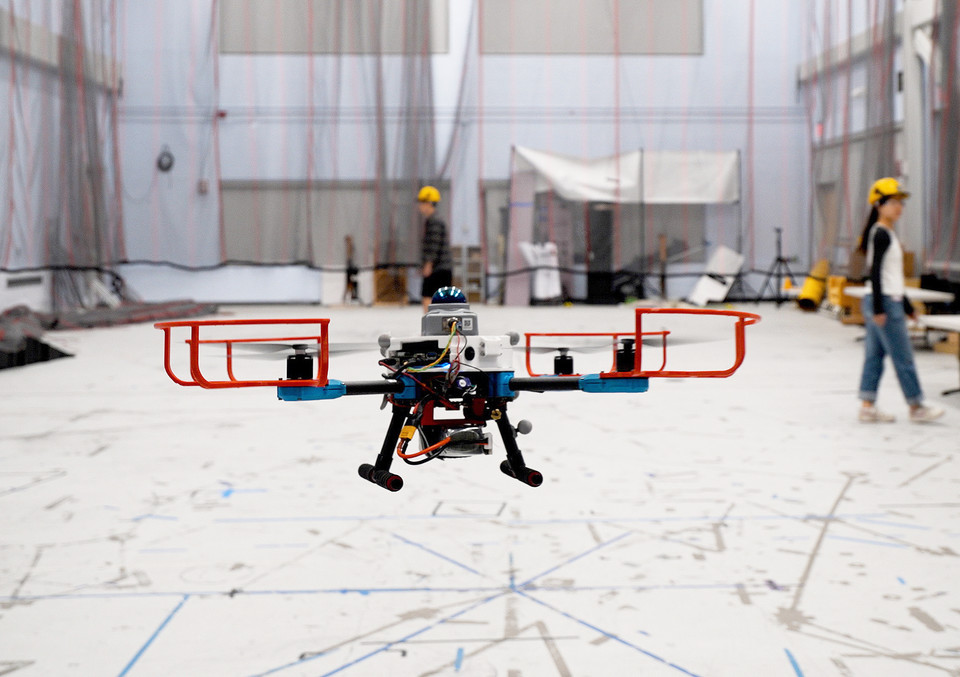
According to AI TIMES, MIT researchers have developed an autonomous path-planning technology called SANDO that mathematically guarantees a drone flight path that avoids moving obstacles and does not collide, even in an unmapped unknown environment. In 12 real drone tests, the system relied only on the onboard computer to recalculate a safe path in response to changes in the surroundings, avoiding all dynamic obstacles, and the research findings were disclosed on the 26th of last month. The core of the technology is not to try to predict the exact future movements of obstacles, but to continuously update safe corridors by calculating which spaces will still be empty in the future based on their maximum speed. It also adds a method for finding a more efficient route while avoiding obstacle-congested areas, aiming to improve both safety and mobility performance. The researchers said it could help drones continue search and mission operations in places where maps are hard to trust, such as wildfires, collapsed buildings, and mines. It also leaves room for expansion into autonomous flight technology that can explain the validity of its route in places where predictions often go wrong, such as delivery and complex urban environments.
Perspective
This study matters because it shifts the benchmark for autonomous flight from faster perception or more sophisticated prediction to a system that can prove why it is safe even under uncertainty. In particular, an approach that keeps revising routes while guaranteeing safety in conditions where unknown spaces and moving obstacles overlap lowers the threshold for disaster response and industrial deployment. Ultimately, real-world applicability depends less on performance itself than on whether risk can still be controlled when things fail, and this technology reads as a sign that that standard has moved forward one step.
This perspective is BizCrush's own commentary and is not part of the reporting by AI TIMES.
This article was produced with the help of an automated content generation algorithm.
Source: AI TIMES
View originalThis article was summarized and organized by BizCrush based on the original article from AI TIMES. For exact quotations and full details, please refer to the original article.