KT Cloud to Participate in Building 50 MW Cheongna AI Data Center
TECHWORLD ·
✦ AI Summary
KT Cloud announced on the 7th that it will participate in building a 50 MW AI data center in Cheongna, Incheon.
KT Cloud will participate as a design-build-operate (DBO) partner, taking charge of design consulting, MEP, commissioning, and operations.
The Cheongna AI data center is divided into an AI zone and a cloud zone, and D2C liquid cooling and DIMS will be applied.
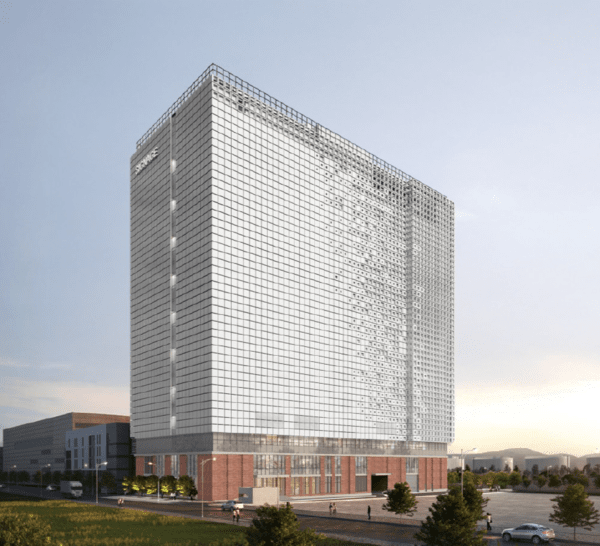
KT Cloud announced on the 7th that it will participate in building a 50 MW AI data center in Cheongna, Incheon. The participation is aimed at expanding the supply base for infrastructure in western Seoul metropolitan area. The Cheongna AI data center will span 2 basement floors and 11 above-ground floors, with a power capacity of 50 MW. Groundbreaking is targeted for the fourth quarter this year, and completion is targeted for the first quarter of 2030.
KT Cloud will participate in the project as a design-build-operate (DBO) partner. KT Cloud will be responsible for data center design consulting, major equipment construction (MEP), commissioning, and post-completion operations.
Hyundai Engineering will participate as a co-contractor. Hyundai Engineering will handle building construction, civil engineering work, equipment installation, landscaping, telecommunications work, and MEP construction.
The Cheongna AI data center will be located within an area that can be reached from major business districts in Seoul within 1 hour, and it is close to Gimpo International Airport and Incheon International Airport. KT Cloud plans to link it in the future with its existing data centers in Gasan and Mok-dong in the Seoul metropolitan area. Through this, the company aims to respond to customer demand for infrastructure expansion and secure network continuity between hubs.
The data hall was designed as a hybrid structure that can accommodate demand for both AI infrastructure and general-purpose cloud services. It is divided into an high-density GPU server 'AI zone' and a 'cloud zone' for general cloud services, allowing customers to configure infrastructure by workload.
The 'AI zone' will be equipped with D2C(Direct-to-Chip) liquid cooling. In this method, coolant directly removes heat generated by server chips. KT Cloud's proprietary integrated management solution, 'DIMS,' will be applied to data center operations, and the solution will be used to manage equipment and infrastructure status.
This project is part of KT Cloud's strategy to expand AIDC supply. KT Cloud aims to secure the capacity to supply more than 1 GW of AIDC by 2031. In the Seoul metropolitan area, it plans to pursue this by linking existing hubs with new data centers, and in non-metropolitan regions it plans to build large-scale AIDC centers centered on Gunsan and other areas.
Based on experience accumulated in the DBO business, the company is advancing liquid-cooling technology and also advancing next-generation data center technologies such as modular and prefab systems. This is intended to improve build timelines and operational efficiency by using advanced technologies in response to rising power and cooling requirements as AI accelerators become more densely integrated.
Kim Bong-gyun, CEO of KT Cloud, said he expects the Cheongna AI data center to serve as a major hub in western Seoul metropolitan area, and said it will help respond to large-scale AI infrastructure demand from domestic and overseas companies. He added that the company will pursue the expansion of AIDC supply bases in the Seoul metropolitan area and non-metropolitan regions, and will refine its 1 GW AIDC target based on its technological capabilities.
Source: TECHWORLD · Kim Seung-gi
Original: https://www.epnc.co.kr/news/articleView.html?idxno=407890
References
This article was produced with the help of an automated content generation algorithm.
Source: TECHWORLD
View originalThis article was summarized and organized by BizCrush based on the original article from TECHWORLD. For exact quotations and full details, please refer to the original article.