Korean AI Chip Makers Meet Lisa Su, Seek Overseas Expansion Through AMD System Collaboration
IT DAILY ·
✦ AI Summary
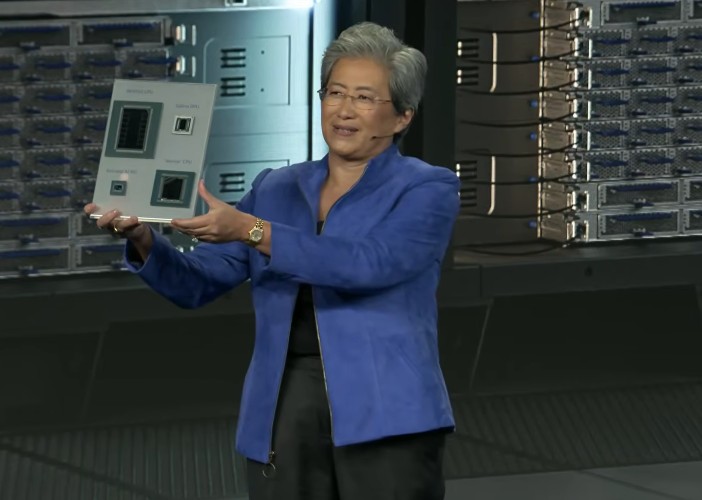
Lisa Su, chair of AMD, met with domestic AI semiconductor, software, and cloud companies and discussed ways to cooperate on global AI infrastructure.
The government and AMD agreed to pursue the buildout of heterogeneous computing infrastructure that combines AMD CPU and GPU with domestic AI chips and to link it with domestic demonstrations.
The two sides also discussed developing the project into a reference model usable in overseas markets, along with participation in open ecosystems such as ROCm and expanding the scope of cooperation among companies.
Lisa Su, chair of AMD, met with domestic AI semiconductor, software, and cloud companies. They discussed ways to cooperate on global AI infrastructure.
The government and AMD are pursuing the buildout of infrastructure that combines AMD CPU and GPU with domestic AI chips. They plan to link the infrastructure with domestic demonstrations. The government and AMD intend to develop the infrastructure into a reference model that can be used in overseas markets.
This marks a shift from promoting the individual performance of domestic chips to presenting a system-level approach. The idea is to present a jointly operated system combining global companies' computing hardware with domestic technology. The scope of participation includes, beyond semiconductors, software, memory, storage, networks, cloud, and AI model companies.
According to the Ministry of Science and ICT, this meeting and roundtable between the ministry and AMD were carried out as follow-up measures to the MOU signed with AMD in July at the San Francisco AI Summit. On the morning of the 7th at Four Seasons Hotel Seoul, Vice Minister Ryu Je-myung of the Ministry of Science and ICT met with Su, and a roundtable was also held with executives from domestic AI semiconductor ecosystem companies in attendance.
The two sides reviewed the progress of existing cooperation projects during this schedule. They also reviewed efforts to establish AMD's AI research center (CoE) by the end of the year and to train graduate-level talent in AI and AI transformation (AX).
The Ministry of Science and ICT and AMD agreed to carry out these tasks without setbacks. During the schedule, they also presented a direction that would expand cooperation from individual semiconductors to systems and platforms, in line with the subtitle's theme.
Amid this trend, Vice Minister Ryu said the AI inference market is expanding and that the focus of global competition to build AI infrastructure is shifting from individual semiconductor products to systems and platforms. He then proposed building a heterogeneous computing infrastructure that combines AMD CPU and GPU with domestic AI chips as a cooperative task.
The two sides are pursuing ways to connect various demonstrations underway in Korea and develop them into a reference model usable in global markets. To that end, they are pursuing verification of an environment that combines domestic companies' technologies with AMD products, and the results are intended to serve as a basis for entering overseas markets.
This approach does not limit the assessment of the competitiveness of domestic AI chips to the chip itself, but instead aims to present competitiveness at the level of the entire infrastructure. It is aligned with the intent to show the competitiveness of AI chips not as standalone chips, but through integration across the infrastructure and actual cases of service support.
If the demonstrations become more concrete, they could serve as examples showing how different computing devices and software are linked and how they support actual AI services. If the demonstrations become more concrete, they could show how heterogeneous computing devices and software are connected and how they support actual AI services, and they could also be turned into case studies.
A roundtable was also held. Thirteen companies attended the roundtable, including FuriosaAI, HyperAccel, DEEPX, Mobilint, MangoBoost, Panmnesia, Dnotitia, Moreh, Nota AI, Rebello Labs, FADU, Ellis Group, and Upstage, and the proposed themes were ROCm and links to the global ecosystem.
The participating companies discussed combining AMD CPU and GPU with domestic AI chips, participation in open software ecosystems such as Radeon Open Compute Platform (ROCm), and ways to enter global markets. ROCm is AMD's open-source-based AI and high-performance computing software platform, and it supports AI development and execution using GPUs.
The companies then presented the potential for their technologies and services to connect to AMD's global AI ecosystem. The areas of participation included chip design, software, data processing, cloud, and AI models, and the scope of cooperation discussions expanded beyond individual technologies to the infrastructure as a whole.
Amid this trend, Su said that Korea is an important partner for AMD and expressed a willingness to pursue new cooperation opportunities with Korean companies. AMD said it will continue to expand linkages among technologies and companies based on an open ecosystem and support domestic companies' participation in the global AI ecosystem.
The Ministry of Science and ICT plans to review the proposals and suggestions raised at the roundtable and to pursue them in connection with follow-up measures to the existing MOU.
It was also suggested that the importance of companies and technologies participating in heterogeneous infrastructure demonstrations will increase. In addition, whether the verification results can be connected to systems that overseas customers can use was also mentioned as an important task going forward.
Vice Minister Ryu said cooperation with AMD began with the July MOU, and that the visit by Lisa Su advanced the partnership through direct meetings with domestic companies. He also explained that at this meeting, AMD and domestic companies shared technologies and capabilities and explored new opportunities for cooperation. Ryu said the government's key role is to create a venue where excellent companies and technologies can meet, and that such meetings need to be supported so they lead to actual cooperation. He added that he hopes domestic companies' technological strength and AMD's global capabilities will combine to produce new AI technologies and businesses.
Source: IT DAILY · Lee Jae-young
Original: https://www.itdaily.kr/news/articleView.html?idxno=242052
References
This article was produced with the help of an automated content generation algorithm.
Source: IT DAILY
View originalThis article was summarized and organized by BizCrush based on the original article from IT DAILY. For exact quotations and full details, please refer to the original article.