Micron: 75% of Next Year’s Memory Already Sold; HBM Essentially Sold Out
TECHWORLD ·
✦ AI Summary
As AI data centers spread, memory demand has surged, leaving a global shortage in the market that is expected to deepen next year.
Micron said it has already allocated more than 75% of its total 2027 memory output to customers, and that most of next year's production of AI HBM has already been sold.
Micron said supply conditions in 2027 and 2028 are expected to be tighter than in 2026, and that the shortage could last through 2028.
As AI data centers spread, memory demand has surged, leaving demand greater than supply. In the global memory market, shortages are already emerging and are expected to deepen next year, the industry said on the 7th.
Against that backdrop, Micron said it has already allocated more than 75% of its total memory output for 2027 to customers. It also said most of next year’s production of AI HBM has already been sold.
Micron said demand centered on AI data centers is likely to continue outpacing supply capacity. It also projected that memory supply conditions in 2027 and 2028 will be tighter than in 2026, and said contracts for most of its 2027 HBM supply have already been completed.
Major overseas outlets, including Bloomberg, reported the developments in succession after Micron's earnings announcement for fiscal 2026 fourth quarter.
Micron CEO Sanjay Mehrotra said at the earnings call that more than 75% of the company's 2027 memory output has already been contracted with customers. He also said that a substantial portion of current discussions with customers is focused on 2028 volumes.
Sanjay Mehrotra, CEO of Micron, also said during the earnings call that a substantial portion of 2027 HBM bit supply has already been sold. He added that prices for that HBM volume are significantly higher than in 2026.
Ars Technica said the gist of Micron's announcement was that 75% of 2027 memory supply has already been contracted and that negotiations are shifting to 2028 volumes.
Ars Technica also reported that most of Micron's 2027 HBM volume has already been sold and that prices have risen sharply from this year.
AI was cited as the key background to the current shortage. The spread of generative AI and AI agents has driven a surge in GPU demand for large data centers, while HBM demand and server DRAM demand have also jumped.
Micron said memory capacity requirements and memory performance requirements are continuing to rise as parameters in large AI models increase, context lengths grow longer, and concurrent workloads expand. It also said data centers' share of the memory and storage market is increasing.
Along with these shifts, HBM and standard DRAM share the same wafer production capacity, so the expansion of HBM production is increasingly likely to affect general DRAM supply. In particular, concerns have been raised that expanding HBM production could constrain general DRAM supply, and observers say the concentration of production capacity on AI HBM could also affect supply of general-purpose DRAM, including server DDR5.
Samsung Electronics said HBM's share of total DRAM wafer production capacity is expected to reach about 20% in 2026 and to approach 30% in 2027. Foreign media interpreted Micron's announcement as a signal that the RAM shortage will last longer.
Micron said it does not believe the shortage can be resolved in the short term, and it put the shortage outlook through 2028. The company said even with new manufacturing facilities, an immediate solution would be difficult.
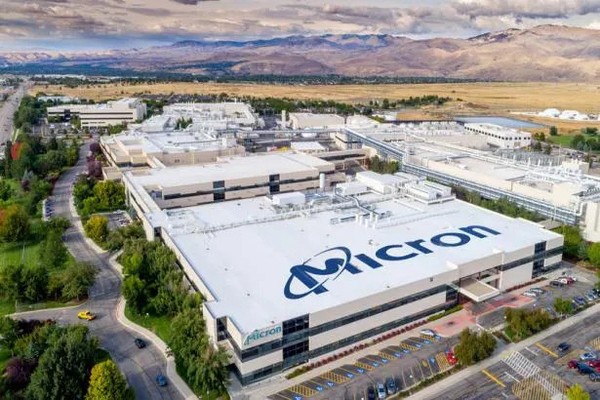
Micron said it is expanding production capacity at global manufacturing hubs in the U.S., Japan, and elsewhere. It said a new fab in Idaho in the U.S. is scheduled to begin first wafer production in mid-2027, expansion of its DRAM fab in Japan is expected to begin initial production at the end of 2028, and its advanced HBM packaging facility in Singapore is targeting initial production in early 2027.
However, Micron said the market shortage will not be resolved immediately even after new plants begin operating. The company said output from new DRAM and NAND fabs increases gradually over several quarters after initial operations begin.
Accordingly, Micron said it will take time before capacity expansion has a meaningful impact on market supply. The implication is that announced expansions and startup schedules for new facilities will not immediately translate into better supply-demand conditions.
Micron stressed that slower productivity gains from HBM generation shifts and process-node transitions are also a hurdle. In particular, it emphasized that supply growth could face constraints during the transition from HBM3E to HBM4 and HBM4E-centric products.
The shortage is driving HBM prices higher. Micron announced that 2027 HBM contract prices rose sharply compared with 2026.
Against this backdrop, Micron's revenue for fiscal 2026 fourth quarter came in at USD 54.23 billion. That was a sharp increase from revenue of USD 11.32 billion in the same period a year earlier. Micron's annual revenue was USD 133.19 billion.
The company forecast that record results would continue in fiscal 2027. Micron said customers are increasingly moving to secure long-term supply.
Customer financial commitments based on long-term strategic supply agreements rose from USD 22 billion in June to USD 32 billion in September. Remaining performance obligations (RPO), which refer to revenue to be recognized under future contracts, increased from about USD 100 billion to USD 150 billion.
Industry experts said Micron did not clearly specify when the memory shortage would ease. Based on this, they forecast that supply-demand conditions in 2027 and 2028 will be tighter than in 2026.
Industry experts raised the possibility that the memory shortage could persist through 2028, based on Micron's outlook. They also analyzed that even when new plants begin operations, the immediate effect on supply volumes will be limited and will not directly lead to lower prices.
They also noted that most of the 2027 HBM volume has already been contracted. As a result, competition among major memory makers such as Samsung Electronics, SK, and Micron to secure production capacity is expected to intensify.
Source: TECHWORLD · Park Kyu-chan
Original: https://www.epnc.co.kr/news/articleView.html?idxno=407855
References
This article was produced with the help of an automated content generation algorithm.
Source: TECHWORLD
View originalThis article was summarized and organized by BizCrush based on the original article from TECHWORLD. For exact quotations and full details, please refer to the original article.