Photonic Quantum Computing Aims to Span Bio Candidate Selection and Validation
AI TIMES ·
✦ AI Summary
According to AI TIMES, the Korea Research Institute of Bioscience and Biotechnology and Quandela said on October 7 that they will launch a j…
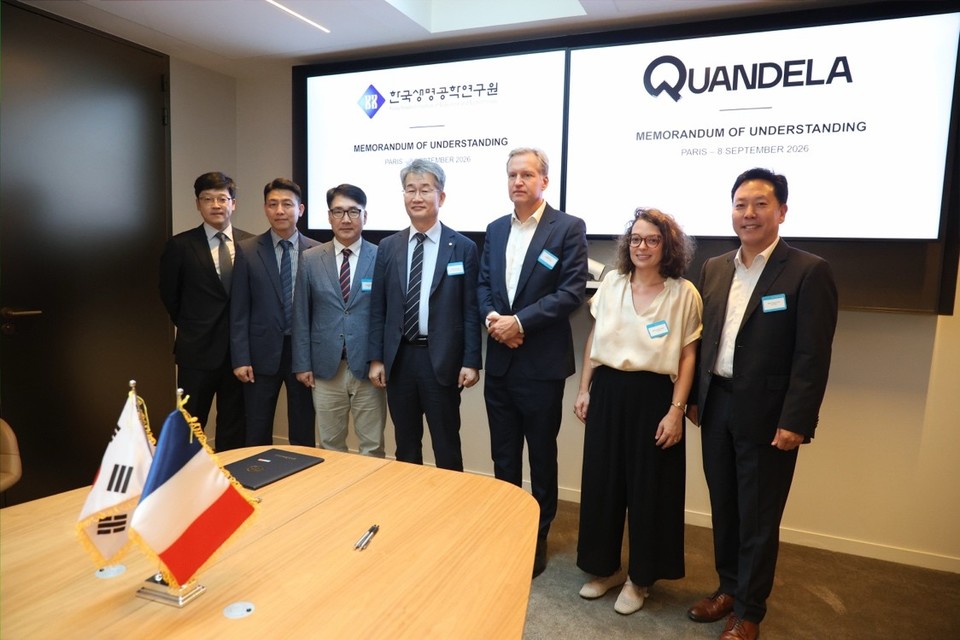
According to AI TIMES, the Korea Research Institute of Bioscience and Biotechnology and Quandela said on October 7 that they will launch a joint research project applying photonic quantum computing to advanced biotechnology and drug development. The partnership builds on a memorandum of understanding signed on the 8th of last month and will proceed by first verifying the reproducibility of early results before expanding the scope of the research. The project will use a structure that combines artificial intelligence, classical computing, and photonic quantum computing. It will first narrow down candidate pools through bio data analysis, then divide simulation and optimization tasks to apply them to the selection and prioritization of promising candidates. The scope of the collaboration is expected to extend beyond drug development to cell therapy design and the identification of genetic targets. The plan also includes running education programs and technology exchanges alongside the research to build capabilities in applying quantum computing in the bio field.
Perspective
The significance of this collaboration lies not just in testing a new computing resource, but in trying to change the flow of work from filtering candidates to moving them into validation in real research settings. In particular, putting reproducibility checks first reads as a signal that the effort is focused on practical usability rather than technology demonstrations. If the approach of combining artificial intelligence, legacy methods, and photonic quantum computing takes hold, bio research is likely to move away from single-technology competition and toward designing computing combinations suited to each problem.
This perspective is BizCrush's own commentary and is not part of the reporting by AI TIMES.
This article was produced with the help of an automated content generation algorithm.
Source: AI TIMES
View originalThis article was summarized and organized by BizCrush based on the original article from AI TIMES. For exact quotations and full details, please refer to the original article.