Rockwell Automation: 90% of Life Sciences Manufacturers Say Digital Transformation Is Essential
TECHWORLD ·
✦ AI Summary
Rockwell Automation on the 7th released a report analyzing digital transformation and regulatory response strategies for life sciences manufacturers.
According to the report, 90% of life sciences manufacturers viewed digital transformation as a business essential, and 58% had introduced smart manufacturing technologies.
The report identified connected data, cybersecurity, and validated AI applications as key elements and included 7 action items.
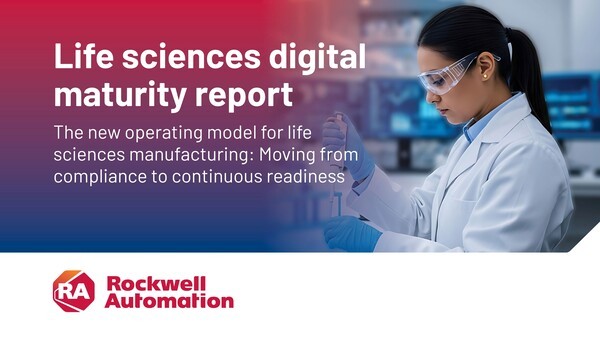
Rockwell Automation on the 7th released a report analyzing digital transformation and regulatory response strategies for life sciences manufacturers. The report is titled, "A New Operating Model for Life Sciences Manufacturing: From Regulatory Compliance to Continuous Readiness."
The survey was conducted among decision-makers in manufacturing and industrial operations in the life sciences sector. The report highlighted how digital technologies are being used in the ongoing modernization of life sciences manufacturers.
According to the report, 90% of life sciences manufacturers viewed digital transformation as a business essential. It also found that 58% of life sciences manufacturers had introduced smart manufacturing technologies across large-scale or some operational areas.
The report also identified connected data, cybersecurity, and validated AI applications as key factors for improving visibility on the factory floor. These elements were also presented as factors that strengthen quality processes.
Connected data, cybersecurity, and validated AI applications were also presented as key elements in establishing a continuous state of regulatory readiness. Through this report, Rockwell Automation addressed how life sciences manufacturers are modernizing operations and changing their approach to regulatory readiness.
The report outlined 7 action items for building continuous readiness among life sciences manufacturers. The main items included evidence management, cyber resilience, industrial data operations, clearly defined AI use cases, and AI governance.
The report also presented survey results on which technologies companies see as core. AI and machine learning were the most frequently cited core technologies for life sciences manufacturers, with 46% selecting AI and machine learning. Process automation followed at 44%, and cybersecurity at 39%.
Perceptions of core technologies were also reflected in actual investment priorities. The main purposes of technology investment were improving quality, digitizing operations, and reducing risk. Among respondents' top purposes for technology investment, improving quality accounted for 43%, digitizing operations for 36%, and reducing risk for 35%.
Among manufacturers currently using AI, the outlook for AI use is expanding. Of manufacturers currently using AI, 64% planned to expand its use within the next year, while 49% expected related investment to increase over the next 5 years.
The survey found that limitations in data use continue. Only 32% of companies said they were effectively using more than half of the data they collect. Compared with the amount of data accumulated, the level of use in actual manufacturing and operational decision-making was found to be limited.
At the same time, cybersecurity has emerged as a major issue for life sciences manufacturers. Over the past year, 54% of life sciences companies were found to have experienced at least one cyberattack. The main areas of exposure were IT systems and corporate networks at 41% in first place, remote access and connected equipment at 33% in second, and IT-OT integration points at 29% in third.
Rockwell Automation said that connectivity between IT-OT environments and the use of digital technologies are expanding. It also stressed the need to consider cybersecurity throughout the lifecycle of plant operations.
Matt Weaver, vice president for life sciences in Rockwell Automation's global industries division, said manufacturers need to change the way they approach regulatory readiness. He said that in the past, manufacturers had regarded regulatory readiness as a project to temporarily raise preparedness levels when needed. He added that today, regulatory readiness needs to be embedded as a daily principle across facility operations.
Matt Weaver also set out a benchmark for future readiness. He said companies that connect data, secure systems, and validate AI applications will be prepared for future regulatory demands and market changes.
Source: TECHWORLD · Park Gyu-chan
Original: https://www.epnc.co.kr/news/articleView.html?idxno=407848
References
This article was produced with the help of an automated content generation algorithm.
Source: TECHWORLD
View originalThis article was summarized and organized by BizCrush based on the original article from TECHWORLD. For exact quotations and full details, please refer to the original article.