LG Electronics Accelerates AI Data Center Cooling Business, Secures Major 5 GW U.S. Deal
TECHWORLD ·
✦ AI Summary
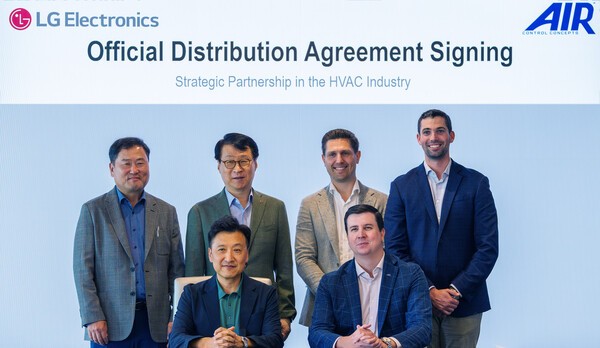
LG Electronics has signed a long-term supply contract (LTA) for AIDC chillers with AIR Control Concept (AIR), a North American infrastructure platform company.
Under the deal, LG Electronics will sequentially supply cooling solutions, including high-efficiency chillers, for a total of 5 GW of AIDC.
LG Electronics said that orders for AIDC cooling solutions in the first half of this year exceeded KRW 600 billion.
LG Electronics has secured a long-term supply contract for AI data center cooling solutions in North America. North America is the largest market for AI data centers, and LG Electronics' U.S. unit signed the deal on the 6th with AIR Control Concept (AIR), a North American infrastructure platform company. The contract is a long-term agreement (LTA) for chillers for AIDC.
Under the deal, LG Electronics will sequentially supply cooling solutions, including high-efficiency chillers, for a total of 5 GW worth of AIDC. Through this, LG Electronics has secured supply volumes for AI data center cooling equipment in the North American market and will meet thermal management demand for 5 GW worth of data centers.
Omdia projected that global data center required power capacity will increase from 226 GW in 2026 to 334 GW in 2027. The increase is 108 GW.
The 5 GW supply opportunity secured by LG Electronics is equivalent to about 5% of that increase, on a simple comparison basis.
AIR is an infrastructure platform company that oversees the entire AIDC process in North America, including the U.S. and Canada. AIR's areas of responsibility include design, build, public procurement and aftermarket services. AIR's data center-focused subsidiary is AMC (AIR Mission Critical). AMC is carrying out large-scale projects, and AIR's customer base includes major global data center operators.
LG Electronics signed the long-term supply agreement with AIR this time. Through the deal, LG Electronics expects to secure stable supply volumes in the North American AIDC market. It also expects to strengthen its position within the cooling infrastructure supply chain for major data center projects.
Meanwhile, as the installation of high-performance GPUs for AI computing increases, the importance of thermal management in AIDC is also growing. Accordingly, power density is rising and heat generation is increasing as well.
Air-cooling has traditionally been used, but the spread of liquid cooling is also continuing. Liquid cooling is characterized by directly removing heat with cooling water.
LG Electronics and AIR are discussing ways to expand supply items as part of their response to market changes. The expansion targets include CDU (cooling water distribution units), a core liquid-cooling facility.
LG Electronics plans to expand its business portfolio into a total cooling solution company covering both air-cooling and liquid cooling, the 'Chip to Chiller' solution. Through this, it aims to build a portfolio spanning air-cooling and liquid cooling in the data center cooling business.
LG Electronics has accumulated 60 years of HVAC engineering experience in high-reliability environments such as nuclear power plants and large hospitals. Based on that experience, LG Electronics is expanding its large-scale project references in the data center cooling market.
It began supplying and installing cooling solutions in earnest this year for a large AIDC project in North America that it won last year. LG Electronics is also supplying cooling solutions to large data centers in global south regions such as the Middle East and Indonesia, thereby securing global references.
LG Electronics plans to expand its business into an AIDC total solutions provider based on the integrated infrastructure solution of 'One LG,' which combines its own cooling technologies with the capabilities of the LG Group. LG Electronics' AIDC cooling solutions business is growing rapidly.
Fortune Business Insights projected that the global AIDC market will grow by about 26% a year. It forecast that the global AIDC market will reach about USD 133.5 billion, or about KRW 185 trillion, in 2034.
First-half orders surpass KRW 600 billion... expectations are rising that chiller sales will reach KRW 1 trillion early. LG Electronics said that orders for AIDC cooling solutions in the first half of this year exceeded KRW 600 billion. Inside LG Electronics, cumulative orders for AIDC cooling solutions are expected to reach several trillion won by the end of the year.
LG Electronics' original goal was to achieve KRW 1 trillion in chiller sales by the end of 2027. As orders for AIDC cooling solutions expand, the timing of reaching KRW 1 trillion in chiller sales is expected to move forward.
Brad Hobbs, CEO of AIR, said that LG Electronics can provide proven solutions in the process of building an AI data center portfolio by leveraging its high-efficiency chiller technology.
Lee Jae-seong, head of LG Electronics' ES division, said that LG Electronics has high-efficiency chillers, high-performance liquid cooling solutions and differentiated technological capabilities, and that it is also rapidly expanding its experience in supplying large-scale data centers. He added that, based on this, the company will push ahead with leading the global AIDC cooling market.
Source: TECHWORLD · Park Gyu-chan
Original: https://www.epnc.co.kr/news/articleView.html?idxno=407787
References
This article was produced with the help of an automated content generation algorithm.
Source: TECHWORLD
View originalThis article was summarized and organized by BizCrush based on the original article from TECHWORLD. For exact quotations and full details, please refer to the original article.